35,000+ smart investors are already getting financial news, market signals, and macro shifts in the economy that could impact their money next with our FREE weekly newsletter. Get ahead of what the crowd finds out too late. Click Here to Subscribe for FREE.
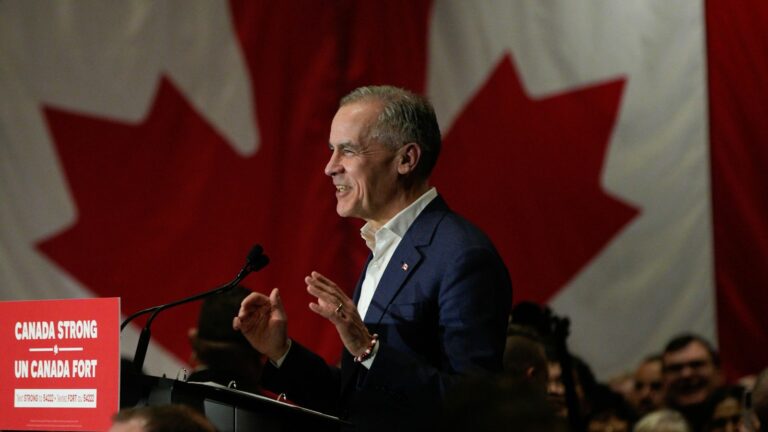
Three federal byelections are giving Canadians an unusually concentrated look at how the political landscape has shifted since Prime Minister Mark Carney escalated his response to the renewed U.S. trade war. Voters in Chicoutimi—Le Fjord, Beaches—East York and North Vancouver—Capilano went to the polls on August 31, with each constituency offering a different test for the federal parties.
The biggest question is in Quebec, where Conservatives are defending a seat they narrowly won in 2025 against increasingly competitive Liberal and Bloc Québécois campaigns. Toronto and North Vancouver begin from much stronger Liberal positions, but even there, winning is only part of the story. Margins, turnout and changes from the last federal election could indicate whether Carney’s confrontation with Washington is translating into durable political support — or whether the national numbers are masking a more complicated local picture.
Chicoutimi—Le Fjord Is the Race That Could Redraw the Quebec Map
Chicoutimi—Le Fjord is easily the most consequential of the three contests because it began as a Conservative seat and has developed into a genuine three-party battleground. Richard Martel captured the riding for the Conservatives in the 2025 federal election with 17,356 votes, or 34.1% of valid ballots. The Bloc Québécois finished with 31.2%, while the Liberals were only one-tenth of a percentage point behind the Bloc at 31.1%. Martel’s advantage over the second-place Bloc candidate was just 1,499 votes. His departure came after Carney appointed him to the Senate in July, creating an unusual opportunity for the governing Liberals to take a seat directly from the official Opposition without waiting for another general election. The Conservatives are now represented by Régis Gaudreault, while the Liberals are running Daniel Gobeil and the Bloc has Caroline Dubé. A Segma Recherche poll released late in the campaign illustrated how dramatically the contest had changed, placing Gobeil at 40%, Dubé at 38% and Gaudreault at 17% among 448 respondents, with a stated margin of error of 4.6 percentage points.
Trade makes the riding especially revealing. Saguenay–Lac-Saint-Jean is deeply exposed to industries caught in the Canada-U.S. dispute, particularly aluminum, manufacturing and agriculture. The Quebec government says U.S. tariffs on Canadian steel and aluminum currently reach 50% in important categories, while provincial statistics showed exports of unwrought aluminum and aluminum alloys falling 38.8% in June from May. Ottawa had already announced nearly $7 million for seven regional organizations affected by aluminum tariffs earlier this year. Carney also visited an aluminum operation in Saguenay during the campaign and defended Canada’s supply-management system, an important issue for dairy producers; Liberal candidate Gobeil is a former dairy producer and agricultural organization leader. Nationally, Ipsos put Liberal support at 44% against 33% for the Conservatives shortly before voting, but the Quebec numbers were more complicated: 37% Liberal, 33% Bloc and 22% Conservative. At the same time, 57% of Quebec respondents supported Canada’s decision to stand firm against the United States despite potential economic costs. A Liberal victory here would therefore carry considerably more meaning than simply adding another seat. It would suggest that Carney’s trade positioning is capable of breaking into territory Conservatives successfully defended only 16 months earlier.
Beaches—East York Tests Whether Liberal Dominance Survives Without Its Familiar MP
Beaches—East York presents a very different challenge. The Liberals are not trying to overturn an opposition stronghold; they are attempting to demonstrate that one of their safest urban constituencies remains firmly attached to the party after the departure of a well-established incumbent. Nate Erskine-Smith won an extraordinary 67.7% of the valid vote in the 2025 general election, collecting 39,804 votes compared with 13,830, or 23.5%, for the Conservatives. The NDP’s Shannon Devine finished at 6.9%. Erskine-Smith had represented the east Toronto riding since 2015, building a reputation as an unusually independent-minded Liberal before briefly serving in cabinet. He resigned his federal seat in July and is now seeking a Toronto city council seat. That leaves Liberal candidate Tanveer Shahnawaz with the task of showing that the constituency’s support was not dependent solely on Erskine-Smith’s personal political brand. Shahnawaz brings significant local continuity: he grew up in the area and spent roughly a decade working with Erskine-Smith, including as constituency office manager.
For Carney, the useful number is therefore not simply whether the Liberals finish first. The scale of the victory matters. Ontario remains one of the strongest regions for the governing party in recent national polling, with Ipsos putting Liberal federal support in the province at 49%. Roughly 65% of Ontario respondents also supported Canada’s decision to resist further U.S. demands even if doing so produced higher tariffs or economic costs. Those figures create favourable conditions for a government seeking to turn a confrontation with Donald Trump’s administration into a broader argument about economic sovereignty. Yet byelections can behave differently from national campaigns: turnout is usually more localized, candidate recognition matters more, and voters can use a low-risk contest to register dissatisfaction without changing the government. Elections Canada estimated that about 11,800 people in Beaches—East York had already cast ballots during the four advance-voting days. Conservatives are running Jim Syrbos, while Devine is again representing the NDP. If Shahnawaz approaches the commanding Liberal share achieved in 2025, the result would strengthen the argument that Carney’s national advantage is filtering down to the constituency level. A sharp contraction, even with a Liberal win, would tell a more cautious story.
North Vancouver—Capilano Puts a Carney Insider Directly on the Ballot
North Vancouver—Capilano may provide the cleanest personal test of Carney’s political brand because the Liberal candidate, Braeden Caley, arrives with unusually close ties to the prime minister. Caley most recently served as Carney’s deputy chief of staff before returning to British Columbia to contest the seat. He is replacing Jonathan Wilkinson, who represented the area federally beginning in 2015 and won 59.8% of the vote in the 2025 election. Wilkinson left Parliament after being chosen to become Canada’s ambassador to the European Union, another move closely connected to Carney’s broader effort to deepen economic and political relationships outside the United States. The Conservative candidate, commercial lawyer Stephen Curran, provides voters with a direct comparison to the previous election because he also challenged Wilkinson in 2025. Curran received 21,339 votes, or 33.7%, leaving the Conservatives 26.1 percentage points behind the Liberals. The NDP, by comparison, captured just 4.2% during its nationwide collapse that year.
There are signs of substantial voter engagement. Elections Canada estimated approximately 16,700 ballots were cast at advance polls in North Vancouver—Capilano, the highest total among the three August 31 byelections. The election-night register listed more than 89,000 electors in the riding, meaning the advance count alone represented close to one-fifth of registered voters before election day ballots were included. The broader provincial environment also appears favourable to Carney: Ipsos measured federal Liberal support at 46% in British Columbia, while approximately 65% of provincial respondents backed Canada standing firm in the trade dispute despite the possibility of higher economic costs. Wilkinson’s new diplomatic assignment gives the local race an additional international dimension. The federal government reported that combined Canada–EU goods and services trade reached $178.6 billion in 2025, and it has explicitly positioned closer European ties as part of Canada’s economic strategy. A strong Caley result would therefore allow Liberals to argue that a candidate closely identified with Carney can inherit a large incumbent margin even after a popular, decade-long MP leaves. A considerably tighter race would give Conservatives a different message: national approval for confronting Washington does not automatically erase concerns about affordability, government performance or individual candidates once voters enter the booth.
This Options Discord Chat is The Real Deal
While the internet is scoured with trading chat rooms, many of which even charge upwards of thousands of dollars to join, this smaller options trading discord chatroom is the real deal and actually providing valuable trade setups, education, and community without the noise and spam of the larger more expensive rooms. With a incredibly low-cost monthly fee, Options Trading Club (click here to see their reviews) requires an application to join ensuring that every member is dedicated and serious about taking their trading to the next level. If you are looking for a change in your trading strategies, then click here to apply for a membership.