35,000+ smart investors are already getting financial news, market signals, and macro shifts in the economy that could impact their money next with our FREE weekly newsletter. Get ahead of what the crowd finds out too late. Click Here to Subscribe for FREE.
President Donald Trump’s latest comments on North American trade negotiations have highlighted a growing divide between Washington’s approach to Mexico and Canada. While Mexico appears to be moving closer to an agreement with the United States, Canada continues to face unresolved trade demands, tariff disputes and uncertainty over its economic relationship with its largest trading partner.
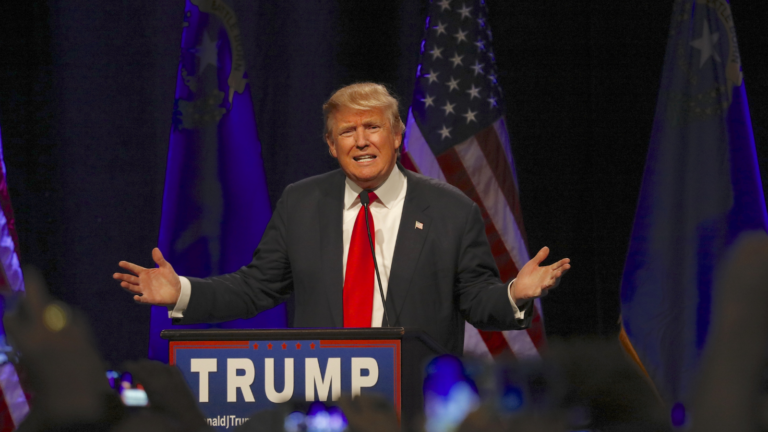
Speaking at a White House news conference on November 20, 2026, Trump expressed optimism about negotiations with Mexican President Claudia Sheinbaum but adopted a noticeably tougher tone toward Canadian Prime Minister Mark Carney.
The contrasting messages come as all three countries navigate the future of the Canada-United States-Mexico Agreement (CUSMA), with major implications for manufacturing, automotive production, energy exports and cross-border investment.
Trump’s Latest Remarks Put Mexico Ahead of Canada
Trump Says Mexico Is Nearing a Trade Deal While Canada Still Faces Unresolved Demands from Washington
- Trump’s Latest Remarks Put Mexico Ahead of Canada
- Mexico’s Trade Negotiations Are Advancing, but No Final Deal Exists
- Washington’s Separate Negotiations Could Give Mexico an Advantage
- Canada’s Trade Minister Acknowledges That Major Obstacles Remain
- Carney Says Washington Has Withdrawn Some Earlier Demands
- Trump’s Threatened Tariff Increases Add Pressure to Canadian Industries
- The Future of CUSMA Remains Uncertain Despite Mexico’s Progress
- Canadian Jobs and Investment Depend on Predictable U.S. Trade Access
- Canada’s Expanding Trade Relationships With China Could Complicate Negotiations
- The Next Few Months Could Determine Canada’s Trade Position
At a White House news conference on November 20, Trump said negotiations with Mexico were nearing an agreement after meeting President Claudia Sheinbaum at the APEC summit in China. His words suggested momentum, not a bargain: neither leader announced a signed text, a tariff schedule or a date when new terms would begin. The distinction matters for businesses that cannot make production plans based on an optimistic comment alone.
His description of Canada was colder. He called Prime Minister Mark Carney a pleasant counterpart, yet accused Canada of taking advantage of the United States and questioned America’s need for Canadian cars, energy and lumber. Those claims reflect Trump’s negotiating position, not evidence that Canadian trade has harmed the United States. For Ottawa, the contrast creates a difficult backdrop: Mexico can point to encouragement from Washington, while Canadian officials must continue explaining why their talks have not delivered comparable tariff relief.
Mexico’s Trade Negotiations Are Advancing, but No Final Deal Exists
Sheinbaum has offered a similar, though more cautious, assessment of the negotiations. After meeting Trump on the sidelines of the APEC gathering in Shenzhen, she told reporters on November 19 that the two governments hoped to determine whether a deal could be concluded when they meet again at the G20 summit in Miami in December. She highlighted progress on efforts to lower American tariffs on Mexican vehicles, steel and aluminum, but did not unveil final terms.
That leaves an important gap between diplomatic confidence and economic certainty. An agreement would require the two governments to settle outstanding issues and spell out which goods receive relief, at what rates and under what conditions. Mexican manufacturers are watching those details because a vehicle or metal shipment can become substantially more expensive when duties apply. Sheinbaum’s public optimism may encourage investors, but it does not yet change the charges paid at the border.
Washington’s Separate Negotiations Could Give Mexico an Advantage
Mexico’s apparent advantage is not accidental. Reuters reported in September that the two governments had been pursuing an interim bilateral arrangement after U.S.-Canada negotiations faltered. Washington sought concessions involving the amount of U.S. content in vehicles assembled in Mexico and scrutiny of Chinese investment, while Mexico wanted relief from American duties. The talks gave both governments room to address specific disputes without first resolving every question involving Canada.
The agenda also shows why a deal could prove complicated. Rules of origin decide whether goods qualify for preferential treatment, and changing them can alter where carmakers purchase steel, electronics and other components. Restrictions aimed at Chinese investment could affect factory financing and sourcing decisions. A bilateral understanding might ease urgent tariff pressures, but it would not automatically rewrite the three-country trade pact. For Canadian manufacturers, any Mexico-first compromise could become a reference point when Washington returns to questions about Canadian production.
Canada’s Trade Minister Acknowledges That Major Obstacles Remain
Canada is pursuing a narrower immediate objective: an interim tariff arrangement rather than replacing CUSMA. Trade Minister Dominic LeBlanc told CBC on November 19 that an initial deal could lower U.S. Section 232 tariffs affecting steel, aluminum, automobiles and lumber, even if some duties remained. Ottawa is also seeking removal of Section 338 tariffs on certain Canadian goods. LeBlanc described tariff relief as a possible gateway to formal review discussions.
The difficulty is Washington’s limited movement. Reuters reported that LeBlanc told Canada’s trade advisory committee American negotiators had not substantially changed their position since bilateral talks broke down in August. The minister remains in contact with U.S. counterparts, but he has emphasized that any agreement must protect long-term viability of Canadian industries. That matters to an aluminum producer negotiating contracts or an auto supplier bidding for future work: a smaller tariff is useful only if it leaves the business competitive.
Carney Says Washington Has Withdrawn Some Earlier Demands
Carney has acknowledged movement in negotiations without suggesting the dispute is settled. On November 3, he said Washington had withdrawn some demands, including a proposal that would have given the United States final approval over trade agreements Canada might negotiate elsewhere. The prime minister described an improving exchange of offers, but said the countries were not finished. That distinction helps explain why Ottawa resists measuring progress solely through Trump’s public predictions.
The leaders met again in Shenzhen on November 18. According to the Canadian government’s account, they discussed a mutually beneficial agreement intended to support employment, affordability and Canadian sovereignty, and agreed to remain in contact. No agreement or tariff reduction was announced. Canadian negotiators must now convert signs of flexibility into enforceable commitments while preserving the country’s ability to make decisions. For manufacturers wondering where to invest next, assurances about a constructive meeting are less valuable than trade rules.
Trump’s Threatened Tariff Increases Add Pressure to Canadian Industries
The stakes are sharpened by tariffs in place and others that Trump has threatened. In August, Washington imposed 50% duties under Section 338 on specified Canadian products, with no blanket exemption simply because goods qualify under CUSMA. Canadian government guidance identifies affected categories including furniture, plastics, electronics, paper and machinery. Separate sectoral measures also apply to automobiles, metals and some wood products, subject to product-specific rules and exemptions.
Following the collapse of August negotiations, Trump threatened to raise tariffs on Canadian cars, trucks and automotive parts to 50% beginning January 1, 2027. That increase remains a threatened future action, not a rate already imposed on every vehicle. The uncertainty reaches beyond carmakers. A small parts supplier may need to quote prices months before shipping, while an American customer must decide whether those costs will rise. Until Washington confirms its next move, both sides face risks that are difficult to budget.
The Future of CUSMA Remains Uncertain Despite Mexico’s Progress
The dispute has not ended the underlying North American trade agreement. CUSMA, known as USMCA in the United States, entered into force in July 2020. At the six-year review on July 1, 2026, Washington declined to extend the agreement in its existing form, although Canada and Mexico supported renewal. U.S. Trade Representative Jamieson Greer said the pact would remain in force while negotiations continued.
Under its review provisions, the agreement now faces annual joint assessments unless all three governments agree to another sixteen-year term. Without an extension or earlier withdrawal, it is scheduled to expire in July 2036. This distinction matters because a potential U.S.-Mexico tariff arrangement would not, by itself, replace the legal structure governing three-country trade. Canada and Mexico reaffirmed their support for renewal when Carney met Sheinbaum in Shenzhen on November 17. Their shared preference preserves a basis for cooperation even as each negotiates separately with Washington.
Canadian Jobs and Investment Depend on Predictable U.S. Trade Access
Canada’s exposure is enough that a prolonged standoff would reach well beyond export executives. Statistics Canada reported that 71.7% of the country’s merchandise exports went to the United States in 2025, down from 75.9% in 2024. Meanwhile, the U.S. Trade Representative estimated two-way goods and services trade with Canada at US$872.3 billion in 2025. Those figures illustrate a commercial relationship, not one that either economy could easily replace overnight.
The ties extend from energy and agriculture to factories on both sides of the border. U.S. government data also show that America runs a services trade surplus with Canada, a reminder that merchandise deficits tell only part of the story. A tariff that raises costs for a Canadian auto plant can also burden its American suppliers or customers. For workers deciding whether to relocate or take on a mortgage, uncertainty about future production matters as much as the headline tariff rate.
Canada’s Expanding Trade Relationships With China Could Complicate Negotiations
Canada is responding to U.S. uncertainty by widening its trade options, in Asia. During Carney’s November visit to China, Ottawa announced an expanded arrangement that could provide tariff relief on approximately C$400 million worth of Canadian pork and seafood exports. In exchange, Canada agreed to extend certain exemptions covering Chinese steel and aluminum products. The measures provide new opportunities for exporters, but they do not immediately replace the scale of Canada’s American market.
China is also a sensitive issue in Washington’s talks with Mexico. U.S. negotiators have sought tighter scrutiny of Chinese investment and changes to North American production requirements. Sheinbaum, after meeting President Xi Jinping, said closer cooperation with China would not undermine Mexico’s relationship with the United States. Both leaders are trying to diversify without losing access to their main customer. That balancing act may become harder if Washington treats Asian partnerships as an obstacle to trade concessions.
The Next Few Months Could Determine Canada’s Trade Position
The next tests are practical rather than rhetorical. Sheinbaum hopes her December meeting with Trump in Miami can produce an agreement, while Ottawa is seeking tariff relief without committing to a completion date. LeBlanc has said negotiations could continue into January or February if necessary. Meanwhile, Trump’s threatened January 1 increase on Canadian vehicle tariffs gives companies a reason to watch developments.
There is also a political opening, although its impact remains uncertain. Democratic Senator Chris Coons said Canada should pursue an interim deal with the administration and seek longer-term improvements through the incoming Congress. He acknowledged that some Democrats still favour tariffs protecting American metal producers. Ultimately, the measures of success will be public and concrete: which tariffs are reduced, which products qualify, when changes take effect and whether CUSMA gains a durable extension. Until those details emerge, Mexico’s optimism and Canada’s difficulties remain different stages of unfinished negotiations.
This Options Discord Chat is The Real Deal
While the internet is scoured with trading chat rooms, many of which even charge upwards of thousands of dollars to join, this smaller options trading discord chatroom is the real deal and actually providing valuable trade setups, education, and community without the noise and spam of the larger more expensive rooms. With a incredibly low-cost monthly fee, Options Trading Club (click here to see their reviews) requires an application to join ensuring that every member is dedicated and serious about taking their trading to the next level. If you are looking for a change in your trading strategies, then click here to apply for a membership.