35,000+ smart investors are already getting financial news, market signals, and macro shifts in the economy that could impact their money next with our FREE weekly newsletter. Get ahead of what the crowd finds out too late. Click Here to Subscribe for FREE.
Democrats have secured control of both chambers of the U.S. Congress following the November 3, 2026, midterm elections, delivering a major political setback to President Donald Trump. However, the victory does not guarantee relief for Canadian businesses facing his administration’s 50% tariffs on selected imports.
Although Democrats will gain substantial influence over American trade policy when the new Congress takes office in January 2027, Trump retains the constitutional power to veto legislation designed to remove tariffs or restrict his trade authority.
The resulting political standoff could have significant consequences for Canadian exporters, American manufacturers, and consumers already dealing with higher costs. With congressional leadership changing hands but presidential authority remaining intact, the central question is whether lawmakers can build enough bipartisan support to challenge Trump’s trade agenda.
Democrats’ Congressional Victory Reshapes Washington’s Political Balance
Democrats Win Control of Congress but Trump Retains Veto Power Over Efforts to End Canada’s 50% Tariffs
- Democrats’ Congressional Victory Reshapes Washington’s Political Balance
- Canada’s 50% Tariffs Affect More Products Than Many Businesses Expected
- A Nearly Century-Old Trade Law Gives Trump Unusual Tariff Authority
- Trump’s Presidential Veto Remains the Biggest Obstacle to Tariff Repeal
- Democrats Can Use Congressional Investigations to Challenge Trump’s Trade Policies
- Republican Support Could Determine Whether Canada’s Tariffs Survive
- American Businesses Are Already Paying Millions Because of the Canadian Tariffs
- Ottawa’s Retaliatory Tariffs Add Pressure as Trade Negotiations Continue
- The Next Major Test for Canada-U.S. Trade Relations Comes in 2027
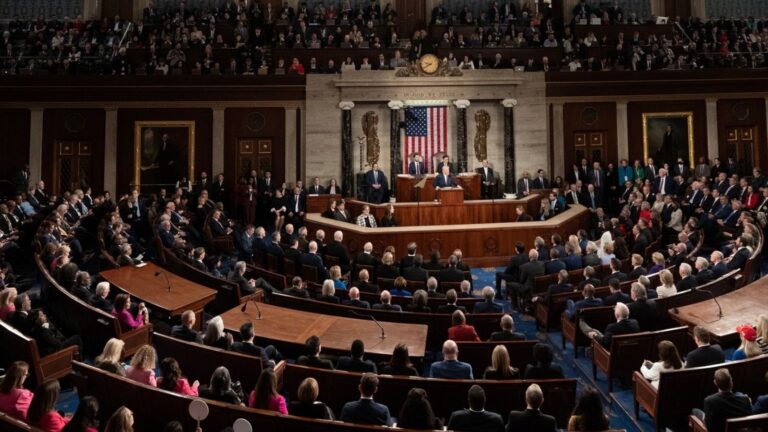
The November 3 midterm elections produced a decisive shift in American political power, with Democrats winning majorities in both the House of Representatives and the Senate. By November 19, election tracking showed Democrats and the two independents who caucus with them holding a 56–44 Senate advantage. In the House, Democrats had secured more than 250 seats, comfortably exceeding the 218 needed for a majority.
The outcome represents a significant reversal for Republicans, who entered the elections controlling both chambers. However, the newly elected lawmakers will not take office until January 3, 2027, leaving the existing Congress in place for the remainder of 2026. That distinction matters enormously for Canada. While Democratic victories have created expectations of stronger congressional opposition to Trump’s tariffs, they have not changed the laws governing those duties. Canadian exporters therefore face a transition period in which Washington’s political direction has shifted, but the administration’s existing trade restrictions remain in force.
Canada’s 50% Tariffs Affect More Products Than Many Businesses Expected
Trump’s 50% tariffs are not a blanket tax on every Canadian product entering the United States. Instead, they apply to designated categories of imports under Section 338 of the Tariff Act of 1930. Introduced on August 22, 2026, the measures initially targeted a broad collection of goods, including plastics, furniture, paper products, industrial machinery, textiles, and sporting equipment. Congressional researchers estimate that approximately US$20 billion worth of Canadian imports, based on 2025 trade figures, are covered by the measures.
A particularly important complication is that these additional tariffs can apply even when products meet the rules of origin under the Canada–United States–Mexico Agreement, known as CUSMA in Canada. The administration has also repeatedly modified the lists of affected products, most recently through changes effective October 30. Certain products have been removed while others have been added. For Canadian manufacturers, this creates uncertainty extending beyond the tariff rate itself. Businesses must continually verify product classifications, applicable exemptions, and whether additional industry-specific duties apply before calculating the actual cost of shipping goods across the border.
A Nearly Century-Old Trade Law Gives Trump Unusual Tariff Authority
The legal foundation of the tariff dispute reaches back to the Great Depression. Section 338 of the Tariff Act of 1930 allows an American president to impose additional duties of up to 50% when another country is found to discriminate against U.S. commerce. Although the legislation has existed for nearly a century, Trump’s 2026 measures marked the first time a president expressly used that provision to impose tariffs. The administration cited Canadian policies involving American dairy products, alcohol, and motor vehicles as justification for its actions.
The statute is particularly consequential because Congress previously delegated considerable authority over international trade to the executive branch. Section 338 also contains provisions allowing import restrictions when discriminatory practices continue. In September, the administration expanded its response by prohibiting imports of certain Canadian goods. Meanwhile, the U.S. International Trade Commission sought public input on how to fulfil its responsibilities under the statute. That combination of broad presidential discretion and an unfamiliar legal framework has intensified the dispute over congressional oversight. Democratic lawmakers can propose changes to the law, but those proposals still face the constitutional hurdles associated with passing legislation.
Trump’s Presidential Veto Remains the Biggest Obstacle to Tariff Repeal
Controlling Congress gives Democrats the ability to introduce and potentially pass legislation removing the tariffs, but it does not eliminate Trump’s constitutional veto authority. Under Article I, Section 7 of the U.S. Constitution, a president can reject legislation approved by both chambers. Overriding that decision requires support from two-thirds of the lawmakers voting in each chamber. If every member participates, the required totals are 290 votes in the House and 67 in the Senate.
Those thresholds create a substantial political challenge. With Democrats and their allies projected to hold 56 Senate seats, they would need support from at least 11 Republican senators to override a veto if all 100 senators voted. In the House, a Democratic majority of approximately 258 seats would still require more than 30 Republican votes under full attendance. Ordinary legislation could face an additional obstacle: Senate rules generally require 60 votes to overcome a filibuster. Consequently, Democratic control increases the possibility of passing anti-tariff proposals, but successful repeal would still depend heavily on Republican cooperation or a change in Trump’s position.
Democrats Can Use Congressional Investigations to Challenge Trump’s Trade Policies
Even without enough votes to override a presidential veto, Democrats will have additional opportunities to scrutinize the administration’s trade decisions. Representative Richard Neal, who is expected to lead the House Ways and Means Committee, has publicly committed to reversing tariffs he considers unjustified. Senator Ron Wyden is also expected to lead the Senate Finance Committee. Both committees play important roles in overseeing American trade policy and examining the economic consequences of government decisions.
Committee hearings could bring importers, manufacturers, economists, and administration officials before lawmakers to explain how tariffs affect businesses and consumers. Democrats could investigate the process used to grant product exemptions, question the legal justifications for restrictions, and demand information about their economic effects. Congressional control over government funding also provides potential negotiating leverage, although funding restrictions would face their own political and legal hurdles. These mechanisms cannot automatically cancel tariffs, but they can increase public scrutiny and create pressure for negotiated adjustments. For Canadian businesses, that distinction matters: congressional investigations may establish the case for relief even when immediate legislative repeal remains beyond reach.
Republican Support Could Determine Whether Canada’s Tariffs Survive
Senator Ron Wyden has identified the 50% tariffs on Canadian products as a potential priority for the incoming Democratic-controlled Congress. He believes the economic consequences of the measures could provide an opportunity to attract Republican support. His approach reflects a political calculation: lawmakers representing states economically dependent on Canadian trade may have reasons to oppose tariffs regardless of their party affiliation. Nevertheless, dissatisfaction with individual tariffs does not necessarily translate into willingness to override a president from the same political party.
Maine illustrates the political complications. Republican Senator Susan Collins warned in August that the new trade restrictions could expose approximately US$170 million worth of Maine goods to Canadian counter-tariffs. She subsequently lost her re-election bid to Democrat Troy Jackson, in a campaign shaped partly by economic concerns and the deterioration of cross-border trade. However, Collins’ opposition does not translate into a vote in the incoming Senate because she will no longer hold office. Democrats also have internal disagreements about using tariffs to protect American industries. Building a veto-proof coalition would require lawmakers to agree not only that Canada’s tariffs are damaging, but also on what should replace them.
American Businesses Are Already Paying Millions Because of the Canadian Tariffs
The impact of the trade dispute extends beyond Canadian exporters. Gellert Global Group, a New Jersey-based food importer, has become a prominent example of an American business facing substantial additional costs. The company imports Canadian cheeses and filed a lawsuit in the U.S. Court of International Trade on October 20, challenging Trump’s use of Section 338. According to its court filings, one shipment of goat’s milk cheese valued at approximately US$120,000 generated roughly US$60,000 in additional tariffs. The company estimates that the new duties could cost approximately US$40 million annually on its Canadian cheese imports.
The company’s supply chain also demonstrates how interconnected the two economies have become. According to co-chief executive Thomas Gellert, a significant portion of the Canadian cheese it imports is produced using American milk shipped to Canadian processing facilities. Finished products subsequently return to the United States, where they face the additional import duties. This means tariffs intended to protect American commerce can also increase costs for businesses connected to American agricultural producers. Gellert’s legal challenge remains pending, but its experience highlights why some U.S. manufacturers and importers are pressing for relief alongside Canadian exporters.
Ottawa’s Retaliatory Tariffs Add Pressure as Trade Negotiations Continue
Canada has responded to the American measures with its own trade restrictions. Beginning September 8, 2026, Ottawa imposed counter-tariffs of 15%, 25%, and 50% on approximately C$27.6 billion worth of U.S. imports. The affected products include steel, dairy products, appliances, agricultural equipment, paper products, and electronics. Canada’s strategy has been to match American trade restrictions while creating incentives for Washington to negotiate. However, the economic consequences remain concentrated in particular industries. The Bank of Canada estimated in October that the average U.S. tariff on Canadian goods had increased from 5% in July to 7.5%, even though approximately 80% of Canadian goods exports to the United States remained tariff-free.
Ottawa is also pursuing a negotiated solution rather than relying exclusively on congressional opposition. On November 19, reports from a federal trade advisory meeting indicated that significant disagreements remained between the countries, particularly over automotive tariffs. Canada-U.S. Trade Minister Dominic LeBlanc has maintained contact with American officials, including Commerce Secretary Howard Lutnick and U.S. Trade Representative Jamieson Greer. The Canadian government is seeking an interim agreement that could reduce tariffs before broader CUSMA negotiations advance. Although some officials see an opportunity for progress before the end of 2026, there is no confirmed agreement. The changing political balance in Congress has increased Canada’s potential negotiating leverage without resolving the underlying disputes.
The Next Major Test for Canada-U.S. Trade Relations Comes in 2027
The beginning of 2027 will bring several developments capable of influencing the trade relationship. Democrats will assume control of Congress on January 3, giving them the ability to advance legislation and expand investigations into tariff policy. At the same time, the CUSMA review process remains unresolved. The United States declined to extend the agreement during its July 2026 joint review, although the trade pact remains legally in force. Another review is expected in 2027, with the Office of the U.S. Trade Representative accepting public submissions until January 12. Legal challenges to Trump’s tariffs, including the Gellert Global Group case, provide another possible avenue for changes to the restrictions.
For Canadian businesses, however, none of these developments guarantees immediate financial relief. Trump can continue modifying tariff measures under existing presidential authority, and his veto remains a significant barrier to legislation that would permanently constrain that power. Exporters must therefore prepare for continued uncertainty while monitoring negotiations, court decisions, and congressional activity. The Democratic victory has fundamentally changed the political environment surrounding Canada’s trade dispute with Washington. It has not yet changed the economic reality confronting businesses affected by the tariffs. Whether the election ultimately produces meaningful relief will depend on congressional cooperation, the administration’s willingness to negotiate, and the outcome of legal challenges to presidential trade authority.
This Options Discord Chat is The Real Deal
While the internet is scoured with trading chat rooms, many of which even charge upwards of thousands of dollars to join, this smaller options trading discord chatroom is the real deal and actually providing valuable trade setups, education, and community without the noise and spam of the larger more expensive rooms. With a incredibly low-cost monthly fee, Options Trading Club (click here to see their reviews) requires an application to join ensuring that every member is dedicated and serious about taking their trading to the next level. If you are looking for a change in your trading strategies, then click here to apply for a membership.