35,000+ smart investors are already getting financial news, market signals, and macro shifts in the economy that could impact their money next with our FREE weekly newsletter. Get ahead of what the crowd finds out too late. Click Here to Subscribe for FREE.
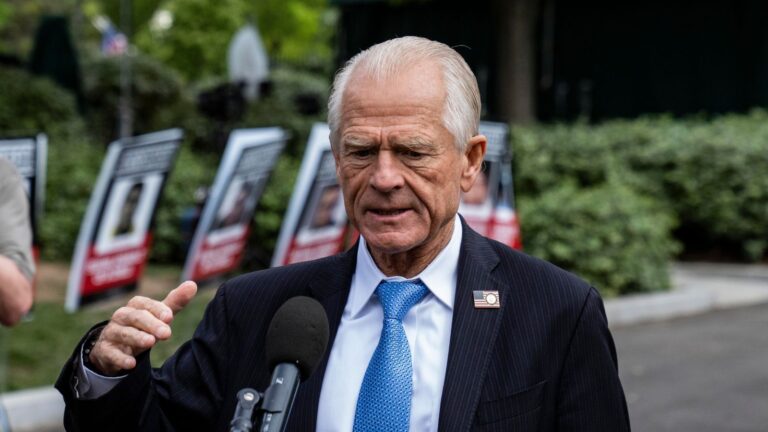
A sharp warning from Washington has added another layer of tension to Canada’s increasingly difficult trade relationship with the United States. White House trade adviser Peter Navarro has accused Ottawa of arrogance and dishonesty, suggesting Canadian negotiators are seriously miscalculating their position against President Donald Trump’s administration.
The confrontation comes as Prime Minister Mark Carney attempts to restore economic stability with Canada’s largest trading partner while expanding commercial relationships with other countries, including China. Despite recent discussions between Carney and Trump, fundamental disagreements over tariffs, automotive manufacturing and the future of North American free trade remain unresolved. Navarro’s unusually personal criticism highlights how quickly diplomatic tensions can escalate, even as both governments continue exploring a possible agreement.
Trump Adviser Peter Navarro Calls Ottawa ‘Arrogant and Dishonest,’ Warns Canada Trade Fight ‘Doesn’t End Well’
- Navarro Accuses Ottawa of Misjudging Its Position Against Washington
- Canada’s Growing Relationship With China Fuels a New Confrontation
- Carney and Trump Continue Negotiations Despite Public Tensions
- Ottawa Considers an Interim Trade Agreement as Pressure Builds
- Canada’s Free Trade Agreement Faces an Uncertain Future
- Canadian Auto Workers Face Growing Risks From Higher U.S. Tariffs
- Canada’s Dependence on the American Market Remains a Major Vulnerability
- Carney’s Trade Diversification Strategy Faces Its Biggest Test
Peter Navarro delivered his latest criticism on November 19, 2026, using social media to accuse the Canadian government of negotiating with an unrealistic understanding of its economic position. The senior Trump adviser condemned what he described as the “arrogance and dishonesty of Ottawa on trade,” arguing that Canadian officials were failing to recognize the considerable advantage Washington holds in bilateral negotiations. His remarks came amid renewed efforts to reach an agreement after months of disagreements over tariffs and market access.
Navarro illustrated his argument with a striking basketball comparison, describing Canadian negotiators as a high school team competing against the New York Knicks. “That doesn’t end well for Canada,” he warned. The comparison was intended to emphasize the enormous difference in economic power between the two countries. However, the comments also revealed the confrontational approach that has characterized Navarro’s public statements about Canada, raising fresh questions about whether escalating rhetoric could complicate negotiations already facing significant political obstacles.
Canada’s Growing Relationship With China Fuels a New Confrontation
Navarro’s confrontation with Ottawa did not begin with Thursday’s basketball analogy. Earlier in the week, Carney suggested that Canada could seek automotive investment from China, Europe or Japan if talks with Washington failed to preserve the deeply integrated North American industry. He stressed that any Chinese partnership would need meaningful Canadian production, appropriate labour standards and stronger domestic supply chains, rather than simply assembling imported vehicle kits. That distinction matters in communities where an automotive investment can support suppliers, apprenticeships and long-term factory employment.
Navarro responded on November 16 by asking whether Carney was attempting to play China against the United States, calling the possibility “offensive in the extreme.” The broader dispute comes after Canada agreed in January to admit an initial annual quota of up to 49,000 Chinese electric vehicles at a 6.1 per cent tariff. Ontario Premier Doug Ford has voiced concerns that greater Chinese competition could jeopardize local jobs and U.S. market access.
Carney and Trump Continue Negotiations Despite Public Tensions
Only a day before Navarro’s public warning, Carney and Trump spoke on the sidelines of the Asia-Pacific Economic Cooperation summit in Shenzhen, China. Their November 18 discussion lasted just under 20 minutes, according to the Prime Minister’s Office, and included senior American trade officials. A Canadian readout said the leaders discussed a mutually beneficial arrangement that would support jobs and affordability while respecting Canada’s languages, culture and sovereignty. Both sides agreed to remain in contact.
The diplomatic encounter demonstrated that discussions at the highest level had not stopped, but it did not produce a publicly announced deal. For Canadian manufacturers, that distinction is crucial: a cordial meeting offers little immediate relief from duties already affecting cross-border shipments. The contrast between the leaders’ restrained official language and Navarro’s confrontational remarks illustrates the competing pressures surrounding the negotiations. Ottawa is looking for durable terms, while Washington continues to signal that access to its market comes with difficult conditions.
Ottawa Considers an Interim Trade Agreement as Pressure Builds
Inside Ottawa, the immediate objective is increasingly an interim tariff arrangement rather than a comprehensive resolution of every trade dispute. On November 19, Canada-U.S. Trade Minister Dominic LeBlanc chaired the tenth meeting of the federal advisory committee, joined by chief negotiator Janice Charette and Ambassador Mark Wiseman. Government officials reported on contacts with Washington while representatives from industries and regions described the consequences of American trade measures for businesses and workers.
LeBlanc subsequently told CBC that an interim agreement could reduce, but not entirely eliminate, tariffs on steel, aluminum, autos and lumber. He also suggested that reaching such an arrangement could open the door to more formal CUSMA review discussions. Reuters reported, citing people familiar with the committee briefing, that Washington had shown little movement since August. Although some reports described a year-end ambition, officials cautioned that there was no firm deadline. The emphasis remains on an agreement Ottawa believes Canadian industries can survive.
Canada’s Free Trade Agreement Faces an Uncertain Future
The larger concern is the fate of the Canada–United States–Mexico Agreement, known in Canada as CUSMA. The pact replaced NAFTA in July 2020 and established rules for one of the world’s most integrated trading regions. At its scheduled review on July 1, 2026, the United States declined to extend the agreement in its existing form. That decision intensified uncertainty for companies making investments that depend on stable North American market access and predictable trading conditions.
Crucially, refusing an extension did not terminate the agreement. The U.S. Trade Representative confirmed that CUSMA remains in force, and its review rules allow annual discussions until the three countries agree on an extension or the pact expires in 2036. That legal distinction matters because businesses still operate under existing trade provisions even as their future is contested. For Ottawa, the challenge is to address tariff disputes without losing the predictable framework that has supported automotive assembly, agriculture and manufacturing across borders for years.
Canadian Auto Workers Face Growing Risks From Higher U.S. Tariffs
Few sectors illustrate the stakes more clearly than automotive manufacturing. Federal figures show that Canada’s auto industry supports more than 500,000 direct and indirect jobs, with approximately 125,000 positions tied directly to manufacturing. More than 90 per cent of Canadian-made vehicles and 60 per cent of Canadian-made auto parts are exported to the United States. Assembly plants and suppliers therefore cannot easily replace their American customers when tariffs rise.
The threat is becoming more immediate. Trump has warned that tariffs on Canadian vehicles and automotive parts could climb from 25 to 50 per cent on January 1, 2027. Industry groups have warned that higher costs could undermine supply chains built over decades and prompt job losses or plant closures. In a manufacturing community such as Windsor, Ontario, the consequences could extend beyond factory gates, affecting suppliers, contractors and local service businesses. A prolonged trade fight risks turning uncertainty at the border into uncertainty at household kitchen tables.
Canada’s Dependence on the American Market Remains a Major Vulnerability
The size of the U.S. market explains why Navarro’s remarks carry economic weight, even when his language is provocative. Statistics Canada reported that 71.7 per cent of Canada’s merchandise exports went to the United States in 2025, down from 75.9 per cent in 2024. Canadian shipments to the U.S. declined 5.8 per cent over that period, while exports to other destinations increased 17.2 per cent. The figures show both how concentrated the relationship remains and how exporters have begun expanding elsewhere.
Dependence also runs in both directions. Canadian firms sell energy, vehicles, metals and agricultural products into American supply chains, while U.S. producers rely on Canadian inputs and buyers. The federal government estimates that the countries exchanged nearly $3.5 billion in goods and services each day in 2025. That scale makes disruption costly on both sides, even if the United States has the larger economy. Economic leverage is substantial, but it is not without consequences.
Carney’s Trade Diversification Strategy Faces Its Biggest Test
Carney’s response has been to pursue broader international trade relationships while leaving the American negotiating channel open. During his November trip to Asia, Canada announced the conclusion or substantial conclusion of free trade negotiations with the Philippines and the Association of Southeast Asian Nations. Those agreements still require further steps before taking effect, but Ottawa estimates the ASEAN arrangement alone could eventually add nearly $2 billion to Canada’s economy and support approximately 14,000 jobs.
Canada also announced expanded tariff relief with China covering approximately $400 million in additional Canadian exports, including pork and seafood. These developments offer new opportunities for farmers, producers and exporters, but they do not immediately replace the commercial scale of the United States. The next test is whether Ottawa can turn diplomatic gains into sustained market access while securing workable terms from Washington. Navarro’s warning may dominate the headlines, but the lasting outcome will depend on negotiated rules, investment decisions and the jobs that follow.
This Options Discord Chat is The Real Deal
While the internet is scoured with trading chat rooms, many of which even charge upwards of thousands of dollars to join, this smaller options trading discord chatroom is the real deal and actually providing valuable trade setups, education, and community without the noise and spam of the larger more expensive rooms. With a incredibly low-cost monthly fee, Options Trading Club (click here to see their reviews) requires an application to join ensuring that every member is dedicated and serious about taking their trading to the next level. If you are looking for a change in your trading strategies, then click here to apply for a membership.