35,000+ smart investors are already getting financial news, market signals, and macro shifts in the economy that could impact their money next with our FREE weekly newsletter. Get ahead of what the crowd finds out too late. Click Here to Subscribe for FREE.
Canada’s immigration debate is no longer just about how many people enter the country. It is also about whether a young family can find a rental, whether a hospital can recruit staff, and whether communities can keep pace with growth.
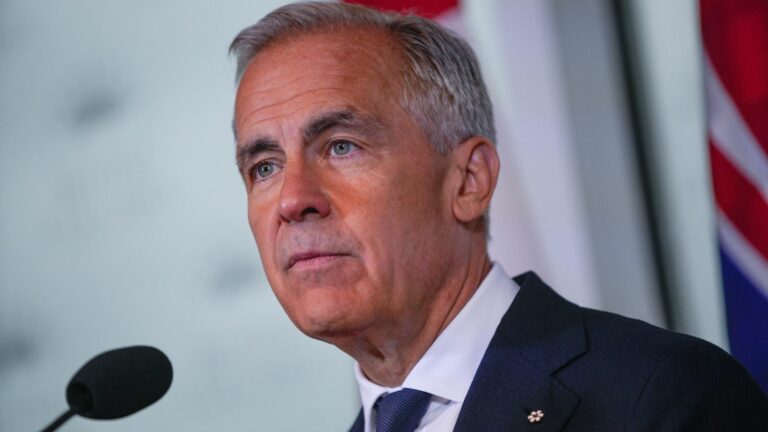
Prime Minister Mark Carney’s government has maintained a target of 380,000 permanent residents annually from 2027 through 2029, extending a level already planned for 2026. The decision comes as housing affordability remains a major concern, even though population growth and rental demand have slowed. There is an important qualification: Ottawa is also offering up to 200,000 extra permanent-residence spaces in 2027 for people already living in Canada. The policy therefore represents both a pullback from earlier immigration highs and a renewed test of how Canada balances workforce needs, housing supply and public confidence.
A Steady Target After Years of Faster Growth
Carney Keeps Immigration at 380,000 Permanent Residents a Year Through 2029 Despite Housing Affordability Pressure
- A Steady Target After Years of Faster Growth
- Permanent Residence Is Not the Same as a New Arrival
- The Extra 200,000 Places Change the Picture
- Population Growth Has Already Slowed Sharply
- Housing Construction Remains the Bigger Test
- Renters Are Finding Relief, but Unevenly
- Temporary Workers and Students Face Tighter Limits
- Economic Immigration Remains the Priority
- Families, Refugees and Regions Still Have a Place
- By 2029, Housing Outcomes Will Matter More Than Targets
The headline number is unchanged: Immigration, Refugees and Citizenship Canada plans 380,000 permanent-resident admissions in each of 2027, 2028 and 2029. The announcement extends the target set for 2026. It represents a retreat from peak years. Canada admitted 483,655 permanent residents in 2024 and 393,770 in 2025, according to Ottawa. That makes the new target roughly 104,000 below the 2024 total, rather than an expansion of immigration.
Still, a target is not an absolute ceiling or a promise that exactly that many applications will be approved. The official planning range runs from 352,500 to 422,000 admissions per year, reflecting operational flexibility. Figures for 2028 and 2029 remain subject to annual review. For employers, that offers a clearer basis for planning. For households facing expensive housing, the question is whether a stable rate is low enough to allow public services and construction to catch up.
Permanent Residence Is Not the Same as a New Arrival
Permanent residence and arrival are not the same thing. Many people receive permanent status after years of living in the country as international students or temporary workers. Immigration department data shows 188,790 former temporary residents became permanent residents in 2025, accounting for about 48% of that year’s admissions. From January through August 2026, 153,005 made the transition, representing 58% of permanent-resident admissions during that period.
Consider a nurse who has rented an apartment, paid taxes and worked in a Canadian community for several years. Granting that person permanent residence changes legal status, but it does not create another new household arriving at the border overnight. This matters for the housing debate, although families can grow, move and change their housing needs. Treating all 380,000 admissions as entirely new arrivals would exaggerate the immediate population impact and obscure the government’s emphasis on retaining people already established in Canada.
The Extra 200,000 Places Change the Picture
Separately, Ottawa has announced a temporary pathway for up to 200,000 people already in Canada to gain permanent residence in 2027. One cohort provides space for up to 100,000 workers and their families, coordinated with provinces. Another covers up to 100,000 people in humanitarian and family-related pathways, including long-waiting applicants. These are additional admissions spaces, not part of the ordinary 380,000 annual target.
That distinction is important: total permanent-residence grants in 2027 could exceed the headline target if the extra spaces are used. The government argues that changing the status of people already here should not create the same immediate strain on housing and services as bringing in new residents. The measure also provides a human dimension to an administrative backlog. A long-settled worker or a spouse waiting for approval may see permanent status as the difference between uncertainty and the ability to plan a future.
Population Growth Has Already Slowed Sharply
Statistics Canada estimated the population at 41.8 million on July 1, 2026, up just 0.5% from a year earlier. Growth was 2.8% in 2023–24. The slower pace is striking after several years when rapid international migration helped fuel debate about crowded classrooms, medical access and scarce rental housing.
The number of non-permanent residents also fell to about 2.78 million by July 2026, or 6.7% of the population. That was down from a peak share of 7.2% in October 2024. Ottawa wants the share below 5%, partly by reducing new temporary arrivals and managing transitions to permanent status. Yet slower population growth does not erase the housing shortfall already accumulated. A family priced out of ownership does not automatically gain access to a home because the national growth rate has fallen. That requires available units in the right communities, at prices incomes can support.
Housing Construction Remains the Bigger Test
Canada’s housing challenge explains why immigration targets have not ended the affordability debate. In its fall 2026 housing supply report, Canada Mortgage and Housing Corporation estimated that the country needs roughly 417,000 to 469,000 new homes annually to restore pre-pandemic affordability by 2036. Under its business-as-usual outlook, the pace is closer to 231,000, leaving an annual gap estimated at 187,000 to 238,000 homes.
Those figures do not mean every permanent resident requires a separate home. Household sizes vary, and many admissions involve people already living in Canada. Instead, they reveal how far construction must rise to improve affordability for existing households as well as future ones. CMHC also warned that builders could slow activity as demand softens, creating a shortage when the market recovers. For a first-time buyer watching developments stall, lower immigration alone offers limited comfort if too few affordable homes reach the market.
Renters Are Finding Relief, but Unevenly
Slower population growth is changing the rental market. CMHC’s mid-2026 assessment found that advertised rents had been declining in Toronto, Vancouver and Calgary as more apartments became available and demand softened. Its survey put 2025 purpose-built apartment vacancy rates at 3.0% in Toronto, 3.7% in Vancouver and 5.0% in Calgary. Landlords in some buildings were offering incentives or taking longer to fill units.
Yet the improvement has not reached everyone equally. CMHC found that rent paid on occupied units continued to rise, even while advertised rents softened. Older buildings and lower-cost apartments remained tighter than newly completed, expensive properties. A renter seeking a modest two-bedroom apartment for children might therefore see little of the negotiating power available to someone shopping for a luxury unit. Immigration policy affects demand, but construction patterns, household incomes and the type of available housing determine whether easing conditions translate into meaningful affordability.
Temporary Workers and Students Face Tighter Limits
Permanent-resident targets are steady, but new temporary arrivals face tighter limits. The 2027–2029 plan sets 370,000 new arrivals annually across designated worker and international-student programs, including 220,000 workers and 150,000 students. That is below the 385,000 target for 2026 and 686,010 arrivals recorded in 2024. The temporary target covers specific new permits, not every visitor, extension or asylum claim.
The change was already visible before the latest plan. Federal data show new student arrivals between January and August 2026 were 71% lower than during the same months of 2024; new worker arrivals were down 57%. That can ease competition for some rentals, particularly around college campuses. It can also affect colleges, employers and communities that relied on a flow of newcomers. The challenge is to reduce pressure without leaving genuine labour needs unmet or making planning impossible for people studying and working in Canada.
Economic Immigration Remains the Priority
Economic immigration represents 244,700 annual admissions, or 64.4% of the planned 380,000. The federal plan includes 100,000 places under its high-skilled category and 95,000 through the Provincial Nominee Program. Ottawa says it wants to prioritize skills that support investment and address labour gaps, including trades and health-related occupations. Employers seeking specialized expertise may welcome that focus, but selection is only one part of successful hiring.
Canada’s labour market also presents a complication. Statistics Canada reported a 6.7% unemployment rate in October 2026, with youth unemployment at 13.7%. Construction employment rose by 16,000 that month. Those numbers show why immigration is not simply a choice between adding workers and protecting jobs. Labour shortages can persist in particular occupations or places while other Canadians struggle to find employment. Training, credential recognition and regional matching will matter just as much as admission targets for success.
Families, Refugees and Regions Still Have a Place
The plan extends beyond workers. It reserves 81,000 admissions a year for family reunification, including spouses, partners, children, parents and grandparents. Another 49,300 places are planned for refugees and protected persons, with 5,000 under humanitarian, compassionate and other categories. Those figures matter to families separated by borders and people needing safety, not just employers filling positions.
Ottawa is also trying to make immigration more responsive to conditions outside its biggest cities. The Provincial Nominee Program’s annual admissions rise to 95,000, and the Atlantic Immigration Program reaches 6,000. Targets for French-speaking permanent residents outside Quebec increase from 9.5% in 2027 to 12% in 2029. The goal is to strengthen local workforces and Francophone communities. But regional success will depend on whether newcomers can find appropriate housing, health care and stable jobs where they settle. A nomination is not, by itself, a guarantee of community capacity.
By 2029, Housing Outcomes Will Matter More Than Targets
Ottawa is pairing immigration policy with housing investment. Budget 2026 proposes another $13 billion over ten years, starting in 2028–29, for Build Canada Homes, to expand non-market housing. The government says the agency’s combined capitalization would reach $45 billion. Those are projections, however, not completed homes available to a family searching for affordable housing today.
The coming years will test whether immigration planning and housing construction can finally move together. Measurable results will include completed homes, rents relative to incomes, access to services, and whether newcomers can use their skills without years of uncertainty. Holding permanent-resident admissions at 380,000 offers predictability, but it cannot resolve affordability on its own. If housing supply grows and local services strengthen, the balance may become easier to defend. If construction lags, Canadians and newcomers alike will still confront the same fundamental shortage, regardless of how stable the immigration target looks on paper.
This Options Discord Chat is The Real Deal
While the internet is scoured with trading chat rooms, many of which even charge upwards of thousands of dollars to join, this smaller options trading discord chatroom is the real deal and actually providing valuable trade setups, education, and community without the noise and spam of the larger more expensive rooms. With a incredibly low-cost monthly fee, Options Trading Club (click here to see their reviews) requires an application to join ensuring that every member is dedicated and serious about taking their trading to the next level. If you are looking for a change in your trading strategies, then click here to apply for a membership.