35,000+ smart investors are already getting financial news, market signals, and macro shifts in the economy that could impact their money next with our FREE weekly newsletter. Get ahead of what the crowd finds out too late. Click Here to Subscribe for FREE.
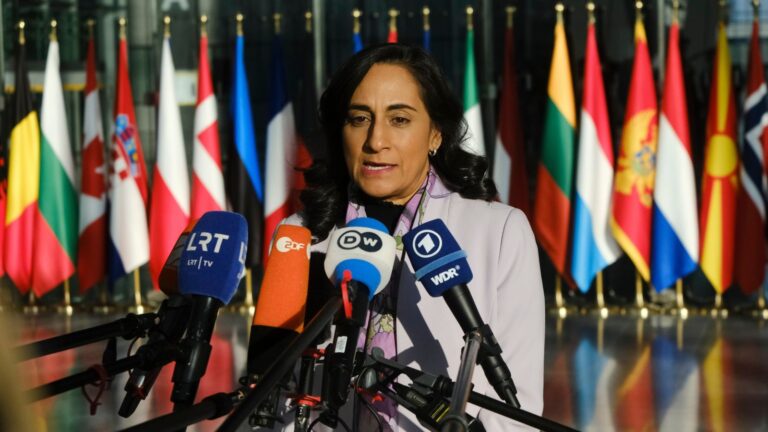
Canada is moving to reshape its economic future as President Donald Trump’s tariffs continue to strain one of the world’s most important trading relationships. Foreign Affairs Minister Anita Anand says Ottawa has forged 20 new trade and security agreements internationally, marking a significant push to reduce Canada’s dependence on the United States.
Speaking to Reuters on October 31, 2026, Anand described a strategy built around stronger international partnerships, greater economic independence, and new opportunities for Canadian businesses. Prime Minister Mark Carney’s government wants to double Canada’s non-U.S. trade over the next decade, expanding relationships across Europe, Asia, and the Middle East.
But the announcement also raises important questions about how much these agreements will deliver, which markets stand to benefit Canadian exporters, and whether diversification can meaningfully reduce the economic risks created by Washington’s trade policies.
What Anand’s 20 Agreements Actually Represent
Anand Says Canada Has Forged 20 Trade and Security Agreements as Trump’s Tariffs Push Ottawa Beyond the U.S.
- What Anand’s 20 Agreements Actually Represent
- Trump’s Tariffs Have Changed Canada’s Economic Calculations
- The United States Remains Canada’s Most Important Customer
- Ottawa Wants to Double Non-U.S. Exports Within a Decade
- Canada’s Access to 1.5 Billion Consumers Predates the New Deals
- Canada Already Has Trade Agreements With Every Other G7 Country
- Indonesia Offers One of the Clearest Examples of Real Progress
- ASEAN Negotiations Could Open a Much Larger Market
- The Philippines Is Becoming a Strategic Partner Beyond Trade
- India Has Returned to the Centre of Canada’s Trade Strategy
- Europe Is Emerging as a Much Deeper Economic and Security Partner
- The United Arab Emirates Deal Shows How Quickly Trade Ties Can Change
- Qatar Illustrates Why Security and Economic Diplomacy Are Being Linked
- Nordic Cooperation Is Making Arctic Security an Economic Priority
- Technology Partnerships Could Shape Canada’s Next Generation of Exports
- Critical Minerals Are Becoming a Major Source of Canadian Influence
- Energy and Food Exports Give Canada Additional Negotiating Leverage
- Africa and Latin America Are Returning to Ottawa’s Diplomatic Priorities
- Canada’s Ports and Railways Could Determine Whether Diversification Works
- The Real Test Will Be Exports, Investment, and Canadian Jobs
The most important distinction in Anand’s announcement is that Canada has not necessarily signed 20 new free trade agreements. The government’s count covers a wider collection of economic, security, and defence arrangements. These can include formal trade treaties, defence cooperation frameworks, and strategic partnerships intended to strengthen relationships between governments. Their economic significance varies considerably depending on the obligations involved and whether they have entered into force.
That distinction matters because a signed declaration does not automatically eliminate tariffs or create immediate business opportunities. Some arrangements establish the groundwork for future negotiations, while others contain concrete commitments that companies can eventually use. Canada has also been developing several of these relationships for years, meaning the latest agreements cannot all be attributed solely to Trump’s tariff policies. Anand’s announcement demonstrates increased diplomatic activity, but evaluating its success requires examining the substance of individual agreements rather than simply counting how many have been announced.
Trump’s Tariffs Have Changed Canada’s Economic Calculations
The urgency behind Canada’s international trade strategy becomes clearer when examining the damage caused by American tariffs. The Bank of Canada reported in April 2026 that industries facing sector-specific U.S. trade restrictions accounted for approximately 15% of Canadian exports. Steel, aluminum, lumber, and motor vehicle shipments were among the sectors experiencing declines, with steel exports particularly affected by substantial American duties.
For workers in manufacturing communities, these disruptions represent far more than disagreements between politicians. A factory producing automotive components may depend on customers across the border, while a steel producer cannot necessarily replace an established American buyer with an overseas customer. Building new distribution networks takes time, investment, and reliable transportation. Canada’s government has therefore adopted a two-part approach: continuing negotiations with Washington while expanding alternative markets. The strategy cannot immediately reverse tariff-related damage, but it could gradually reduce the consequences of future trade disputes by ensuring Canadian exporters have more places to sell their products.
The United States Remains Canada’s Most Important Customer
Despite Ottawa’s increasingly international outlook, the scale of Canada’s relationship with the United States remains difficult to replicate. Statistics Canada reported that 71.7% of Canadian merchandise exports went to the American market in 2025, down from 75.9% in 2024. The United States also supplied 58.8% of Canada’s merchandise imports that year. These figures illustrate how closely production, transportation, and consumption remain connected across the border.
Geography provides an advantage that distant markets cannot easily match. Manufacturers in southern Ontario can ship components to American assembly plants through established road and rail networks, often as part of production systems that have operated for decades. Exporting those same goods to Asia or Europe can involve ocean transportation, different technical standards, and additional costs. Ottawa’s diversification strategy is therefore unlikely to mean abandoning American trade. Instead, its practical objective is to make Canada less vulnerable when Washington changes trade rules. Even modest reductions in concentration could give businesses additional flexibility during future disputes.
Ottawa Wants to Double Non-U.S. Exports Within a Decade
Prime Minister Mark Carney’s broader economic ambition gives Anand’s diplomatic efforts a measurable objective. The federal government wants to double Canadian exports to markets outside the United States over ten years. Its trade diversification strategy projects approximately $300 billion in additional trade if the target is achieved, making overseas market development a major component of Canada’s long-term economic plans.
The challenge is translating diplomatic access into actual purchases. A company producing agricultural equipment in Saskatchewan may identify promising customers in Southeast Asia, but reaching those customers requires competitive prices, financing, reliable shipping arrangements, and sometimes new product certifications. Government negotiations can remove obstacles, yet businesses still need to establish commercial relationships. Ottawa has proposed additional export support and trade infrastructure investment to help bridge that gap. Whether the government’s target becomes achievable will depend on more than the number of countries signing agreements with Canada. Consistent export growth, stronger investment, and sustained demand for Canadian products will ultimately determine whether the strategy delivers meaningful results.
Canada’s Access to 1.5 Billion Consumers Predates the New Deals
One of the most striking figures associated with Canada’s expanding trade strategy is access to approximately 1.5 billion consumers across 51 countries. The number demonstrates the country’s considerable international reach, but it needs important context. According to federal government reporting, that market access comes from Canada’s established network of 15 free trade agreements. It should not be interpreted as 1.5 billion entirely new consumers gained through Anand’s recently announced agreements.
The distinction highlights both Canada’s existing advantages and its unrealized opportunities. Free trade agreements can reduce import duties, improve regulatory predictability, and give Canadian businesses preferential treatment over competitors from countries without comparable arrangements. However, preferential access does not guarantee commercial success. Canadian exporters must still identify buyers, comply with local requirements, and compete on quality and price. Ottawa’s current negotiations with additional large economies are intended to expand that existing network. Government trade officials have suggested agreements with India, ASEAN, and the Philippines could eventually extend Canada’s preferential reach to roughly three billion consumers, although those negotiations remain unfinished.
Canada Already Has Trade Agreements With Every Other G7 Country
Canada’s diversification strategy is not starting from an empty negotiating table. According to Global Affairs Canada, the country is the only G7 member with comprehensive free trade agreements covering every other G7 economy. Its existing arrangements include the Canada-European Union Comprehensive Economic and Trade Agreement, the Canada-United Kingdom Trade Continuity Agreement, and the Comprehensive and Progressive Agreement for Trans-Pacific Partnership, which connects Canada with major Asian and Pacific economies.
This established network could become increasingly valuable as geopolitical tensions encourage businesses to reconsider their supply chains. A Canadian manufacturer interested in Japan, for example, can already examine preferential treatment available through the Pacific trade agreement instead of waiting for an entirely new treaty. Similarly, exporters looking toward Europe can use provisions under Canada’s existing agreement with the European Union. These arrangements do not eliminate transportation costs or administrative requirements, but they provide a legal foundation for expansion. Anand’s diplomatic strategy aims to build upon these advantages while developing relationships in markets where Canada has historically maintained a smaller commercial presence.
Indonesia Offers One of the Clearest Examples of Real Progress
Indonesia demonstrates what a concrete trade agreement looks like within Canada’s broader international strategy. The Canada-Indonesia Comprehensive Economic Partnership Agreement was signed on September 24, 2025, after negotiations that began in 2021. Canadian Parliament approved the necessary implementing legislation in May 2026, and the government has scheduled the agreement to enter into force on December 1, 2026. Its development therefore predates the latest diplomatic announcements, even as it supports Ottawa’s current diversification objectives.
Indonesia represents an important opportunity because of its large population, expanding economy, and demand for imported goods and services. Federal trade guidance identifies potential benefits for Canadian agriculture, aerospace, clean technology, machinery, mining, and financial services. Once implemented, the agreement is intended to reduce or eliminate selected tariffs while improving conditions for investment and business operations. For Canadian exporters, the difference between a diplomatic promise and an enforceable trade framework is substantial. Indonesia provides an example of a market where detailed legal commitments are moving toward practical implementation rather than remaining solely a negotiating objective.
ASEAN Negotiations Could Open a Much Larger Market
Southeast Asia has become one of the most important targets in Canada’s international trade expansion. Ottawa is negotiating a free trade agreement with the Association of Southeast Asian Nations, a regional grouping of ten countries. The relationship already has considerable economic weight. Global Affairs Canada reported that bilateral merchandise trade between Canada and ASEAN reached $52.5 billion in 2025, an increase of 23.7% from the previous year.
Negotiations have advanced substantially, with International Trade Minister Maninder Sidhu saying in September that more than 90% of the work had been completed. However, the agreement had not yet been finalized as of November 1, making it a prospective achievement rather than an existing free trade treaty. A successful agreement could create opportunities for Canadian agricultural producers, manufacturers, energy companies, and service providers. It could also strengthen supply-chain relationships across countries such as Vietnam, Thailand, Malaysia, and Indonesia. For Canadian businesses seeking alternatives to American customers, the region represents an increasingly important opportunity, although the terms and timing of the eventual agreement remain essential.
The Philippines Is Becoming a Strategic Partner Beyond Trade
Canada’s developing relationship with the Philippines demonstrates how Ottawa is combining economic diplomacy with security cooperation. During Philippine President Ferdinand Marcos Jr.’s visit to Vancouver in July 2026, the two countries announced an expanded strategic partnership covering trade, energy, defence, tourism, and natural resources. Canadian officials identified a bilateral free trade agreement as a major priority, with negotiations intended to conclude before the end of the year.
The relationship also has a substantial human dimension. More than one million Filipino Canadians provide enduring personal, cultural, and commercial connections between the countries. Bilateral merchandise trade reached approximately $3.4 billion in 2025, creating a foundation for further growth. Beyond trade negotiations, Canada and the Philippines have pursued arrangements involving military logistics, defence cooperation, and maritime security. Agreements concerning tourism, cultural exchange, and labour mobility add further depth. These initiatives matter because stronger economic relationships often depend on trust built through cooperation in other areas. Still, the proposed free trade agreement remains separate from the strategic arrangements already announced, and its eventual benefits will depend on successfully completing negotiations.
India Has Returned to the Centre of Canada’s Trade Strategy
India represents one of the largest potential opportunities in Canada’s diversification plans. After a period of serious diplomatic strain, the two governments have renewed high-level engagement and resumed efforts toward a comprehensive economic partnership agreement. On October 30, Anand met Indian External Affairs Minister Subrahmanyam Jaishankar during the G20 foreign ministers’ gathering in Atlanta. Canadian officials reported continued progress toward concluding negotiations before the end of 2026.
The economic incentives are substantial. Global Affairs Canada recorded $30.4 billion in two-way goods and services trade with India during 2025, while both governments have expressed an ambition to increase annual bilateral trade to $70 billion by 2030. Potential areas for expansion include energy, critical minerals, agriculture, aerospace, artificial intelligence, and education-related services. However, restoring diplomatic momentum does not automatically resolve the complexities of trade negotiations. Market access, regulatory differences, and sensitive domestic industries still require careful handling. A completed agreement would represent a major development, but Ottawa must distinguish between a political commitment to reach a deal and a finalized treaty with enforceable provisions.
Europe Is Emerging as a Much Deeper Economic and Security Partner
Canada’s relationship with the European Union has developed beyond its existing trade agreement into a broader partnership covering economic security, technology, and defence. During the October 29–30 Canada-EU summit in Montréal, leaders launched an Alliance for the Future intended to deepen cooperation across several strategic sectors. The European Union was already Canada’s second-largest trading partner for goods and services, with approximately $178 billion in bilateral trade during 2025.
A particularly important development is Canada’s participation in the European Union’s Security Action for Europe initiative, known as SAFE. Canada joined in February 2026, becoming the first non-European participant and creating new opportunities for Canadian defence suppliers. Officials have also discussed an unprecedented form of closer association between Canada and the EU, although its scope and legal structure remain to be determined. For Canadian businesses, the significance lies in connecting established trade access with additional opportunities in defence manufacturing, energy, critical minerals, and advanced technology. Europe cannot replace the United States overnight, but deeper industrial cooperation could make it a more influential economic partner over time.
The United Arab Emirates Deal Shows How Quickly Trade Ties Can Change
One of Canada’s newest international agreements involves the United Arab Emirates. On October 27, 2026, Canadian and Emirati officials signed a Comprehensive Economic Partnership Agreement after negotiations completed in just 47 days. Once fully implemented, the agreement is expected to reduce or eliminate tariffs on more than 99% of current Canadian exports to the UAE. The agreement has been signed but is not yet in force, with implementation expected in 2027.
The UAE is already an important Middle Eastern market for Canadian businesses, with bilateral merchandise trade valued at approximately $3.5 billion in 2025. The relationship also includes a major Emirati investment commitment of $70 billion to Canada, alongside expanded cooperation in defence, energy, and technology. Canadian agriculture, aerospace, industrial machinery, and energy businesses could benefit from greater commercial access. However, investment commitments should not be confused with money already spent or projects already completed. The agreement provides a tangible example of Canada’s ability to negotiate new commercial arrangements, while its long-term impact will depend on implementation and private-sector investment decisions.
Qatar Illustrates Why Security and Economic Diplomacy Are Being Linked
Canada’s relationship with Qatar highlights another dimension of Anand’s international strategy. During Prime Minister Carney’s January 2026 visit to Doha, the two governments announced measures designed to strengthen investment, trade, defence, and technology cooperation. They also established a joint mechanism for economic, commercial, and technical cooperation. In May, Anand and Qatari officials signed an additional memorandum establishing a ministerial-level strategic dialogue covering security, defence, and economic matters.
Unlike a conventional free trade agreement, these arrangements focus largely on building institutional relationships and creating opportunities for future cooperation. Qatar has expressed interest in investing in Canadian infrastructure and strategic industries, while Canada has identified potential opportunities in aerospace, artificial intelligence, agriculture, and advanced manufacturing. Defence cooperation is another priority, including the development of closer military and security relationships. These initiatives could eventually support commercial expansion, particularly where government relationships influence major investment decisions. Nevertheless, their direct economic value remains harder to calculate than a trade agreement that specifies tariff reductions or enforceable market-access commitments.
Nordic Cooperation Is Making Arctic Security an Economic Priority
Anand has also emphasized Canada’s expanding cooperation with Nordic countries, particularly in the Arctic. In March 2026, Canadian and Nordic leaders met in Oslo and committed to strengthening collaboration on defence, security, economic resilience, and Arctic development. The partnership reflects growing international concern about Russian military activity, strategic competition, and the security of northern infrastructure. For Canada, these concerns extend across an enormous region that includes remote communities, valuable natural resources, and important transportation routes.
The practical benefits could reach beyond traditional military cooperation. Canada and Norway have pursued closer relationships involving coast guard activities, Arctic research, maritime surveillance, and emerging technology. The two countries have also discussed expanding defence industrial cooperation, while Nordic partners are working together on energy solutions for northern communities. These activities demonstrate why Ottawa is treating economic security and national defence as increasingly connected issues. Reliable infrastructure, communication networks, and transportation systems support both civilian prosperity and military preparedness. However, meaningful benefits for northern residents will require sustained investment and cooperation with Indigenous communities, not merely additional commitments between national governments.
Technology Partnerships Could Shape Canada’s Next Generation of Exports
Not every agreement in Canada’s diversification strategy concerns physical goods crossing international borders. Ottawa is also developing partnerships involving artificial intelligence, digital infrastructure, cybersecurity, and emerging technologies. One example is the Australia-Canada-India Technology and Innovation Partnership, established in November 2025. The three countries subsequently advanced cooperation on responsible artificial intelligence, including policy development, technical research, and managing potential risks associated with increasingly powerful systems.
These relationships are important because technology companies often face challenges that traditional tariff reductions cannot solve. A Canadian artificial intelligence developer entering a foreign market may encounter different privacy requirements, technical standards, procurement rules, and expectations surrounding the responsible use of automated systems. Government cooperation can help address some of these barriers while supporting research partnerships and commercial connections. Australia and India also offer opportunities to collaborate on semiconductors, communications infrastructure, and other strategically important technologies. The immediate financial benefits may be difficult to measure, but stronger international technology networks could help Canadian businesses remain competitive in industries expected to shape future economic growth.
Critical Minerals Are Becoming a Major Source of Canadian Influence
Canada’s substantial reserves of critical minerals are increasingly central to its international economic strategy. Materials such as nickel, lithium, cobalt, graphite, and rare earth elements are essential for technologies ranging from electric vehicles and batteries to advanced electronics and military equipment. Governments seeking alternatives to concentrated global supply chains have become more interested in countries capable of providing reliable access to these resources. Canada hopes to turn that demand into new investment, processing capacity, and long-term export relationships.
The federal government’s national security strategy, released in October 2026, specifically identifies critical minerals among the capabilities important to Canada’s economic and national security. Yet possessing valuable deposits is only part of the opportunity. Mining projects require substantial financing, infrastructure, environmental assessments, and meaningful consultation with affected Indigenous communities. Canada must also develop more domestic processing capacity if it wants to capture additional economic benefits rather than exporting primarily raw materials. International agreements can encourage investment and cooperation, but turning mineral potential into durable employment and stronger supply chains will take years of coordinated public and private investment.
Energy and Food Exports Give Canada Additional Negotiating Leverage
Canada’s natural resources and agricultural production provide another foundation for trade diversification. European and Asian buyers are looking for dependable sources of energy, food, and industrial inputs, creating potential opportunities for Canadian producers. In October 2026, the proposed Ksi Lisims liquefied natural gas project in British Columbia announced a supply agreement involving Germany’s SEFE for one million tonnes of LNG annually over a period of up to 20 years. Deliveries are expected to begin in the early 2030s, making the arrangement a prospective commercial opportunity rather than an immediate increase in exports.
Agriculture presents a different but equally important opportunity. Canadian producers already sell grain, meat, pulses, and other food products internationally, although access to individual markets can be disrupted by trade restrictions, regulatory requirements, and diplomatic disputes. Stronger relationships with overseas governments may improve conditions for these exporters, especially when accompanied by reliable transportation infrastructure. Neither LNG supply agreements nor agricultural sales should automatically be counted among Anand’s 20 government agreements. Their importance lies in showing how Canada’s broader diplomatic ambitions could translate into commercial activity once companies secure customers and deliver products.
Africa and Latin America Are Returning to Ottawa’s Diplomatic Priorities
Canada is also strengthening relationships in regions that receive less attention than Europe and Asia. During an August 2026 visit to Benin, Anand opened a Canadian embassy in Cotonou and signed a memorandum establishing regular political and diplomatic consultations. The two countries reported bilateral trade of $77.1 million in 2025, an increase of 77% from the previous year. Anand also visited Côte d’Ivoire, where officials agreed to establish a similar consultation mechanism and discussed expanding economic cooperation.
These individual relationships are part of a much larger opportunity. Canada recorded $18.8 billion in merchandise trade with African countries in 2025, while its diplomats and trade commissioners continue developing relationships involving agriculture, infrastructure, critical minerals, and technology. In Latin America, Anand’s July visit to Brazil advanced discussions about trade, investment, security, and a potential Canada-Mercosur free trade agreement. None of these diplomatic initiatives guarantees immediate increases in exports. Nevertheless, they demonstrate a strategy of expanding Canada’s presence in markets where stronger government relationships could eventually help businesses identify customers, attract investment, and establish lasting commercial partnerships.
Canada’s Ports and Railways Could Determine Whether Diversification Works
Signing international agreements is only one part of reaching new markets. Canadian producers also need the infrastructure required to deliver their goods efficiently. Ports, railways, highways, and inland shipping hubs become particularly important when businesses begin exporting to destinations farther away than the United States. Recognizing this challenge, Ottawa has established a $5 billion Trade Diversification Corridors Fund to support improvements to transportation infrastructure and help Canadian companies access overseas customers.
A recent Manitoba initiative illustrates both the possibilities and the uncertainties. On October 26, 2026, Arctic Gateway Group, CentrePort Canada, and DP World announced a memorandum of understanding to explore expanded trade activity through the Port of Churchill and its connecting transportation network. The proposal could strengthen links between Prairie producers and international markets, but no specific investment funding was committed when the memorandum was announced. That distinction matters for communities hoping to benefit from new projects. An exploratory agreement can attract interest and encourage planning, but actual economic benefits require financing, construction, reliable operations, and sufficient demand from exporters. Canada’s transportation capacity may ultimately be as important as its diplomatic relationships.
The Real Test Will Be Exports, Investment, and Canadian Jobs
Anand’s announcement comes as Canadian trade patterns are already changing. Global Affairs Canada’s 2026 State of Trade report found that Canadian goods and services exports to non-U.S. markets increased by 11.1% in 2025. Statistics Canada has since reported that merchandise exports to countries outside the United States continued rising in the first half of 2026. These figures provide evidence of diversification, although much of the earlier growth came from commodities such as gold and energy rather than newly negotiated trade agreements.
The challenge for Ottawa is turning that momentum into sustained, broadly distributed economic gains. The Bank of Canada has observed that exporters are generally finding it easier to expand relationships with established overseas customers than to enter unfamiliar markets. Meanwhile, Global Affairs Canada faces planned staffing and spending reductions even as its international responsibilities grow. Those pressures make execution especially important. Canadians will ultimately judge the strategy through factory investment, new customers for farmers and exporters, reliable employment, and greater protection against future trade disruptions. The 20 agreements may signal a significant diplomatic shift, but their lasting value will depend on what businesses and communities can accomplish with them.
This Options Discord Chat is The Real Deal
While the internet is scoured with trading chat rooms, many of which even charge upwards of thousands of dollars to join, this smaller options trading discord chatroom is the real deal and actually providing valuable trade setups, education, and community without the noise and spam of the larger more expensive rooms. With a incredibly low-cost monthly fee, Options Trading Club (click here to see their reviews) requires an application to join ensuring that every member is dedicated and serious about taking their trading to the next level. If you are looking for a change in your trading strategies, then click here to apply for a membership.