35,000+ smart investors are already getting financial news, market signals, and macro shifts in the economy that could impact their money next with our FREE weekly newsletter. Get ahead of what the crowd finds out too late. Click Here to Subscribe for FREE.
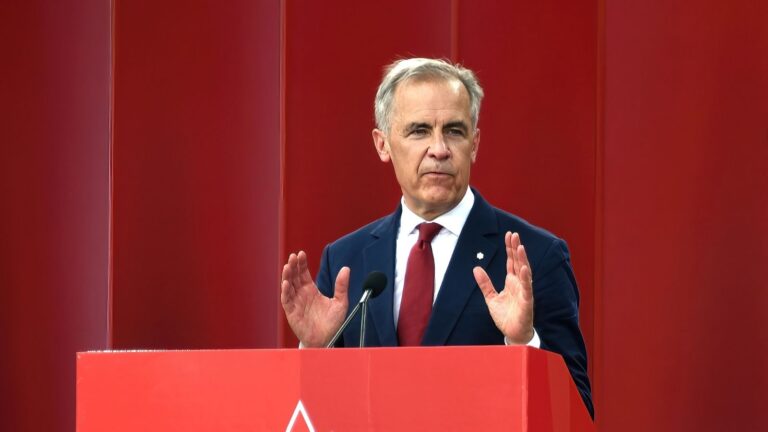
Prime Minister Mark Carney’s Liberals have drawn a firm line around one of Canada’s most contentious energy policies, helping defeat a Conservative attempt to repeal the federal oil tanker moratorium on British Columbia’s North Coast. Bill C-264 failed at second reading in the House of Commons on October 28, with only Conservative MPs supporting its advance to committee.
The vote keeps the 2019 Oil Tanker Moratorium Act intact at a moment when Ottawa is simultaneously pushing for dramatically more Canadian oil to reach overseas buyers. That apparent contradiction sits at the heart of the dispute. Conservatives argue the North Coast should be opened to additional export routes, while Carney’s government says Canada can expand Pacific energy exports through a southern corridor without reopening the politically and environmentally sensitive waters around northern B.C.
What the House Actually Voted Down
Carney’s Liberals Vote Down Conservative Bill to Lift B.C. Oil Tanker Ban
- What the House Actually Voted Down
- The Tanker Ban Is Narrower Than the Political Shorthand Suggests
- Conservatives Made the Ban a Test of Carney’s Energy Agenda
- Strathcona’s 250,000-Barrel-a-Day Pitch Raised the Stakes
- Carney Had Already Promised B.C. the Ban Would Stay
- Pacific Link Gives the Liberals a Different Route to Asia
- B.C.’s New Conservative Government Is Not Rushing to Reopen the North Coast
- Coastal First Nations Remain a Major Barrier to Any Northern Oil Route
- Canada Is Already Diversifying Oil Exports — but the U.S. Still Dominates
- The Ban Survives, but the Political Fight Is Far From Finished
Bill C-264 was a remarkably short piece of legislation with a potentially large impact. Sponsored by Calgary Signal Hill Conservative MP David McKenzie and first introduced in March 2026, the bill proposed repealing the Oil Tanker Moratorium Act entirely. The House was therefore not voting on whether to approve a particular pipeline, terminal or tanker route. MPs were deciding whether the statutory prohibition itself should survive.
After the final second-reading debate, the vote was deferred until October 28. MPs then divided largely along party lines, with only Conservatives voting to send the legislation to committee. Carney was present for the vote. The defeat stopped C-264 before the committee stage, where MPs could otherwise have heard witnesses and considered amendments. Conservatives had signalled that although they preferred complete repeal, they were prepared to discuss narrower changes that could accommodate emerging export proposals. For now, however, the law remains intact and any major North Coast crude-export proposal must operate within its restrictions or wait for Parliament to change them.
The Tanker Ban Is Narrower Than the Political Shorthand Suggests
Calling the measure simply a “tanker ban” can make it sound broader than it actually is. The Oil Tanker Moratorium Act received royal assent on June 21, 2019 and applies to ports and marine installations along northern British Columbia, including Haida Gwaii and waters such as Dixon Entrance, Hecate Strait and Queen Charlotte Sound. It prohibits tankers carrying more than 12,500 metric tonnes of crude oil or designated persistent oils from stopping, loading or unloading within the covered area.
Smaller petroleum shipments remain possible, an important exemption for isolated northern communities and industries that require fuel deliveries. The legislation also does not prohibit products such as liquefied natural gas simply because they travel through northern B.C. waters. That distinction matters because Prince Rupert, Kitimat and surrounding areas are already major centres for other forms of energy and commodity exports. Transport Canada says the legislation complements a voluntary offshore tanker exclusion zone that has existed since 1985. In practical terms, C-264 would have removed a specific restriction on large crude and persistent-oil cargoes rather than deregulating marine shipping generally.
Conservatives Made the Ban a Test of Carney’s Energy Agenda
For Pierre Poilievre and his caucus, the tanker vote offered a straightforward political argument: a government promising to turn Canada into an “energy superpower” should not simultaneously block one possible route to Asian buyers. During debate, Conservative MPs repeatedly linked repeal to trade diversification, higher competition for Canadian crude and reduced reliance on U.S. refineries. They also argued that northern proposals should be judged individually through environmental and regulatory reviews rather than ruled out in advance by statute.
There is a measurable economic issue underneath that political message. Canada remains extraordinarily dependent on the American market for crude exports. Canada Energy Regulator data show the country exported about 4.3 million barrels of crude per day in 2025, with roughly 90.1% going to the United States. That concentration has already begun declining as the Trans Mountain expansion provides greater access to Pacific buyers, but the United States remains overwhelmingly dominant. Conservatives therefore see North Coast access as another lever for creating buyer competition. The Liberal disagreement is less about whether exports should diversify than about whether northern B.C. needs to be part of that diversification.
Strathcona’s 250,000-Barrel-a-Day Pitch Raised the Stakes
The debate became considerably more immediate when Calgary-based Strathcona Resources floated a plan to move Canadian crude by rail to Prince Rupert. Company chairman Adam Waterous said the concept could support exports of as much as 250,000 barrels per day through a new marine terminal, using existing rail infrastructure to bring crude toward the coast. Strathcona has argued that the approach could potentially begin moving oil overseas much sooner than a completely new long-distance pipeline.
That proposal gave Conservatives something more tangible than an abstract argument about future market access. They pointed to Strathcona as evidence that private-sector capital was interested in using the North Coast now, not decades from now. But the proposal remains just that — a proposal. A new terminal would still require extensive regulatory review, environmental assessment where applicable, infrastructure work and Indigenous engagement. Repealing the moratorium would remove one major statutory obstacle, but it would not amount to project approval. Strathcona’s own timeline and export capacity are company estimates rather than approved operating commitments. The vote therefore closed one door without settling whether the underlying commercial idea is otherwise viable.
Carney Had Already Promised B.C. the Ban Would Stay
The Liberal position was also constrained by a major agreement Carney signed only months earlier. On July 2, Ottawa and then-B.C. premier David Eby announced the Canada-British Columbia Cooperative Prosperity Agreement, a wide-ranging package covering energy, infrastructure, trade corridors, environmental protection and First Nations participation. Embedded in that agreement was an unusually explicit commitment from Canada to maintain the federal North Coast tanker ban without alteration, suspension or a narrowing of its scope.
That commitment was part of a larger political bargain. British Columbia agreed to engage constructively with a proposed new interprovincial oil pipeline even though Eby’s government did not actively seek the project. In exchange, Ottawa accepted conditions intended to address B.C.’s environmental, economic and political concerns, including North Coast protection, consultation with First Nations and a future framework for sharing economic benefits. Supporting C-264 only a few months later would therefore have put Carney in direct conflict with a written federal commitment. The October vote effectively reinforced the architecture of that July deal rather than reopening it.
Pacific Link Gives the Liberals a Different Route to Asia
The strongest Liberal answer to accusations that Ottawa is blocking oil exports is Pacific Link. On October 1, Carney formally listed the proposed West Coast pipeline as a project of national interest. The project is being developed around a southern B.C. route, largely following an established transportation corridor toward the Delta area rather than terminating on the North Coast. Federal plans envision capacity of up to one million barrels per day, significantly larger than the volume proposed in Strathcona’s Prince Rupert concept.
Ottawa argues that this approach can deliver the export diversification Conservatives want without overturning the northern tanker moratorium. The Major Projects Office is leading the federal process with support from the Canada Energy Regulator, while the project concept continues through route development, environmental work, Indigenous consultation and commercial planning. Carney’s government has described the North Coast protection and the southern pipeline as parts of the same strategy rather than opposing policies. Whether Pacific Link ultimately reaches construction remains a separate question, but politically it allows Liberals to say they voted against one export corridor while actively backing another with potentially four times Strathcona’s proposed daily capacity.
B.C.’s New Conservative Government Is Not Rushing to Reopen the North Coast
The politics became more complicated after British Columbia’s October 24 election. Lorne Doerkson’s provincial Conservatives defeated Eby’s NDP and won roughly two-thirds of the legislature’s 93 seats, creating an obvious question: would a Conservative government in Victoria now join federal Conservatives and Alberta in demanding repeal of the tanker restrictions?
So far, Doerkson has taken a more cautious position. Asked about the federal push to overturn the ban, the premier-designate did not endorse the effort and instead emphasized the Pacific Link project already moving forward on the southern route. During the provincial campaign, he similarly expressed concern about the tanker restriction without committing to simply abolishing it, saying economic development and coastal protection should not be treated as mutually exclusive. The distinction is important. Federal Conservatives can make repeal a national energy and market-access issue; a B.C. premier must also manage coastal communities, environmental concerns, Indigenous relationships and the consequences of additional marine traffic. A Conservative victory in Victoria therefore has not automatically produced a united Conservative position on the North Coast.
Coastal First Nations Remain a Major Barrier to Any Northern Oil Route
No serious assessment of the tanker dispute can ignore opposition from Coastal First Nations. The Coastal First Nations-Great Bear Initiative, representing communities on B.C.’s central and northern coast, has repeatedly defended the moratorium and welcomed the Carney-Eby commitment to preserve it. Its leadership argues that the region’s fisheries, tourism, cultural resources and broader marine economy would face unacceptable risk from a major crude-oil spill.
The economic argument is not limited to petroleum development. The B.C. government said this summer that the North Coast’s sustainable marine economy generates more than $3 billion annually and that as much as 30% of employment in the region is connected directly to the coastal economy. Coastal First Nations says its conservation-economy work has supported more than 1,400 jobs and roughly 140 businesses over the past quarter-century. Those figures help explain why the debate cannot be reduced to jobs versus environmental protection; competing industries and communities view the same coastline as an economic asset. Any future government considering a northern crude route would also have to address Indigenous rights and consultation obligations, not simply change a shipping statute.
Canada Is Already Diversifying Oil Exports — but the U.S. Still Dominates
The economic case for diversification has strengthened as trade tensions with Washington have highlighted Canada’s dependence on a single customer. Canada Energy Regulator figures put 2025 crude exports at about 4.3 million barrels per day, roughly 3.9 million of which went to the United States. Statistics Canada, using its broader crude-oil-and-equivalent measure, also found a sharp increase in shipments to non-U.S. destinations after the Trans Mountain expansion entered service.
That shift is significant because it shows overseas market access can materially change trade patterns. Statistics Canada reported that non-U.S. crude and equivalent exports more than doubled in 2025, while U.S.-bound volumes declined. The question raised by C-264 is therefore not whether diversification works; recent data suggest that it does. The disagreement is over how much additional infrastructure Canada needs, how quickly it can be built and which coastal regions should carry the environmental and marine-traffic risks associated with greater export capacity. Conservatives want another opening at Prince Rupert. Carney is betting that southern B.C. can provide the additional Pacific access Canada needs without reopening the North Coast.
The Ban Survives, but the Political Fight Is Far From Finished
The October 28 vote settles Bill C-264, but it does not permanently settle the tanker issue. Transport Canada has explicitly noted that changing or repealing the Oil Tanker Moratorium Act ultimately requires a decision by Parliament. A future government with enough support in the House and Senate could try again, while a narrower amendment or project-specific legislative approach could also revive the debate in a different form.
For the immediate future, the more consequential developments are likely to happen outside C-264. Strathcona can continue trying to convince Ottawa that its Prince Rupert concept deserves a legal pathway. Doerkson’s incoming B.C. government will have to decide how aggressively it wants to revisit the previous government’s North Coast commitments. Alberta will continue pressing for greater access to global oil buyers, while Ottawa will be under pressure to prove that Pacific Link can actually move from political announcement to construction. Carney’s Liberals have preserved the tanker ban, but they have also increased the stakes for their alternative: if Canada is going to keep the northern door closed, the government now has more reason to demonstrate that its southern route can deliver.
This Options Discord Chat is The Real Deal
While the internet is scoured with trading chat rooms, many of which even charge upwards of thousands of dollars to join, this smaller options trading discord chatroom is the real deal and actually providing valuable trade setups, education, and community without the noise and spam of the larger more expensive rooms. With a incredibly low-cost monthly fee, Options Trading Club (click here to see their reviews) requires an application to join ensuring that every member is dedicated and serious about taking their trading to the next level. If you are looking for a change in your trading strategies, then click here to apply for a membership.