35,000+ smart investors are already getting financial news, market signals, and macro shifts in the economy that could impact their money next with our FREE weekly newsletter. Get ahead of what the crowd finds out too late. Click Here to Subscribe for FREE.
Canada has put a firm date on one of the clearest pieces of Prime Minister Mark Carney’s trade-diversification strategy. Canadian and Turkish negotiators will meet in Ankara from November 30 to December 4, 2026, for the first formal round of negotiations toward a comprehensive free trade agreement.
The timing carries significance beyond the size of the Canada–Türkiye relationship. Carney is trying to build more economic options as Canada navigates a bruising trade dispute with President Donald Trump’s United States, still by far its most important export market. His first bilateral visit to Türkiye by a Canadian prime minister produced a wider three-year strategic partnership covering trade, energy, defence and transportation. The November negotiations will test whether that diplomatic reset can now be converted into measurable commercial gains.
A Date on the Calendar Turns Diplomacy Into Negotiations
Carney Confirms November 30 Trade Talks With Türkiye as Canada Looks Beyond Trump’s America
- A Date on the Calendar Turns Diplomacy Into Negotiations
- Türkiye Offers Scale Canada Has Barely Tapped
- The U.S. Shock Is Giving Diversification New Urgency
- Agriculture and Aerospace Give Negotiators a Starting Point
- Energy and Nuclear Cooperation Could Become the Bigger Prize
- Defence Cooperation Marks a Significant Political Reset
- More Flights and Export Financing Expand the Opportunity
- The Relationship Comes With Economic and Political Risks
- November 30 Is a Beginning, Not the Finish Line
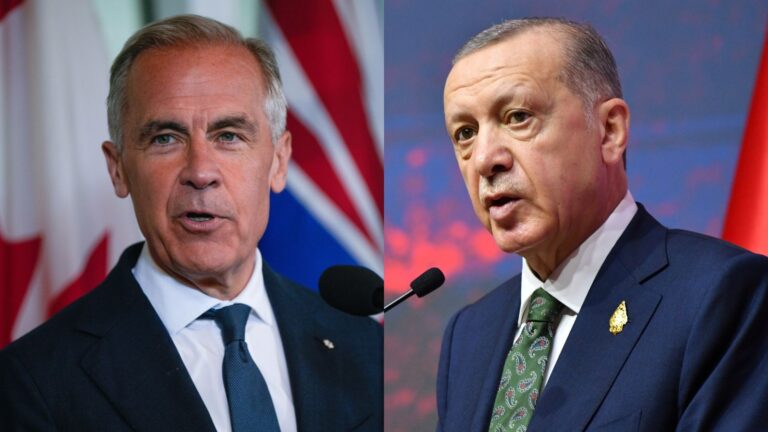
The November 30 meeting is the product of months of preparation rather than a sudden agreement reached during Carney’s trip. Canada and Türkiye announced their intention to pursue an FTA in July 2026, when Carney and Turkish President Recep Tayyip Erdoğan met around the NATO summit in Ankara. Ottawa subsequently held public consultations from July 31 through September 14 and formally notified Parliament on September 21 of its intention to begin negotiations.
Carney’s October visit moved the process into its next phase. The two governments launched a strategic partnership supported by a three-year action plan covering trade and investment, defence and security, energy, and people-to-people links. Importantly, November 30 is the beginning of negotiations rather than the signing of a trade deal. Canadian and Turkish officials still need to work through issues ranging from tariffs and product standards to services, investment and rules of origin. For Canadian businesses, however, having negotiators scheduled in the same room gives the initiative a level of credibility that political declarations alone cannot provide.
Türkiye Offers Scale Canada Has Barely Tapped
Türkiye already represents a multibillion-dollar trading relationship, although it remains small compared with Canada’s commercial ties with the United States, Europe or China. Two-way merchandise trade reached more than C$4.3 billion in 2025. Canadian exports accounted for about C$1.1 billion, while imports from Türkiye were approximately C$3.2 billion. Ottawa says bilateral trade has increased by almost 50% since 2020, creating a larger base from which negotiators can work.
The attraction also lies in Türkiye itself. With a population above 85 million, a large industrial sector and a geographic position connecting Europe, Asia and the Middle East, the country offers access to customers and supply chains far removed from Canada’s traditional North American routes. Türkiye maintains a network of 24 free trade agreements of its own. That does not mean Canadian products could simply enter Türkiye and automatically receive preferential access elsewhere—rules of origin would prevent such a shortcut—but it does make Turkish manufacturers potential partners in internationally connected supply chains. For Ottawa, that combination of domestic scale and geographic reach helps explain why Ankara has moved up the diversification agenda.
The U.S. Shock Is Giving Diversification New Urgency
No agreement with Türkiye is capable of replacing the American market, and Ottawa’s own numbers make that clear. The United States still absorbed 71.7% of Canadian merchandise exports in 2025 on a balance-of-payments basis. Yet that was down from 75.9% a year earlier, while Canadian goods exports to non-U.S. destinations jumped 17.2%. The shift was large enough to push America’s share of Canadian exports to its lowest level since the early 1980s.
Trump’s second presidency has turned diversification from a long-running policy aspiration into an economic-security issue. Canada and the United States entered another major tariff confrontation in 2026, with Ottawa announcing dollar-for-dollar retaliation after Washington moved to impose a 50% tariff on roughly C$28 billion of Canadian goods in August. On October 23, Trump said Canada was working hard for a U.S. deal and declared that Washington held “all the cards.” Carney’s response has been to argue that Canada needs more leverage through more markets. His government has set a goal of doubling exports to non-U.S. destinations over the coming decade, making Türkiye one part of a much broader effort rather than a substitute for America.
Agriculture and Aerospace Give Negotiators a Starting Point
The existing trade mix shows where Canadian exporters may see some of the earliest opportunities. In 2025, Canada sold roughly C$287 million in agri-food products to Türkiye, C$273 million in aircraft and other transportation equipment, and C$151 million in industrial machinery. At a more detailed level, lentils alone accounted for about C$173 million of Canadian exports, while aircraft contributed roughly C$161 million. Those are established commercial channels rather than hypothetical markets waiting to be discovered.
A free trade agreement could make those relationships easier to expand if negotiators succeed in reducing both tariffs and administrative barriers. Canada’s published negotiating objectives include tariff elimination, simpler customs procedures, predictable rules of origin, science-based sanitary and phytosanitary measures, and disciplines covering technical barriers to trade. Ottawa also wants provisions for services, investment, digital commerce and the temporary movement of business people. At the same time, Canada has already declared some defensive lines: its negotiating mandate says it will not provide additional access to supply-managed dairy, poultry and egg markets. The talks therefore begin with both offensive opportunities and politically sensitive areas clearly identified.
Energy and Nuclear Cooperation Could Become the Bigger Prize
Some of the most valuable opportunities may emerge outside traditional merchandise trade. Canada and Türkiye signed a new energy cooperation statement covering liquefied natural gas, civilian nuclear technology, renewable power, clean technologies and critical minerals. Türkiye is a major energy importer seeking to diversify supply, while Canada is attempting to turn its resource base and engineering expertise into a larger international commercial presence.
Nuclear power provides a concrete example. Carney said Canadian engineering group AtkinsRéalis has a serious opportunity to participate in Türkiye’s nuclear expansion, and the company is conducting a feasibility study involving CANDU technology for a possible project at Sinop on the Black Sea coast. Türkiye is already developing the Russian-backed Akkuyu nuclear station and plans additional generating capacity as electricity demand grows. Winning a large nuclear project would be far more economically significant than simply selling another shipment of goods: it could involve engineering services, reactor technology, financing, long-term maintenance and local supply-chain partnerships lasting decades. That is why the strategic partnership’s energy component may ultimately matter as much as the tariff negotiations themselves.
Defence Cooperation Marks a Significant Political Reset
The defence relationship is particularly notable because Canada and Türkiye have not always been comfortable partners in this area. Ottawa suspended or restricted military-export approvals beginning in 2019 and later cancelled permits after Canadian authorities found credible evidence that Canadian-made sensor technology had been used on Turkish-produced drones deployed in the Nagorno-Karabakh conflict. The episode became a serious irritant between two NATO allies and demonstrated how quickly commercial defence relationships can collide with foreign-policy concerns.
Canada changed its approach in January 2024, ending its presumptive-denial policy and returning Turkish military-export applications to case-by-case assessment under Canada’s Arms Trade Treaty obligations and domestic export-control law. The relationship has since moved considerably further. Canada and Türkiye signed a defence cooperation statement in July 2026, followed in October by a memorandum intended to connect their defence industries more directly. Ottawa sees potential in areas where Turkish firms have developed considerable expertise, including unmanned systems and naval technology. Still, defence trade will remain subject to Canadian export controls, end-use assurances and political scrutiny, meaning the new partnership does not amount to a blank cheque for military sales.
More Flights and Export Financing Expand the Opportunity
Trade agreements are considerably less useful when companies cannot move people, cargo or financing efficiently. Canada and Türkiye therefore paired the FTA initiative with an expanded air transport agreement. The arrangement raises permitted passenger-combination services from 12 to as many as 21 weekly flights for each country and removes weekly limits on all-cargo services. For families and tourists, that means more potential travel capacity. For businesses, it can mean more direct options for time-sensitive cargo, executive travel and commercial connections.
A second agreement reaches even farther geographically. Export Development Canada and Türk Eximbank signed a memorandum aimed at supporting Canadian and Turkish companies pursuing projects together in third countries. Turkish officials highlighted opportunities across Africa, the Middle East and North Africa, and Central Asia, while Carney pointed to sectors such as energy, infrastructure, transportation, mining and critical minerals. That arrangement illustrates the larger Canadian strategy behind the Türkiye relationship. Ottawa is not interested only in selling Canadian products to Turkish consumers. It also wants Canadian companies to use partnerships with Turkish firms to compete for projects in markets where those firms already possess relationships, experience and regional reach.
The Relationship Comes With Economic and Political Risks
There are clear reasons for caution alongside the enthusiasm. Canada currently runs a substantial merchandise trade deficit with Türkiye: exports of C$1.1 billion in 2025 compared with C$3.2 billion in imports. The stock of Canadian direct investment in Türkiye stood at about C$3.3 billion in 2025, down nearly 20% from a year earlier. Türkiye also continues to operate in a high-inflation environment. IMF projections in 2026 still showed consumer-price increases running at levels far above those in Canada, while international economic assessments have warned about currency, energy-price and inflation risks.
Politics adds another layer. Human-rights organizations have documented pressure on journalists, opposition politicians, civil-society groups and LGBTQ+ activists in Türkiye. Canadian Foreign Affairs Minister Anita Anand raised human rights with her Turkish counterpart during the visit, and Carney later said Canadian officials had specifically discussed LGBTQ+ rights. Those differences are unlikely to disappear because trade relations are improving. They instead create a balancing problem for Ottawa: Carney wants closer relationships with influential middle powers without suggesting that strategic or commercial cooperation means endorsing every domestic policy of those governments. That tension could periodically resurface as the partnership grows.
November 30 Is a Beginning, Not the Finish Line
The first negotiating round will show how much political momentum can survive contact with technical trade policy. Canada has already published an ambitious agenda spanning goods, services, digital commerce, labour, environmental standards, customs, regulatory barriers and dispute settlement. Even when governments broadly agree on the benefits of an FTA, settling those chapters can require multiple rounds of negotiations, followed by legal review, signature and domestic approval procedures. Canada has committed to table any eventual final agreement in Parliament together with an economic impact assessment.
There are nevertheless signs that both governments want the commercial relationship to move quickly. Erdoğan has publicly discussed raising bilateral trade first toward US$5 billion and eventually US$10 billion, while Canada plans a minister-led trade mission to Türkiye in 2027. The larger significance of November 30, therefore, is not that Canada has found an alternative to the United States. Geography, infrastructure and decades of integrated supply chains make that unrealistic. What Carney is trying to build instead is a Canada with more bargaining power, more customers and more strategic options. Türkiye is about to become one of the first serious tests of whether that strategy can work in practice.
This Options Discord Chat is The Real Deal
While the internet is scoured with trading chat rooms, many of which even charge upwards of thousands of dollars to join, this smaller options trading discord chatroom is the real deal and actually providing valuable trade setups, education, and community without the noise and spam of the larger more expensive rooms. With a incredibly low-cost monthly fee, Options Trading Club (click here to see their reviews) requires an application to join ensuring that every member is dedicated and serious about taking their trading to the next level. If you are looking for a change in your trading strategies, then click here to apply for a membership.