35,000+ smart investors are already getting financial news, market signals, and macro shifts in the economy that could impact their money next with our FREE weekly newsletter. Get ahead of what the crowd finds out too late. Click Here to Subscribe for FREE.
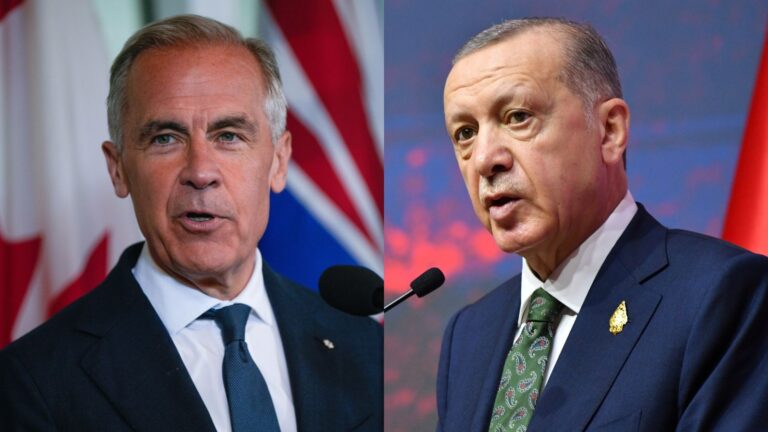
A Canadian nuclear technology that once appeared to have little chance of landing a major Turkish contract is suddenly being discussed as a serious contender. Prime Minister Mark Carney said Friday that AtkinsRéalis and its CANDU technology now have “good chances” as Türkiye weighs partners for the next stage of its ambitious nuclear expansion.
The opportunity arrives at a particularly important moment for Ottawa. Canada is trying to build deeper commercial relationships outside the United States as trade tensions with President Donald Trump’s administration continue to reshape the country’s economic strategy. In Türkiye, that search is producing something more substantial than a diplomatic visit: nuclear negotiations, free-trade talks, energy cooperation and a broader strategic partnership that could give Canadian companies a much larger foothold in a market Ottawa has historically underdeveloped.
A Bid That Looked Unlikely a Year Ago
Carney Says Canadian Nuclear Bid Has ‘Good Chances’ in Turkey as Ottawa Searches for Business Beyond Trump’s U.S.
- A Bid That Looked Unlikely a Year Ago
- Türkiye Has Much Bigger Nuclear Ambitions Than Akkuyu
- CANDU Has Moved From Canadian Pitch to Turkish Due Diligence
- Canada Is Up Against Some of the World’s Biggest Nuclear Players
- Nuclear Is Part of a Much Larger Canada–Türkiye Reset
- Trump-Era Trade Pressure Is Changing Ottawa’s Economic Calculus
- A Turkish Opening Comes With Political Complications
- The Next Few Months Could Show Whether the Strategy Produces Contracts
Carney’s assessment in Istanbul was striking because of how openly he described the change in Canada’s position. Asked about Canadian participation in Türkiye’s planned nuclear expansion, he said the odds would have been considered “very low” roughly a year earlier. Now, he said, Canada has “good chances,” while acknowledging that the competition remains serious and that the ultimate decision belongs to the Turkish government. A decision on at least part of the nuclear program could come before the end of 2026.
AtkinsRéalis, through its Candu Energy subsidiary, has spent much of the year moving closer to the Turkish nuclear establishment. In March, Candu Energy signed a memorandum of understanding with Türkiye Nuclear Energy Company, known as TÜNAŞ, to assess the suitability of CANDU technology for Turkish sites. The work goes beyond simply comparing reactor specifications. The agreement covers licensing, financing structures, project delivery, localization, workforce requirements and potential ownership models. That matters because Türkiye is looking for more than imported hardware. Ankara wants technology that can fit into a domestic industrial strategy and involve Turkish construction companies, suppliers and workers.
Türkiye Has Much Bigger Nuclear Ambitions Than Akkuyu
Türkiye’s nuclear plans extend far beyond the massive Akkuyu project now nearing start-up on the Mediterranean coast. Akkuyu consists of four Russian-designed VVER-1200 reactors with roughly 4.8 gigawatts of total capacity. The project grew from a 2010 agreement with Russia and is being developed by Rosatom, Russia’s state nuclear corporation. The first unit is moving through commissioning, while Turkish officials are planning additional large nuclear stations at Sinop on the Black Sea and in the Thrace region.
The scale explains why suppliers from several countries are paying attention. Ankara has set a long-term goal of reaching roughly 20 gigawatts of nuclear capacity by 2050, with 12 conventional large reactors envisioned across Akkuyu, Sinop and Thrace, alongside approximately five gigawatts of small modular reactors. Sinop is already considerably advanced from a regulatory perspective: Türkiye’s nuclear regulator approved its site in 2024, although a reactor technology and construction partner have not yet been selected. For Türkiye, nuclear is being positioned as part of both energy security and its 2053 net-zero ambitions. For Canada, that creates an opportunity measured in decades rather than a single equipment sale.
CANDU Has Moved From Canadian Pitch to Turkish Due Diligence
Canada’s strongest argument is that CANDU is not an experimental platform waiting for its first commercial demonstration. The technology has decades of operating history, with reactors built in Canada and overseas markets including Romania, South Korea, China and Argentina. CANDU reactors use heavy water as coolant and moderator and can operate with natural uranium fuel. Their design also permits refuelling while the reactor is operating, rather than requiring a shutdown every time fresh fuel is loaded.
Türkiye has been investigating those characteristics directly. In June, Turkish Energy and Natural Resources Minister Alparslan Bayraktar travelled to Romania’s Cernavodă nuclear plant, where Canadian-designed CANDU reactors operate. Turkish officials said the visit was intended to examine the technology in practice while Ankara evaluates safety, costs, fuel supply and waste-management considerations for its future plants. Localization was another major issue raised by Bayraktar. That fits closely with the March AtkinsRéalis-TÜNAŞ agreement, which explicitly includes evaluating Turkish suppliers and workforce development. The Canadian proposal therefore increasingly looks like an industrial partnership pitch rather than a simple reactor export.
Canada Is Up Against Some of the World’s Biggest Nuclear Players
“Good chances” should not be confused with an easy path to a contract. Türkiye has deliberately kept several options alive. South Korea’s KEPCO signed its own nuclear cooperation memorandum with TÜNAŞ in November 2025 covering project development, technology transfer, financing and site evaluation. Ankara has also continued discussions with China, while Russia has expressed interest in applying experience gained at Akkuyu to additional Turkish projects. Previous Japanese involvement at Sinop also demonstrates how long and complicated the competition has been.
That competitive field could ultimately benefit Türkiye because reactor technology is only one component of a modern nuclear proposal. Governments also compare financing, construction schedules, local-content commitments, fuel arrangements, regulatory compatibility and the geopolitical risks created by relying too heavily on any one supplier. Türkiye’s first plant already puts Russia at the centre of its emerging nuclear sector. Choosing a different partner for a future facility could give Ankara greater technological and supply-chain diversity. Canada’s pitch therefore has a strategic element: CANDU offers Türkiye another nuclear ecosystem at a time when energy security increasingly involves the politics of who supplies the technology, fuel, services and long-term maintenance.
Nuclear Is Part of a Much Larger Canada–Türkiye Reset
Carney’s nuclear optimism did not emerge in isolation. During his visit, Canada and Türkiye launched what they called a new strategic partnership built around trade and investment, energy, defence and security, and stronger government-to-government ties. It was the first dedicated bilateral visit to Türkiye by a Canadian prime minister, although Carney had already travelled to Ankara for the NATO Summit in July. The new framework includes cooperation on liquefied natural gas, critical minerals, renewable energy, nuclear power, aerospace and defence production.
The economic relationship is starting from a relatively modest base. Canada and Türkiye recorded more than C$4.3 billion in two-way merchandise trade in 2025. Canadian exports were about C$1.1 billion, including agricultural goods, aircraft and industrial machinery, while imports from Türkiye totalled roughly C$3.2 billion. Bilateral trade has nevertheless grown by close to 50% over five years. The two governments are now moving toward a comprehensive free-trade agreement, with their first formal negotiating round expected in Ankara in November. Ottawa has also announced a Canadian trade mission to Türkiye for 2027.
Trump-Era Trade Pressure Is Changing Ottawa’s Economic Calculus
The Türkiye push makes more sense when viewed against Canada’s changing relationship with its largest customer. The United States remains overwhelmingly Canada’s most important export destination, but that concentration has started to decline. Statistics Canada reported that the U.S. share of Canadian merchandise exports fell from 75.9% in 2024 to 71.7% in 2025. Meanwhile, Canadian merchandise exports to countries other than the United States increased 17.2% in 2025, reaching an annual high.
Those numbers have become central to Carney’s economic strategy as the Trump administration’s tariffs have increased the risks associated with relying so heavily on one market. Ottawa says non-U.S. exports are now on a path to double over the coming decade, and the government has been pursuing trade and investment agreements across Europe, Asia and other emerging markets. Türkiye alone cannot materially replace the United States; its share of Canada’s overall trade remains tiny by comparison. But that is not really the strategy. The goal is to add enough alternative markets, investment relationships and supply chains that future disputes with Washington have less power to disrupt Canadian businesses.
A Turkish Opening Comes With Political Complications
Closer relations with Ankara are not without controversy. Canada and Türkiye have previously clashed over defence exports, and Ottawa maintained a presumptive-denial policy on permits for military goods destined for Türkiye until January 2024. Relations have warmed considerably since then, culminating this year in expanded defence cooperation alongside negotiations over trade and energy. For Carney, Türkiye’s status as a NATO ally, major manufacturing economy and strategically located bridge between Europe, the Middle East and Asia makes the commercial case difficult to ignore.
At the same time, human-rights organizations have raised serious concerns about Turkish government actions involving journalists, political opponents, civil-society organizations and LGBTQ+ groups. During Carney’s visit, Canadian officials said human-rights concerns were raised with Turkish counterparts, and Carney argued that engagement with another government should not be interpreted as approval of all its policies. That tension will continue to shadow the relationship. Ottawa is effectively testing whether it can deepen trade with strategically important countries while still maintaining pressure on issues involving individual rights and democratic institutions.
The Next Few Months Could Show Whether the Strategy Produces Contracts
The clearest test will be Türkiye’s nuclear decision. Carney said an announcement could potentially come before the end of the year, but no Canadian contract has been awarded. Important commercial questions remain, including exactly which site would use Canadian technology, the reactor configuration, project financing, Turkish ownership and localization, and how much of the supply chain would ultimately be Canadian. Large nuclear projects can also take years to move from political support to binding engineering, financing and construction agreements.
Even without an immediate nuclear win, Ottawa has created several follow-on opportunities. Canada and Türkiye are preparing for their first free-trade negotiating round, Export Development Canada and Türk Eximbank are moving toward closer cooperation, a Canadian trade mission is scheduled for 2027, and the new three-year strategic partnership calls for deeper work in energy, defence, advanced technology and investment. A CANDU contract would be the most visible prize, but the larger story is Canada’s effort to turn geopolitical pressure into commercial diversification. If that effort succeeds, Türkiye may become one of the clearest examples yet of how Ottawa intends to build more business beyond an increasingly unpredictable U.S. relationship.
This Options Discord Chat is The Real Deal
While the internet is scoured with trading chat rooms, many of which even charge upwards of thousands of dollars to join, this smaller options trading discord chatroom is the real deal and actually providing valuable trade setups, education, and community without the noise and spam of the larger more expensive rooms. With a incredibly low-cost monthly fee, Options Trading Club (click here to see their reviews) requires an application to join ensuring that every member is dedicated and serious about taking their trading to the next level. If you are looking for a change in your trading strategies, then click here to apply for a membership.