35,000+ smart investors are already getting financial news, market signals, and macro shifts in the economy that could impact their money next with our FREE weekly newsletter. Get ahead of what the crowd finds out too late. Click Here to Subscribe for FREE.
A former tungsten mine in Nevada is moving closer to a potential revival, backed by fresh Canadian financing and growing American interest in securing critical minerals. Toronto-based Blue Moon Metals announced on October 19, 2026, that it had closed a C$35 million investment from U.S.-based The Elmet Group, with the money dedicated to developing the Springer Tungsten Complex.
The financing comes as Washington works to reduce its dependence on foreign tungsten, a metal used in military equipment, aerospace components and industrial machinery. The investment also forms part of a larger proposed US$150 million financing arrangement involving American and Australian partners. For Blue Moon, the closing represents a significant step toward restarting the historic Nevada operation, although production remains subject to additional development work, financing arrangements and technical milestones.
Blue Moon Secures C$35 Million From American Materials Company
Toronto Miner Closes $35 Million Financing With U.S. Partner for Strategic Tungsten Project
- Blue Moon Secures C$35 Million From American Materials Company
- The Investment Gives Elmet Shares, Warrants and Board Influence
- Nevada’s Springer Mine Already Has Infrastructure Worth Reviving
- The C$35 Million Deal Is Part of a Much Larger Investment Plan
- Three Companies Want to Build an Integrated Tungsten Supply Chain
- A US$450 Million American Defence Investment Adds Strategic Importance
- Tungsten Has Become a Critical Concern for North American Manufacturers
- New American Defence Rules Could Increase Demand for Domestic Tungsten
- Exploration Results Are Promising, but Important Technical Questions Remain
- The Canadian Connection Goes Beyond the Size of the Investment
Toronto-based Blue Moon Metals announced on October 19 that it had completed a C$35 million non-brokered private placement with The Elmet Group, an American manufacturer and critical-materials supplier. Elmet purchased 3.5 million investment units at C$10 apiece, providing Blue Moon with gross proceeds of C$35 million. The transaction was originally outlined in September as part of a broader effort to redevelop the Springer Tungsten Complex near Imlay, Nevada. Blue Moon trades on the TSX Venture Exchange under MOON and on Nasdaq under BMM.
The company says the net proceeds are restricted to developing Springer rather than funding its other mineral projects. No finder’s fees were paid, and the newly issued securities carry a Canadian resale restriction lasting four months and one day. Although the financing has closed, final approval from the TSX Venture Exchange remains outstanding. That distinction matters because obtaining investment capital is only one stage of restarting an industrial operation. The mine itself has not resumed commercial production.
Each of the 3.5 million units contains one Blue Moon common share and one warrant, giving its holder the right to purchase another share at C$10.80 within three years. Warrants can generate additional financing if exercised, although they may also increase the number of shares outstanding. Investors therefore gain exposure to the project’s potential success while accepting the financial and operational risks associated with developing a mine and restarting a processing facility.
The agreement also establishes a closer corporate relationship between the two companies. Elmet secured a board nomination right, participation rights in future financings and access to certain company information. William Jacob Homiller joined Blue Moon’s board effective October 16. His previous leadership positions include H.C. Starck Solutions, a specialist in advanced materials, and Montreal-based CarbiCrete. Blue Moon confirmed that the placement did not create a new controlling shareholder. Nevertheless, the arrangement gives the American partner a continuing role in the Canadian company’s strategic direction, extending well beyond a single financial transaction.
Nevada’s Springer Mine Already Has Infrastructure Worth Reviving
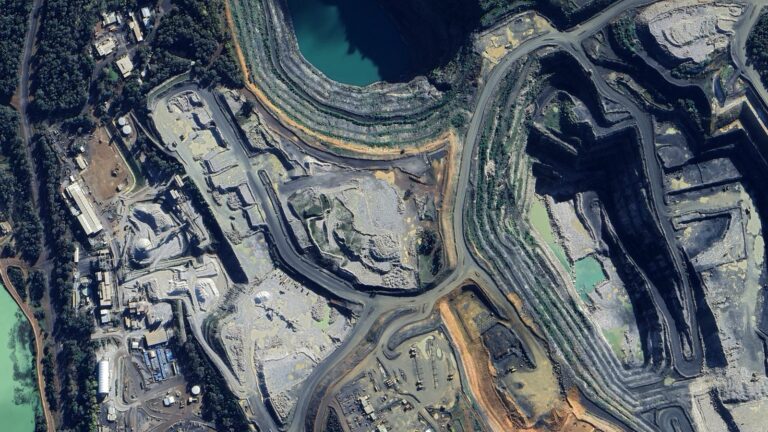
Springer is not an undeveloped mineral discovery in an isolated part of Nevada. The former tungsten operation near Imlay includes historical open-pit and underground workings, a mill designed to process 1,200 tonnes of material daily and an ammonium paratungstate processing plant. That facility could eventually turn tungsten concentrate into a chemical product used farther along the manufacturing chain. The property also benefits from established roads, electrical infrastructure, water access and proximity to major transportation routes.
Those existing assets distinguish Springer from projects requiring an entirely new mine and processing complex. Blue Moon reported that Nevada approved construction-related bonding requirements in August 2026, allowing redevelopment activities to advance. However, infrastructure left behind by an earlier operation is not necessarily ready for immediate commercial use. Equipment must be inspected, repaired or upgraded, and the company must establish a dependable mining plan. The potential advantage lies in reusing infrastructure where practical, rather than constructing every component from the beginning.
The C$35 Million Deal Is Part of a Much Larger Investment Plan
The October financing represents one component of a larger agreement announced September 14 by Blue Moon, Elmet and Australian mining company EQ Resources. Their arrangement outlined approximately US$150 million of planned investment from Elmet, with another US$25 million reserved for potential standby requirements. The proposed package includes a US$50 million tungsten prepayment facility, approximately US$25 million in Blue Moon equity and a US$75 million investment in a processing joint venture.
The distinction between announced financing and completed investment is essential. The C$35 million placement closed in October corresponds to the equity component already included in September’s broader arrangement. It is not an additional amount that should be added to the US$150 million headline figure. Other portions of the proposed financing remain dependent on conditions that include approvals, documentation, due diligence and development milestones. The prepayment facility would also be repaid through credits against future tungsten concentrate sales, making it different from a government grant or unrestricted corporate investment.
Three Companies Want to Build an Integrated Tungsten Supply Chain
The planned partnership would divide Springer into two connected businesses. Blue Moon would retain ownership and operation of the mine and mill, while a separate joint venture would own and operate the ammonium paratungstate processing plant. Under the September framework, Elmet would control 70% of that venture, Blue Moon would hold 20%, and EQ Resources would own the remaining 10%. The initial objective is to establish processing capacity of approximately 4,000 tonnes of ammonium paratungstate annually.
EQ Resources would contribute experience and access to tungsten concentrate from operations in Australia and Spain. The proposed arrangements include an eight-year commitment involving 4,000 tonnes of contained tungsten trioxide supplied from EQ’s mines. Springer concentrate would also feed the processing operation under contemplated supply agreements. This structure could eventually connect mining, refining and advanced manufacturing within a more coordinated Western supply chain. However, the joint venture’s planned ownership, supply agreements and output targets should not be confused with a fully operational processing business today.
A US$450 Million American Defence Investment Adds Strategic Importance
The partnership has attracted attention because of Elmet’s broader relationship with the U.S. government. In September, Elmet announced a US$450 million committed investment from the U.S. Department of War to strengthen American tungsten manufacturing and critical-material supply chains. According to Elmet, approximately US$150 million of that wider initiative was designated for the Springer investment program. The federal investment was made in Elmet, not announced as a direct US$450 million payment to Blue Moon.
Elmet also disclosed a separate Defense Logistics Agency agreement with a ceiling of up to US$2 billion, including a guaranteed funded commitment of US$150 million. That maximum contract value represents potential orders under a supply framework, rather than money automatically available to develop Springer. Deliveries would depend on qualifying material becoming available through Elmet’s supplier network. For Blue Moon, the relationship offers potential access to strategic customers and a larger industrial network, but it does not eliminate the practical challenges involved in bringing a mine into production.
Tungsten Has Become a Critical Concern for North American Manufacturers
Tungsten rarely receives the public attention given to lithium, copper or rare earth minerals, yet its industrial importance is substantial. The metal’s exceptional hardness and resistance to heat make it useful in cutting tools, drilling equipment, wear-resistant components and specialized alloys. Aerospace manufacturers and defence contractors rely on it for demanding applications, while machine shops use tungsten-carbide tools in everyday production. A worker replacing a worn industrial cutting insert may be handling a product that depends on this strategically important metal.
The concern is not simply how much tungsten exists underground, but where it can be mined and processed reliably. U.S. Geological Survey research estimated that China accounted for approximately 83% of global mined tungsten production in 2023. The United States has not produced tungsten commercially from domestic mines since 2015, despite continuing industrial demand. China introduced export-licensing controls on selected tungsten products in February 2025, adding uncertainty for international buyers. Those restrictions were not a complete export ban, but they strengthened incentives to develop alternative sources.
New American Defence Rules Could Increase Demand for Domestic Tungsten
A major regulatory change is approaching for American defence suppliers. Beginning January 1, 2027, U.S. procurement restrictions will expand to cover earlier stages of production for certain tungsten materials originating in China, Russia, North Korea and Iran. The rules address specified military procurement categories and include exceptions; they are not a blanket prohibition on all imported tungsten used in civilian manufacturing. Nevertheless, contractors supplying the American defence industry will face stronger incentives to establish compliant sources of strategically important materials.
Springer could eventually contribute to those supply chains, although its anticipated production schedule comes after the regulatory deadline. Blue Moon has targeted restarting the mine and mill in the fourth quarter of 2027, followed by the ammonium paratungstate plant in the second half of 2028. Both dates remain company projections rather than confirmed operating milestones. The difference between the procurement deadline and Springer’s planned restart illustrates why American manufacturers may need a combination of domestic mining, recycling and supply agreements with allied countries.
Exploration Results Are Promising, but Important Technical Questions Remain
Springer’s mining history provides useful geological information, but historical production does not automatically establish the size of a currently economic deposit. Blue Moon has referenced an estimate developed from work conducted in the 1980s, while explicitly warning that it has not been verified under modern Canadian NI 43-101 mineral-resource reporting standards. That historical estimate should not be treated as a current resource or reserve. A dependable redevelopment plan requires updated geological information and further technical evaluation.
The company has been examining approximately 18,000 metres of historical drill core and collecting additional samples to better understand the deposit. In September, it reported a seven-metre drilling interval containing 1.28% tungsten trioxide, alongside federal approval for specified exploration work on public land. Such results can help identify promising mineralized zones, but individual samples do not establish the grade or economic potential of an entire deposit. Further drilling, geological modelling, processing tests and engineering work remain important. Construction expenses, commodity prices and possible technical delays could also influence the project’s eventual profitability.
The Canadian Connection Goes Beyond the Size of the Investment
Although Springer is located in Nevada, the investment highlights the role Canadian mining companies can play in North American critical-minerals development. Blue Moon is headquartered in Toronto and maintains stock-market listings in both Canada and the United States. Its broader portfolio includes projects in Norway and the American West involving copper, zinc, germanium, gallium and other metals. The company is pursuing a strategy built around mineral properties with existing infrastructure, rather than relying entirely on undeveloped exploration prospects.
For Canada, the arrangement demonstrates how Canadian mining expertise and access to investment markets can contribute to American industrial supply chains. It does not mean the C$35 million will be spent at a mine in Canada or that new Canadian jobs have already been created. The next meaningful developments will include final exchange approval, progress on outstanding financing arrangements, updated geological work and construction activity at Springer. The financing is a completed milestone in a much larger undertaking. Whether it becomes a successful long-term mining operation will depend on execution, costs and sustained demand for tungsten.
This Options Discord Chat is The Real Deal
While the internet is scoured with trading chat rooms, many of which even charge upwards of thousands of dollars to join, this smaller options trading discord chatroom is the real deal and actually providing valuable trade setups, education, and community without the noise and spam of the larger more expensive rooms. With a incredibly low-cost monthly fee, Options Trading Club (click here to see their reviews) requires an application to join ensuring that every member is dedicated and serious about taking their trading to the next level. If you are looking for a change in your trading strategies, then click here to apply for a membership.