35,000+ smart investors are already getting financial news, market signals, and macro shifts in the economy that could impact their money next with our FREE weekly newsletter. Get ahead of what the crowd finds out too late. Click Here to Subscribe for FREE.
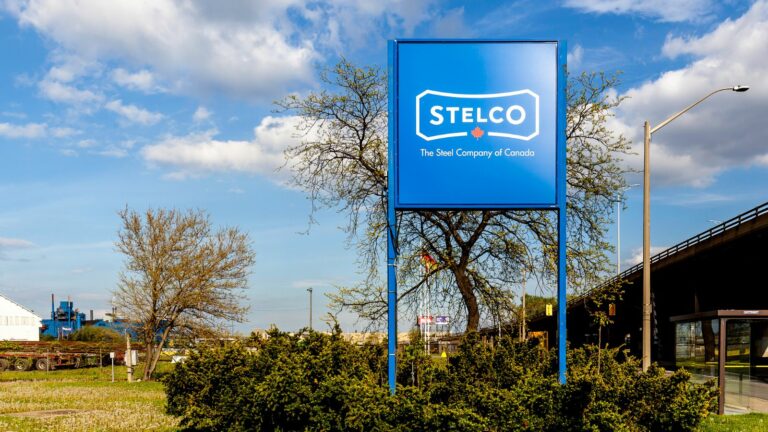
Canada’s steel industry is facing another defining moment as the federal government considers extraordinary intervention in Stelco, the historic Ontario steelmaker now owned by American industrial giant Cleveland-Cliffs.
With up to 500 jobs threatened across the company’s Hamilton and Lake Erie operations, Industry Minister Mélanie Joly has raised the possibility of government involvement while warning that the American owner must honour commitments made when it acquired Stelco in 2024.
The dispute has intensified amid U.S. tariffs, weakening demand for certain steel products, and growing political pressure to protect Canadian manufacturing.
Although Ottawa has not announced a takeover, options ranging from court-ordered compliance to forced divestment are under discussion. For affected workers and their families, the outcome could determine far more than the ownership of a steel company. It could shape the future of industrial employment in one of Canada’s most important manufacturing regions.
Layoffs Have Already Begun at Stelco’s Ontario Operations
Ottawa Considers Taking Over U.S. Owned Stelco as Up to 500 Ontario Steel Jobs Hang in Balance
- Layoffs Have Already Begun at Stelco’s Ontario Operations
- Hamilton’s Steel-Finishing Operations Face an Indefinite Shutdown
- Cleveland-Cliffs’ $3.4 Billion Acquisition Came With Employment Guarantees
- Ottawa Is Exploring Legal Action, Forced Divestment and Public Ownership
- Stelco Rejects Ottawa’s Allegations and Blames the Trade War
- Trump’s 50% Steel Tariffs Have Intensified Canada’s Manufacturing Crisis
- Hamilton and Nanticoke Communities Face the Human Cost of Layoffs
- Political Leaders Clash Over Whether Stelco Should Be Nationalized
- Canada’s Push to Buy Domestic Steel Could Help Protect Manufacturing Jobs
- Stelco’s Previous Ownership Battle Offers Clues About What Happens Next
Stelco’s September 28 announcement has already moved from a warning to actual layoff notices. The company said up to 500 workers could be affected by an indefinite suspension of cold-rolled and coated-steel finishing at Hamilton Works. By early October, notices were being delivered. United Steelworkers Local 1005 president Ron Wells said roughly 90 Hamilton workers were expected to receive notices in the first week, with reductions unfolding over approximately three weeks.
Wells estimated that about 330 Hamilton employees could be affected, alongside additional workers at Lake Erie Works in Nanticoke. The 500 figure is a company-wide maximum, not confirmation that 500 permanent jobs have disappeared. Stelco has called the layoffs indefinite, while the union considers them temporary under its collective agreement. For workers, that distinction offers little certainty about when regular shifts might return. A household can manage a short disruption differently from an open-ended one, particularly when mortgages, childcare and other expenses continue. The final layoff count remains unsettled.
Hamilton’s Steel-Finishing Operations Face an Indefinite Shutdown
The shutdown centres on specific stages of processing, not a complete closure of Stelco. Hamilton Works handles cold-rolled and coated products, which serve customers needing finished sheet steel for uses ranging from appliances and construction to automotive components. Stelco says those markets have been hit hard by the trade dispute. Its plan is to concentrate production at Lake Erie Works in Nanticoke, changing its product mix rather than abandoning Canadian operations altogether.
Cleveland-Cliffs expects a significant number of affected Hamilton employees to find opportunities at Lake Erie Works. A company spokesperson has argued that total steel-production tonnage need not decline. Neither statement guarantees that every displaced employee will secure a new position or that the idled lines will restart. A transfer may also mean a different commute or work assignment for someone based in Hamilton. The larger question is whether concentrating output at one plant preserves enough business to support both sites, or leaves Hamilton with fewer industrial jobs if demand for finished steel fails to recover.
Cleveland-Cliffs’ $3.4 Billion Acquisition Came With Employment Guarantees
The current confrontation began with a transaction that initially carried promises of stability. Cleveland-Cliffs announced its purchase of Stelco in July 2024 at an estimated enterprise value of C$3.4 billion and completed the deal that November. Its announcement described the addition of about 1,800 unionized Stelco employees and anticipated annual cost savings without reductions to union jobs. Federal approval was granted only after a review under the Investment Canada Act, which measures whether major foreign acquisitions benefit Canada.
The five-year commitments went beyond keeping a familiar name on the buildings. They included retaining Stelco’s Hamilton headquarters, maintaining at least the same number of unionized employees and most non-union staff, honouring collective agreements and pensions, and investing in facilities and research. These undertakings explain Ottawa’s forceful response. They are obligations between the purchaser and the federal government, not necessarily promises of an unchanged assignment for each worker. Whether layoffs breach them remains disputed; no court finding has been announced. Employment levels were nonetheless a central condition of foreign ownership.
Ottawa Is Exploring Legal Action, Forced Divestment and Public Ownership
Industry Minister Mélanie Joly escalated the dispute in an October 5 letter to Stelco president Paul Simon, giving the company five business days to explain how it would meet its acquisition commitments. By October 14, she said Ottawa was reviewing the response and that all available legal remedies remained under consideration. In Toronto on October 16, Joly told Reuters that Canada was exploring its options under the Investment Canada Act, including nationalization.
Section 40 of the Act gives courts powers extending beyond fines. After the required legal process, a court may order an investor to honour commitments or relinquish control of Canadian assets. But forcing Cleveland-Cliffs to sell Stelco is not the same as Ottawa buying it. A private Canadian purchaser or government investment would raise different questions about cost and control. Joly also discussed public equity in strategic industries more broadly, without announcing a Stelco purchase. No takeover or court-ordered transfer has been announced. For now, nationalization remains a possibility rather than an accomplished intervention, and legal enforcement may prove the more immediate path.
Stelco Rejects Ottawa’s Allegations and Blames the Trade War
Stelco rejects Ottawa’s accusation that it has broken its purchase obligations. Company president Paul Simon argues that the undertakings do not expressly prohibit layoffs. Stelco says its business has been hit by falling exports of cold-rolled and coated steel to the United States and persistent import pressure in Canada. Its letter reported that Canadian exports of those products were down 58 per cent from pre-trade-war levels, including 226,000 fewer tonnes in the second quarter of 2026 compared with the 2024 quarterly average.
The company presents restructuring as a way to protect the remaining operation, not abandon Ontario. It says production can be concentrated at Nanticoke and some Hamilton workers may find positions there. Ottawa views the decision through the employment commitments Cleveland-Cliffs made to secure approval for its acquisition. Both arguments matter: tariffs can make a production line uneconomic, but difficult conditions do not automatically settle whether binding promises have been met. Until the exact terms are tested in court or the parties reach an agreement, Stelco’s claim of compliance and the government’s allegations remain competing positions, not established legal findings.
Trump’s 50% Steel Tariffs Have Intensified Canada’s Manufacturing Crisis
The immediate economic backdrop is a trade shock that reshaped Canada’s steel market. The United States raised its tariff on imported steel from 25 to 50 per cent in June 2025. Canada had previously sent about 90 per cent of its steel exports south of the border, according to industry reporting, and shipments to the U.S. fell about 60 per cent in 2025. Stelco’s own letter describes a particularly severe decline for cold-rolled and coated products, the very lines now being idled.
Tariffs create pressure in two directions. Canadian steel becomes costlier to sell in its traditional American market, while producers from other countries try to redirect steel into Canada. Ottawa has responded with import quotas and a 50 per cent surtax on covered steel exceeding those quotas from countries outside the Canada-U.S.-Mexico trade agreement. Yet protection at the border cannot instantly replace an export customer or create demand for every specialized product. A mill supplying galvanized sheet faces different conditions from one selling heavy plate for infrastructure. That unevenness helps explain why some Canadian steelmakers report improving domestic business even as Stelco cuts finishing jobs.
Hamilton and Nanticoke Communities Face the Human Cost of Layoffs
Steelmaking has shaped Hamilton since the Steel Company of Canada was formed in 1910. That history gives the latest layoffs a significance far beyond one employer’s payroll. Workers are confronting uncertainty about the duration of the shutdown and whether jobs offered elsewhere will fit their circumstances. One employee, interviewed by Hamilton broadcaster CHCH while workers awaited the layoff lists, described the situation as chaos. Union representatives have said frustration is compounded by the belief that the 2024 takeover came with meaningful job protections.
The effects reach Nanticoke as well. United Steelworkers Local 8782 president John McElroy told The Haldimand Press that more than 60 Lake Erie Works employees were expected to be affected, with two pickling lines facing closure and a third operating at reduced hours. He identified about 20 full-time production vacancies available at the main plant at the time, far fewer than the jobs under threat across both locations. Haldimand County’s mayor has appealed to federal and provincial leaders for help. For communities built around skilled industrial work, preserving a facility matters, but so does preserving the people and experience needed to operate it.
Political Leaders Clash Over Whether Stelco Should Be Nationalized
Public ownership has moved from political theory into the Stelco debate. Federal NDP Leader Avi Lewis wants Prime Minister Mark Carney to nationalize the company, arguing litigation could take too long to protect workers. Ontario NDP Leader Marit Stiles supports public ownership and wants domestic steel used in major Canadian projects. United Steelworkers representative Meg Gingrich says the union is open to nationalization if necessary to preserve jobs, while acknowledging other solutions may work.
Conservative Leader Pierre Poilievre wants Ottawa to sue Cleveland-Cliffs, seek workers’ reinstatement and reopen idled lines, or force a sale to a Canadian operator. His wider steel plan emphasizes tariff-free U.S. trade and restrictions on unfair imports. Ontario’s finance minister says the province offered help that Stelco declined. These positions expose disagreements about ownership, trade diplomacy and government intervention. Every proposal ultimately faces the same test: whether Stelco can employ skilled workers producing steel that customers will buy, rather than simply changing the company’s legal or political status.
Canada’s Push to Buy Domestic Steel Could Help Protect Manufacturing Jobs
Canadian steelmakers are trying to find more customers at home. United Steelworkers data reported by Reuters show Canadian-made steel supplied 51 per cent of steel used domestically in 2025, up from 41 per cent in 2024. Mining, energy and data-centre projects, particularly in Western Canada, have helped generate demand. The improvement is uneven. Customers ordering structural plate or energy-related pipe do not automatically need the cold-rolled and coated steel produced at Hamilton Works, where threatened jobs are concentrated.
Ottawa’s Buy Canadian policy prioritizes Canadian steel in major federal procurement projects. Import quotas and surtaxes aim to prevent excess foreign supply from overwhelming domestic mills, while a C$1-billion financing program supports metal manufacturers and exporters affected by tariffs. That money is not a dedicated Stelco rescue. These measures can encourage orders and investment, but cannot guarantee Hamilton’s idled lines will restart. Success depends on matching Canadian demand with suitable products, competitive costs and reliable delivery. The challenge is converting a preference for Canadian steel into orders that preserve the industrial jobs most exposed to U.S. tariffs.
Stelco’s Previous Ownership Battle Offers Clues About What Happens Next
Stelco has been here before. After U.S. Steel acquired the company in 2007, Ottawa launched proceedings in 2009 over employment and production commitments it said were unmet. A 2011 settlement kept Hamilton and Lake Erie operations running through 2015 and added commitments for at least C$50 million in capital investment and C$3 million toward community and education programs. That precedent shows government enforcement can yield new promises without public ownership. It does not guarantee the same outcome today, particularly when the steel market and trade relationship have changed.
What happens next depends on whether Cleveland-Cliffs offers an acceptable compliance plan, whether Ottawa goes to court, and whether another operator could make the affected production profitable. The parent company is due to report quarterly results on October 19, potentially clarifying its Canadian strategy. A public takeover would raise questions about cost and operating risk, while a forced private sale might not immediately revive idled jobs. For steelworkers, the decisive evidence will be recall dates, viable production and paycheques, not the nationality of the name on ownership documents.
This Options Discord Chat is The Real Deal
While the internet is scoured with trading chat rooms, many of which even charge upwards of thousands of dollars to join, this smaller options trading discord chatroom is the real deal and actually providing valuable trade setups, education, and community without the noise and spam of the larger more expensive rooms. With a incredibly low-cost monthly fee, Options Trading Club (click here to see their reviews) requires an application to join ensuring that every member is dedicated and serious about taking their trading to the next level. If you are looking for a change in your trading strategies, then click here to apply for a membership.