35,000+ smart investors are already getting financial news, market signals, and macro shifts in the economy that could impact their money next with our FREE weekly newsletter. Get ahead of what the crowd finds out too late. Click Here to Subscribe for FREE.
With Alberta preparing for a historic referendum on October 19, Prime Minister Mark Carney has delivered a warning to Washington: Canada’s democratic decisions must remain in Canadian hands.
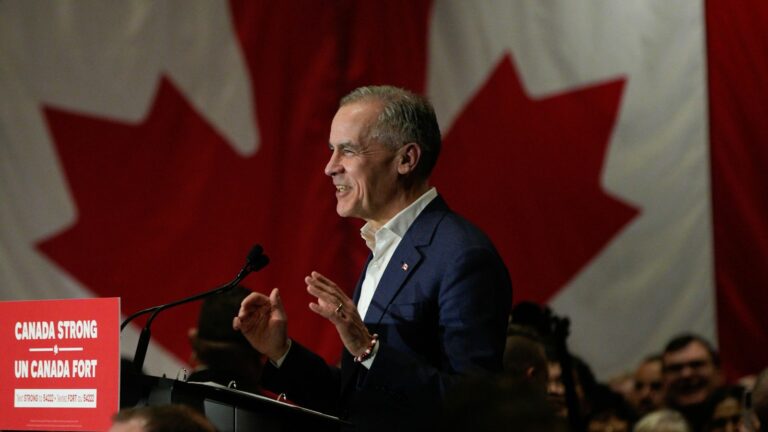
Speaking in Calgary on October 15, Carney said foreign governments, including the United States, should stay out of Alberta’s vote. He also confirmed that Canadian national security agencies are actively monitoring potential foreign interference, although he declined to disclose specific intelligence.
The warning comes amid reports of Alberta separatist representatives meeting American officials and Republican political strategists. President Donald Trump’s strained relationship with Ottawa has added another layer of tension.
For Albertans, the immediate decision is whether to remain in Canada or begin the legal process toward a future separation referendum. For Ottawa, the challenge is ensuring that the choice belongs to Albertans alone.
Carney Delivers a Direct Warning to Washington
Carney Warns U.S. to Stay Out of Alberta Referendum as Canada Watches for Foreign Interference
- Carney Delivers a Direct Warning to Washington
- Alberta’s October 19 Vote Is Not a Direct Independence Referendum
- Alberta Separatists’ Meetings With Americans Have Raised Concerns
- Canadian Intelligence Agencies Are Monitoring Potential Interference
- Danielle Smith Supports Staying in Canada but Wants More Provincial Power
- New Polling Shows Most Albertans Want to Remain Canadian
- Energy Disputes Help Explain the Separation Movement
- Canadian Law Makes Separation Far More Complicated Than a Vote
- First Nations Treaty Rights Add Another Constitutional Challenge
- Business Uncertainty Is Growing Before Albertans Cast Their Final Ballots
Prime Minister Mark Carney made Canada’s position clear during an October 15 interview with Global News in Calgary. He said foreign governments, including the United States, were expected to avoid involvement in Alberta’s referendum. Carney described respect for democratic processes as a reciprocal responsibility, emphasizing that Canada does not interfere in American elections and expects the same treatment in return. His comments came as he travelled through Alberta encouraging residents to support remaining in Confederation.
The timing is particularly sensitive. Earlier in the week, U.S. Ambassador Pete Hoekstra warned Canadian politicians against interfering in November’s American midterm elections, citing political commentary and previous anti-tariff advertising. Carney’s response established a similar principle from Canada’s perspective. His warning also comes against a backdrop of Trump’s repeated remarks about making Canada the 51st American state. However, Carney did not publicly accuse Washington of conducting a confirmed operation to manipulate Alberta’s referendum. His message was a demand for noninterference rather than the announcement of a proven offence.
Alberta’s October 19 Vote Is Not a Direct Independence Referendum
Albertans will face a consequential choice on October 19, but they will not be voting to establish an independent country immediately. Elections Alberta confirms that the separation-related question asks whether the province should remain part of Canada or begin the constitutional process required to hold a future binding referendum on independence. The result is explicitly non-binding. Even a majority supporting the second option would initiate another political and legal process rather than automatically remove Alberta from Confederation.
The question is one of ten appearing on separate, colour-coded ballots. The other nine address immigration, public-service eligibility, voter identification and proposed constitutional changes involving provincial powers. Elections Alberta says the separation question, designated Question 10, will be handed to voters first. The distinction is important because residents may hold different views on the individual proposals. Someone who wants Alberta to remain Canadian could also favour changes to federal-provincial relations. This makes understanding the ballot essential to interpreting the outcome accurately.
Alberta Separatists’ Meetings With Americans Have Raised Concerns
Questions about American involvement intensified after reports that representatives of the Alberta Prosperity Project had met with U.S. State Department officials. The Financial Times reported in January that members of the separatist organization had held several meetings in Washington and discussed obtaining a potential US$500 billion credit facility to support a future independent Alberta. No such financing commitment has been publicly confirmed. The reports nevertheless attracted attention because the group was seeking assistance from a foreign government while campaigning for constitutional change in Canada.
Further controversy emerged in October when reporting examined meetings between Alberta separatist figures and American Republican political strategists. The strategists reportedly discussed technology that could help identify and mobilize supporters. Some separatist representatives disputed allegations that Alberta’s natural resources were offered in exchange for U.S. support. Ambassador Hoekstra separately denied that the Trump administration was organizing or strategizing with separatists. These competing accounts leave important questions unresolved. Contact with foreign officials is not automatically unlawful interference, but concerns about transparency and possible outside influence remain legitimate subjects of scrutiny.
Canadian Intelligence Agencies Are Monitoring Potential Interference
Carney confirmed that Canada’s national security agencies are actively watching for potential foreign interference connected with Alberta’s referendum. He told Global News that intelligence restrictions limited what he could disclose publicly. The statement indicates that federal authorities consider the risk important enough to monitor, but it does not establish that a foreign government has successfully manipulated the campaign. No specific U.S.-directed interference operation was publicly identified in his October 15 remarks.
The Canadian Security Intelligence Service distinguishes ordinary foreign diplomacy from interference involving covert, deceptive or threatening activities. Potential threats can include clandestine political influence, concealed funding, cyber operations or deliberate efforts to undermine democratic institutions. Alberta also regulates referendum advertising through its provincial election-finance system. Third-party advertisers must register after reaching C$1,000 in qualifying contributions or advertising expenses, while registered groups face disclosure obligations and a C$607,000 advertising-spending limit. These requirements are intended to increase accountability. Whether particular conduct violates the rules requires evidence and appropriate investigation rather than speculation based solely on political associations.
Danielle Smith Supports Staying in Canada but Wants More Provincial Power
Alberta Premier Danielle Smith has taken a position that separates provincial autonomy from outright independence. On October 14, she confirmed that she had already voted in advance to keep Alberta within Canada. Smith argued that recent progress on energy policy and major infrastructure demonstrated that cooperation with Ottawa could deliver results. Although her United Conservative government added the separation-process question to the referendum, she continues to advocate for a stronger Alberta operating within Confederation.
Smith is encouraging voters to support the other nine questions, many of which seek greater provincial influence over immigration, public services and constitutional arrangements. Opposition NDP Leader Naheed Nenshi has encouraged Albertans to remain in Canada while opposing those additional proposals. The disagreement reveals a complicated political landscape. Some residents believe Ottawa has exercised too much power over matters affecting Alberta, while others worry that the proposed reforms could create new problems for healthcare access, immigration and constitutional protections. Smith’s challenge is balancing those competing views while maintaining support within her own party, where disagreement over separation remains visible.
New Polling Shows Most Albertans Want to Remain Canadian
Recent polling suggests the independence movement faces substantial opposition. A Léger study released October 8 found that 70% of Albertans preferred remaining in Canada, compared with 22% who supported beginning the legal process toward a future separation referendum. Another 7% were undecided. The poll included 1,001 Alberta adults questioned between October 2 and 4. Support for remaining in Canada had increased from the firm’s August findings, indicating that the federalist position was strengthening as voting approached.
The disagreement nevertheless reaches well beyond political rallies. Léger found that 61% of respondents were concerned about potential American influence or interference surrounding the referendum. Half anticipated negative economic consequences from continued separation discussions, while 30% reported tensions involving relatives, friends, colleagues or neighbours. Those findings illustrate how constitutional uncertainty can affect personal relationships and confidence in the province’s future. The research used a weighted online panel, so a conventional probability-based margin of error does not apply. Polling describes public attitudes before voting; it cannot guarantee the final result.
Energy Disputes Help Explain the Separation Movement
Alberta’s separatist movement draws considerable strength from longstanding disagreements over energy development, federal regulation and provincial authority. Supporters of separation argue that Alberta’s resource wealth should give the province greater control over its economic future. Many believe federal policies have restricted energy investment or placed unfair burdens on the province. These grievances have contributed to tensions between Alberta and successive governments in Ottawa, even though support for independence itself remains a minority position in recent polling.
Carney has attempted to address some concerns through major infrastructure commitments. On October 1, his government designated the proposed Pacific Link oil pipeline a project of national interest. The project is intended to provide capacity for an additional one million barrels of oil daily to reach international markets through British Columbia, reducing dependence on American buyers. Smith has welcomed the initiative as evidence of improving cooperation. However, construction has not started, and environmental assessments, Indigenous consultation and regulatory approvals remain necessary. Its eventual progress will provide a practical measure of whether renewed federal-provincial cooperation produces lasting economic results.
Canadian Law Makes Separation Far More Complicated Than a Vote
Even if Albertans eventually supported independence through a direct referendum, leaving Canada would involve substantial constitutional hurdles. The Supreme Court of Canada’s 1998 Quebec Secession Reference established that a province cannot legally separate from Canada on its own. A clear majority supporting independence on a clear question could create an obligation to negotiate constitutional changes, but it would not automatically establish a new country. Canada’s Clarity Act subsequently established requirements for Parliament to assess the clarity of a proposed secession question and the public mandate supporting it.
Alberta’s October 19 referendum is one stage removed from those requirements. It asks whether the government should pursue the process necessary for another vote rather than immediately declare independence. Any eventual separation would raise difficult questions about borders, public debt, citizenship, trade arrangements and federal institutions. The federal government and other provinces would have significant roles in constitutional negotiations. These legal requirements explain why an October majority favouring further steps would not settle Alberta’s future. It would begin a lengthy and uncertain political process with no predetermined outcome.
First Nations Treaty Rights Add Another Constitutional Challenge
Any proposal to separate Alberta from Canada must also confront Indigenous treaty rights and constitutional obligations. First Nations under Treaties 7 and 8 challenged an earlier citizen-initiated independence petition, arguing that the process could affect rights protected through agreements with the Crown. In May 2026, Alberta’s Court of King’s Bench quashed approval of that petition, finding legal deficiencies that included a failure to fulfil the duty to consult affected First Nations. The provincial government appealed the decision and disputed the court’s interpretation.
The current October referendum question was introduced by Alberta’s government and is different from the earlier citizen-led petition. Nevertheless, the legal dispute demonstrates that separation cannot be considered solely a negotiation between Edmonton and Ottawa. Siksika Nation and the Blackfoot Confederacy have emphasized that constitutionally protected treaty commitments predate Alberta’s creation and cannot simply be extinguished through a provincial vote. Canada’s Clarity Act also identifies Aboriginal rights, territorial claims and minority protections as matters that must be addressed during negotiations over secession. These obligations would remain significant regardless of the referendum outcome.
Business Uncertainty Is Growing Before Albertans Cast Their Final Ballots
The separation debate is already affecting business confidence. Research released October 13 by the Alberta Chambers of Commerce found that 44% of participating businesses reported that separation discussions were affecting their operations, compared with 39% in June. Among those experiencing a direct impact, 96% characterized it negatively. Respondents pointed to uncertainty in planning, investment and expectations for the provincial economy. The findings show that businesses can react to constitutional risk long before any change in legal status occurs.
Advance voting began October 13 and continues through October 17, with the final polling day scheduled for October 19. Election Day voting locations will operate from 9 a.m. to 8 p.m. Elections Alberta says the separation-related question will be counted first, with unofficial results expected within 48 hours after polling closes. Official results are scheduled for October 29. Carney’s foreign-interference warning has intensified national attention, but the immediate test belongs to Alberta’s voters and election authorities. Whatever the outcome, ensuring a transparent count and respecting the constitutional process will be essential to maintaining public confidence.
This Options Discord Chat is The Real Deal
While the internet is scoured with trading chat rooms, many of which even charge upwards of thousands of dollars to join, this smaller options trading discord chatroom is the real deal and actually providing valuable trade setups, education, and community without the noise and spam of the larger more expensive rooms. With a incredibly low-cost monthly fee, Options Trading Club (click here to see their reviews) requires an application to join ensuring that every member is dedicated and serious about taking their trading to the next level. If you are looking for a change in your trading strategies, then click here to apply for a membership.