35,000+ smart investors are already getting financial news, market signals, and macro shifts in the economy that could impact their money next with our FREE weekly newsletter. Get ahead of what the crowd finds out too late. Click Here to Subscribe for FREE.
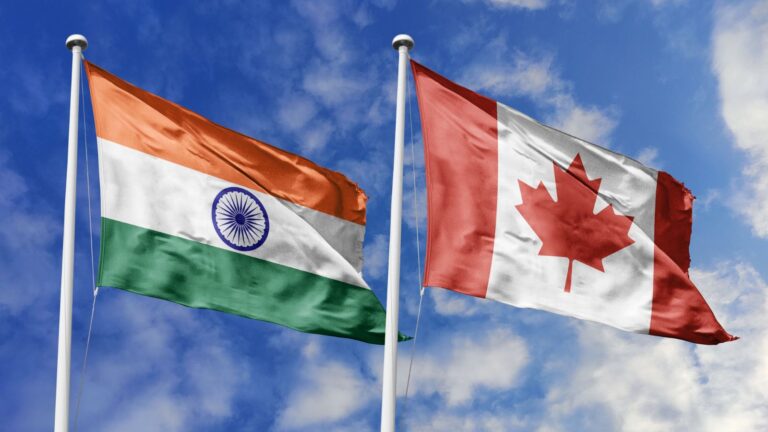
Canada is accelerating its trade negotiations with India at a moment when its relationship with the United States remains under extraordinary strain. Prime Minister Mark Carney and Indian Prime Minister Narendra Modi reaffirmed their commitment to a comprehensive economic partnership on October 13, just days after negotiators completed another round of talks.
Ottawa wants an agreement by the end of 2026, with a longer-term goal of expanding bilateral trade to C$70 billion annually by 2030. Meanwhile, negotiations with President Donald Trump’s administration remain suspended following a dispute over new U.S. tariffs.
The contrast reflects a broader shift in Canadian economic strategy. Rather than relying almost exclusively on its southern neighbour, the Carney government is pursuing new opportunities in energy, agriculture, technology and investment. Whether those ambitions translate into meaningful economic protection will depend on what the negotiations actually deliver.
Carney and Modi Renew Their Push for a Trade Agreement
Carney Government Pushes for India Trade Deal by Year-End as Negotiations With Trump Remain Stalled
- Carney and Modi Renew Their Push for a Trade Agreement
- Five Rounds of Negotiations Have Raised Expectations
- Canada’s Negotiations With Trump Remain Suspended
- The Future of CUSMA Adds Another Layer of Uncertainty
- Canada Wants to Grow India Trade to C$70 Billion by 2030
- Uranium, Energy and Critical Minerals Offer Major Opportunities
- Nearly 300 Canadian Delegates Are Pursuing Business in India
- The Trade Push Follows a Difficult Diplomatic Reset
- Modi’s December Visit Creates a Political Deadline
- An India Deal Could Reduce Dependence Without Replacing the U.S.
Prime Minister Mark Carney spoke with Narendra Modi on October 13, reaffirming their governments’ intention to conclude negotiations on a Comprehensive Economic Partnership Agreement, or CEPA, as soon as possible. The conversation followed months of diplomatic engagement and took place while Canadian ministers were visiting India to strengthen commercial and political ties. According to the Prime Minister’s Office, both leaders discussed cooperation in finance, artificial intelligence, security and energy, alongside their goal of substantially increasing trade.
The timing carries political significance. Modi is expected to visit Canada in December, providing another opportunity for the leaders to evaluate progress before the end-of-year deadline. The two governments have already established a framework for negotiations, but no final agreement has been announced. Their renewed commitment shows that the process remains a priority despite the technical difficulties involved. For Canadian exporters seeking access to India’s large consumer and industrial markets, the immediate question is whether political momentum will produce practical improvements in trade conditions.
Five Rounds of Negotiations Have Raised Expectations
Canada and India completed their fifth round of CEPA negotiations in Ottawa during the week of October 5, building on discussions that formally advanced after Carney’s visit to New Delhi in March. International Trade Minister Maninder Sidhu met Indian Commerce and Industry Minister Piyush Goyal on October 13 to review the progress. Global Affairs Canada described it as their ninth meeting since May 2025, illustrating how frequently the two governments have engaged. Ottawa continues to identify the end of 2026 as its target for concluding a mutually beneficial agreement.
A comprehensive trade agreement involves considerably more than reducing customs duties. Negotiators must address market access for goods and services, investment rules, regulatory barriers and potentially sensitive agricultural sectors. Even when political leaders agree on the broad benefits, individual industries may have competing demands. Canadian companies want greater predictability when entering India, while Indian businesses seek opportunities in Canada’s market. Five negotiating rounds demonstrate sustained engagement, but they do not establish that the remaining differences have been resolved or that a final legal text is ready for signature.
Canada’s Negotiations With Trump Remain Suspended
The contrast with Washington is striking. On August 21, Carney announced that Canada was suspending formal trade negotiations with the United States after rejecting revised American proposals. Ottawa argued that the last-minute terms were economically unreasonable and failed to protect important Canadian interests. The following day, new U.S. tariffs of 50% took effect on approximately C$27.6 billion in Canadian products. Canada responded with counter-tariffs of 15%, 25% and 50% on selected American goods, effective September 8.
The governments remain divided over the causes of the dispute. Washington has criticized Canadian policies affecting American automobiles, dairy products and alcoholic beverages, while Ottawa maintains that the additional duties unfairly target Canadian industries. Diplomatic communication has not stopped entirely. On October 8, U.S. Trade Representative Jamieson Greer said American officials continued speaking frequently with Canadian counterparts, including at senior levels, but were maintaining their negotiating position. No comprehensive settlement has been announced. For manufacturers dealing with tariffs, ongoing contact is not the same as restored certainty.
The Future of CUSMA Adds Another Layer of Uncertainty
The unresolved bilateral dispute is occurring alongside a broader struggle over the Canada–United States–Mexico Agreement, commonly known as CUSMA in Canada. During the agreement’s mandatory review on July 1, the Trump administration declined to extend it under its existing terms. That decision did not terminate the trade agreement. CUSMA remains in force, and annual reviews are now required unless the three countries agree on an extension. Under its current provisions, the agreement could remain in operation until 2036 without another extension.
Even so, uncertainty has economic consequences. North American automakers routinely depend on parts crossing international borders during production, while Canadian steel, aluminum and other industrial suppliers rely heavily on American customers. Businesses deciding where to build factories or commit investment capital must consider the possibility of additional tariffs or changing trade requirements. India’s market offers opportunities for diversification, but it cannot immediately recreate North America’s tightly integrated manufacturing networks. Securing new relationships abroad and stabilizing existing ones at home are therefore separate challenges for Ottawa.
Canada Wants to Grow India Trade to C$70 Billion by 2030
The scale of Canada’s ambitions becomes clearer in the trade figures. Global Affairs Canada estimates that two-way trade in goods and services with India totalled C$30.4 billion in 2025. The two governments want that figure to reach C$70 billion annually by 2030, an increase of more than 130%. Canadian merchandise exports to India were approximately C$3.9 billion in 2025, with vegetables, mineral fuels and oils, and wood pulp among the leading categories. Imports from India included precious metals, machinery and pharmaceutical products.
Services are also a major part of the economic relationship. Education-related travel has historically accounted for a substantial share of Canadian services exports to India, reflecting the importance of international students to universities, colleges and surrounding communities. The proposed CEPA could create additional opportunities for businesses in technology, financial services and professional services. However, the C$70 billion objective is a government target, not a forecast guaranteed by an agreement. Achieving it would require businesses to expand actual sales and investment well beyond the benefits of tariff reductions alone.
Uranium, Energy and Critical Minerals Offer Major Opportunities
Natural resources are among the strongest commercial arguments for deeper cooperation. During Carney’s March 2026 visit to India, Saskatchewan-based Cameco reached a C$2.6 billion uranium supply agreement with India’s Department of Atomic Energy. The governments also established cooperation frameworks for critical minerals and renewable energy. These arrangements reflect India’s growing need for reliable energy and industrial inputs as it expands electricity generation, manufacturing and infrastructure. Canada has established expertise in many of those sectors.
Agriculture provides another important connection. During discussions in January, Indian officials said nearly one-quarter of India’s potash requirements were being sourced from Canadian producers. Potash is essential for fertilizer production, linking Canadian mining operations with Indian agricultural productivity and food security. Canadian liquefied natural gas projects are also attracting Indian commercial interest, although prospective investments should not be confused with finalized contracts. A trade agreement could strengthen these relationships by making long-term planning more predictable. The economic opportunity extends beyond exports to potential investment in Canadian processing facilities, transportation infrastructure and resource development.
Nearly 300 Canadian Delegates Are Pursuing Business in India
Trade negotiations are being reinforced by a substantial commercial mission. From October 12 to 17, International Trade Minister Maninder Sidhu is leading nearly 300 Canadian delegates to India, the largest Canadian trade delegation sent there in more than 30 years. The mission includes stops in Mumbai and Bengaluru, bringing Canadian businesses into direct contact with prospective customers, investors and industry representatives. Participating sectors include aerospace, clean technologies, energy transition, information and communications technology, life sciences and agri-food.
For a Canadian company considering expansion into India, these meetings can be more immediately useful than another diplomatic statement. A technology firm may need a local distributor, while a food processor must understand import requirements and find dependable retail partners. A clean-energy equipment manufacturer may be looking for an Indian company capable of handling installation and servicing. The government hopes these connections will generate contracts, investment and employment in Canada. Yet participation alone does not guarantee commercial success. Financing, regulations, competition and market knowledge still determine whether an introductory meeting becomes a sustainable business relationship.
The Trade Push Follows a Difficult Diplomatic Reset
The renewed economic relationship is particularly notable because Canada and India experienced a serious diplomatic rupture in 2023 and 2024. Tensions intensified after Canadian authorities raised allegations connecting Indian government agents to the killing of Sikh activist Hardeep Singh Nijjar in British Columbia. India denied involvement, and the dispute eventually led to diplomatic expulsions. The deterioration complicated political cooperation and created uncertainty around an otherwise substantial relationship involving businesses, researchers, students and families.
The Carney government has since worked to restore diplomatic engagement while maintaining that Canadian sovereignty and public safety remain important. Senior officials from both countries met again in New Delhi from October 5 to 7, reviewing cooperation against organized crime, cybercrime, extortion, terrorism and trafficking. They also discussed economic security and information-sharing mechanisms. The renewed dialogue does not mean past concerns have disappeared or all disagreements are resolved. Instead, Ottawa is attempting to rebuild commercial relationships while pursuing cooperation on sensitive security matters. Whether that balance proves durable will influence confidence in any eventual trade agreement.
Modi’s December Visit Creates a Political Deadline
Modi’s expected visit to Canada in December provides an important milestone for the negotiations. Carney’s office confirmed the planned visit after the leaders’ October 13 conversation, although it did not announce a completed trade pact or a precise signing date. The original year-end objective was established during Carney’s March visit to India, when the governments agreed on terms of reference for CEPA negotiations. Ministers have repeated that target throughout the year, giving negotiators a clear political timetable.
There is nevertheless a distinction between concluding negotiations and bringing an agreement into force. Even if negotiators settle their differences before December ends, the final text may still require legal review, signature and domestic approval procedures. Businesses would then need clarity about when specific tariff changes and other provisions would apply. A ceremonial announcement during a high-profile visit would represent progress, but it would not automatically deliver immediate market access. The more meaningful outcome would be an agreement with clear commitments, workable rules and a credible implementation timetable that companies can use when planning investments.
An India Deal Could Reduce Dependence Without Replacing the U.S.
Canada’s dependence on the American market remains substantial. Statistics Canada reported that 71.7% of Canadian merchandise exports went to the United States in 2025, down from 75.9% in 2024. Exports to countries outside the United States increased during that period, providing evidence that Canadian businesses were finding opportunities elsewhere. But geographic proximity and established supply chains give American customers advantages that cannot be replicated quickly. An Ontario auto-parts supplier, for example, cannot assume that access to India will replace orders from a nearby American assembly plant.
A successful India agreement could nevertheless provide meaningful long-term benefits. More diversified export destinations would give certain Canadian industries additional customers, while stronger investment and energy partnerships could support domestic projects. The size of those benefits will depend on negotiated market access, business uptake and the protection of Canadian economic interests. Ottawa still needs a workable relationship with Washington, particularly for industries deeply integrated into North American manufacturing. Carney’s India strategy is therefore best understood as an effort to build additional economic options rather than abandon existing ones. The coming months will test whether that ambition produces a substantive agreement before 2026 ends.
This Options Discord Chat is The Real Deal
While the internet is scoured with trading chat rooms, many of which even charge upwards of thousands of dollars to join, this smaller options trading discord chatroom is the real deal and actually providing valuable trade setups, education, and community without the noise and spam of the larger more expensive rooms. With a incredibly low-cost monthly fee, Options Trading Club (click here to see their reviews) requires an application to join ensuring that every member is dedicated and serious about taking their trading to the next level. If you are looking for a change in your trading strategies, then click here to apply for a membership.