35,000+ smart investors are already getting financial news, market signals, and macro shifts in the economy that could impact their money next with our FREE weekly newsletter. Get ahead of what the crowd finds out too late. Click Here to Subscribe for FREE.
When Canada’s foreign minister sets off for India and the United Arab Emirates this week, her itinerary carries a message that reaches beyond the two destinations. Ottawa wants deeper commercial and security relationships while its largest trading partner, the United States, maintains new barriers against Canadian goods.
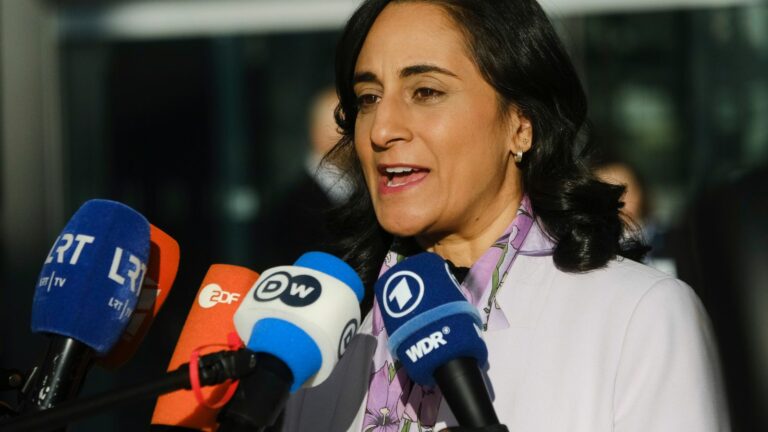
Anita Anand’s October 13–16 trip includes talks with India’s S. Jaishankar and the UAE’s Sheikh Abdullah bin Zayed Al Nahyan. It follows a diplomatic reset with New Delhi, concluded negotiations on a Canada–UAE trade agreement and another difficult chapter in Canada’s tariff dispute with Washington. For businesses weighing new markets, the visit offers possibilities—but also a reminder that diplomatic handshakes do not immediately replace customers, investment or jobs.
A Four-Day Visit With Two Distinct Agendas
Canada’s Foreign Minister Heads to India and UAE for Trade and Security Talks as U.S. Tariff Dispute Continues
- A Four-Day Visit With Two Distinct Agendas
- Washington’s Tariffs Make Diversification More Urgent
- India Relations Are Recovering From a Serious Rupture
- A Trade Deal With India Carries a $70 Billion Goal
- Another Canadian Minister Is Bringing Businesses Along
- Uranium and Maritime Security Add Substance to India Talks
- Family and Campus Ties Remain a Quiet Economic Force
- The UAE Already Has a Negotiated Trade Agreement
- UAE Investment Interest Extends From Ports to Artificial Intelligence
- Regional Security Makes the UAE Visit More Than a Sales Pitch
Anand announced on October 12 that she would travel from October 13 through 16, visiting India and the United Arab Emirates. In New Delhi, she is scheduled to meet External Affairs Minister Subrahmanyam Jaishankar to review a bilateral roadmap spanning trade, energy, defence and security. Ottawa says it will be their 11th meeting since September 2025, a sharp increase in diplomatic contact. Frequent meetings could make cooperation routine.
She will join a Bloomberg New Economy Forum discussion about middle powers and the changing global order. In the UAE, talks with Deputy Prime Minister and Foreign Minister Sheikh Abdullah bin Zayed Al Nahyan are expected to cover commerce, artificial intelligence, innovation and regional security. These are planned engagements, not agreements already delivered. Their significance lies in continuity: ministries, businesses and investors need repeated contact before statements at a podium become valuable contracts or cooperation capable of surviving the next political crisis.
Washington’s Tariffs Make Diversification More Urgent
The tariff dispute with Washington provides the backdrop to Anand’s journey. The United States imposed 50% duties on Canadian goods under Section 338 in August, affecting products from furniture to industrial equipment. Canada answered in September with counter-tariffs of 15%, 25% or 50% on selected American imports. Washington subsequently adjusted the scope of its measures and introduced bans on certain Canadian products. For exporters, changing rules complicate pricing, shipping and investment.
The exposure is enormous: Statistics Canada says 71.7% of Canada’s merchandise exports went to the United States in 2025. The July review of the Canada–United States–Mexico Agreement did not produce an extension in its existing form, and U.S. Trade Representative Jamieson Greer said on October 8 that Washington was holding to its negotiating position. Selling more abroad is therefore a sensible hedge, not a quick substitute for the American market. Geography, existing factories and established customer networks still matter.
India Relations Are Recovering From a Serious Rupture
The relationship deteriorated sharply after Canada accused Indian government agents of links to the 2023 killing of Sikh activist Hardeep Singh Nijjar in British Columbia. India has denied involvement. The dispute led to mutual diplomatic expulsions in 2024, disrupting business, family and academic connections. Canada and India agreed to restore their top diplomatic representatives in 2025, but appointing envoys could never by itself settle the questions raised by the case.
Prime Minister Mark Carney’s March 2026 visit to India accelerated the rapprochement. He and Prime Minister Narendra Modi backed a new defence dialogue and further law-enforcement cooperation, including efforts against organized crime and drug precursor trafficking. Ottawa also reiterated its commitment to combating transnational repression. Anand’s return to New Delhi is part of that careful two-track process: rebuilding useful ties while keeping security concerns on the agenda. Progress on commerce will be judged alongside progress on trust and public safety.
A Trade Deal With India Carries a $70 Billion Goal
Canada and India have given negotiators an ambitious assignment: work toward a Comprehensive Economic Partnership Agreement by the end of 2026 and expand annual two-way trade to C$70 billion by 2030. According to Global Affairs Canada, combined goods and services trade reached C$30.4 billion in 2025. Bridging that gap will be difficult. Businesses would need sustained growth in sales and investment, not simply a signature ceremony, to close that gap.
By September, officials had completed four negotiating rounds. Canadian merchandise exports include agricultural products, mineral fuels and wood pulp, while imports from India span pharmaceuticals, machinery and precious metals. These are established commercial connections for both countries, but a comprehensive pact must resolve market-access and regulatory differences. The end-of-year deadline is a negotiating objective, not an announced completion. For a Canadian producer considering the Indian market, the immediate questions remain practical: tariffs, approvals, reliable buyers and the cost of distribution.
Another Canadian Minister Is Bringing Businesses Along
Anand’s diplomatic meetings overlap with a separate Team Canada Trade Mission led by International Trade Minister Maninder Sidhu from October 12 to 17. The mission is scheduled for Mumbai and Bengaluru, not merely the government offices in New Delhi. Its priority sectors include aerospace, clean technologies, information and communications technology, life sciences, forestry products and agri-food. Ottawa hopes direct business outreach will translate diplomacy into contracts and lasting partnerships with India.
The Trade Commissioner Service plans briefings, site visits and meetings, prioritizing small and medium-sized enterprises. Participation does not guarantee a contract, and opportunities vary by sector and city. A Canadian wood-products supplier, for example, must still learn India’s building-material standards and distribution channels before shipping can expand. That is why the commercial mission matters: finding new markets requires more than opening doors at the diplomatic level. Firms need local partners capable of helping them operate on the other side.
Uranium and Maritime Security Add Substance to India Talks
Energy gives Canada and India a reason to cooperate. During Carney’s March visit, the two countries welcomed a C$2.6 billion arrangement under which Saskatoon-based Cameco would supply nearly 22 million pounds of uranium to India between 2027 and 2035. They also announced a strategic energy partnership spanning liquefied natural gas, liquefied petroleum gas, solar power and hydrogen, together with work on critical minerals. Indian demand could complement Canadian expertise.
Security runs alongside those opportunities. Carney and Modi agreed to create a defence dialogue focused partly on maritime cooperation in the Indo-Pacific and to negotiate an agreement protecting defence information. Their governments also highlighted cooperation against transnational criminal networks. Not every project or security arrangement is complete. The practical tests include whether energy supply commitments are fulfilled, companies develop additional projects, and officials build trusted channels for sensitive matters. For both capitals, reliability and consistency are becoming as valuable as ambition.
Family and Campus Ties Remain a Quiet Economic Force
Diplomatic relations also rest on people whose lives connect the two countries. More than 1.8 million Canadians are of Indian origin, connecting families, careers and cultures. Those connections make political breakdowns unusually personal. When diplomatic relations become strained, uncertainty can reach far beyond cabinet rooms to students exploring universities, researchers developing partnerships and families planning visits. Trust cannot be measured by trade figures alone.
The March 2026 Canada–India partnership announcement included 13 new university collaborations and plans for 300 funded Indian student researcher positions. The University of Toronto also committed up to C$25 million for more than 220 scholarships for Indian students. These initiatives sit beside wider cooperation on artificial intelligence and research. Scholarships do not waive immigration or admission requirements. Yet they show why education belongs in a serious discussion of trade: skilled graduates, research projects and long-running professional relationships can help commercial partnerships endure over the long term.
The UAE Already Has a Negotiated Trade Agreement
The UAE portion of Anand’s trip starts from a different position. Canada and the Emirates announced in July that negotiations for a Comprehensive Economic Partnership Agreement had concluded, after talks launched during Carney’s November 2025 visit. The agreement is not yet in force. The proposed pact aims to improve market access, reduce trade barriers and strengthen supply chains, subject to steps needed for implementation.
Global Affairs Canada valued bilateral merchandise trade at C$3.5 billion in 2025 and identifies the UAE as Canada’s top export market in the Middle East. Compared with the U.S. relationship, those numbers are modest; compared with many developing trade corridors, they offer a base to build on. For Canadian exporters of food, engineering services or technology, the appeal includes the UAE’s role as a commercial and logistics hub. Any real payoff will depend on how agreement provisions are implemented and whether smaller businesses can use them.
UAE Investment Interest Extends From Ports to Artificial Intelligence
The ambition goes beyond goods. During Carney’s November 2025 visit, Ottawa welcomed a UAE decision to invest C$70 billion, equivalent to about US$50 billion, in Canada. Their foreign investment protection agreement entered into force on May 19, 2026, providing clearer legal protections and predictability for investors. Potential destinations for capital included energy, critical minerals, infrastructure, ports and data systems. That intention is not the same as invested money or completed projects.
Other partnerships are concrete. Canada’s Mila artificial intelligence institute announced a research partnership with the UAE’s Technology Innovation Institute, while BlackBerry established a cybersecurity partnership with the Emirates’ Cyber Security Council. More than 150 Canadian companies operate in the UAE, which hosts an estimated 60,000 Canadians. Anand’s planned meetings with business leaders could help turn existing relationships into new activity. The scoreboard will be projects financed, partnerships sustained and jobs created, not the size of an investment announcement alone.
Regional Security Makes the UAE Visit More Than a Sales Pitch
Security is immediate in the Gulf. Anand met UAE Foreign Minister Sheikh Abdullah in New York in September and condemned Iranian strikes against the Emirates and vessels associated with Abu Dhabi National Oil Company. In another September meeting, she acknowledged the UAE’s role in mediating prisoner exchanges between Russia and Ukraine. Those conversations reflect Ottawa’s interest in a broader Gulf partnership. Regional instability can affect energy flows, transport routes and confidence across international markets.
The October itinerary calls for talks on defence, security and wider cooperation, but Ottawa has not announced an outcome in advance. Trade ambitions must coexist with regional security and civilian safety. Her New Delhi discussion about middle powers connects the destinations: Canada is looking for partners with whom it can act on shared interests without depending exclusively on Washington. Success will require measurable agreements and sustained trust, not an alternative photograph to the latest tariff confrontation.
This Options Discord Chat is The Real Deal
While the internet is scoured with trading chat rooms, many of which even charge upwards of thousands of dollars to join, this smaller options trading discord chatroom is the real deal and actually providing valuable trade setups, education, and community without the noise and spam of the larger more expensive rooms. With a incredibly low-cost monthly fee, Options Trading Club (click here to see their reviews) requires an application to join ensuring that every member is dedicated and serious about taking their trading to the next level. If you are looking for a change in your trading strategies, then click here to apply for a membership.