35,000+ smart investors are already getting financial news, market signals, and macro shifts in the economy that could impact their money next with our FREE weekly newsletter. Get ahead of what the crowd finds out too late. Click Here to Subscribe for FREE.
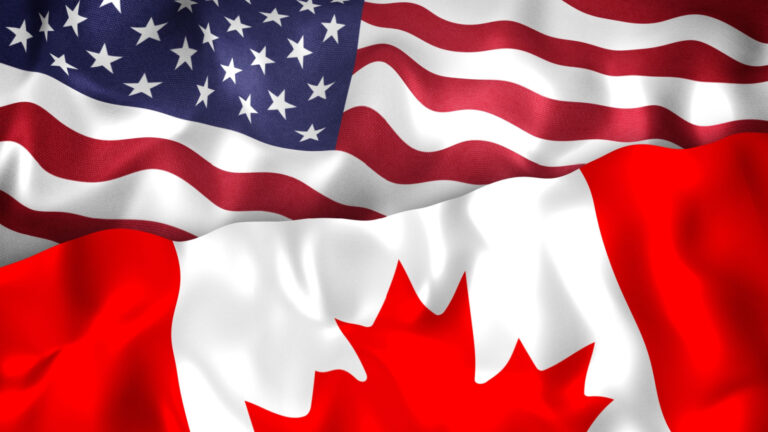
The Canada–U.S. trade confrontation is no longer just a story about factories, border crossings and negotiating rooms. It is increasingly colliding with American farm politics at a moment when Republicans are already under pressure to answer questions about household and business costs. That tension was on display in Iowa on October 4, when a Republican candidate for governor was pressed on national television about whether trade disputes and sharply higher diesel costs had become a political liability.
For farmers, the stakes extend beyond any single tariff. Canada is a major customer, supplier and link in agricultural supply chains that stretch from fertilizer and machinery to meat and processed foods. That makes the dispute particularly difficult politically: Washington wants greater access for American producers, while many of those same producers depend on an integrated North American market.
Farm-Country Affordability Is Becoming a Political Test
Canada–U.S. Trade Fight Reaches American Farm Politics as Republicans Face Affordability Questions
- Farm-Country Affordability Is Becoming a Political Test
- Canada Is Too Important to U.S. Agriculture to Be Treated as a Side Market
- Retaliatory Tariffs Put Rural Supply Chains in the Crosshairs
- Fertilizer Dependence Shows How Deep the Integration Runs
- Beef Has Exposed the Conflict Between Lower Prices and Protecting Producers
- The Dairy Dispute Is Real, but More Complicated Than the Political Slogans
- The Bigger Risk Is What Happens to USMCA
- Republicans Now Have to Reconcile Trade Leverage With the Cost-of-Living Message
The trade fight is landing at an uncomfortable time for Republicans in agricultural states. American farmers entered the fall dealing with expensive fuel, tight margins and uncertainty over export markets. In Iowa, some producers have reported dramatically higher diesel bills during the 2026 growing and harvest seasons. One farmer profiled by The Wall Street Journal estimated that fueling his tractors, semitrailers and combine would cost roughly $18,000 this year, compared with about $11,500 in 2025. Trade policy is not responsible for all of that increase—energy markets and the Iran conflict have played major roles—but tariffs add another source of uncertainty.
That distinction matters politically. Republicans can argue that tariffs are intended to win better access for American farmers over the long run while still confronting voters who are more focused on what inputs cost today. On October 4, Iowa Republican gubernatorial candidate Zach Lahn was directly asked whether President Donald Trump’s trade conflicts with Canada and China were becoming a headwind for his party. Lahn pointed to broader structural problems in agriculture, including industry consolidation, while acknowledging the additional burden of higher diesel prices. The exchange illustrated how quickly trade policy has moved from an abstract national debate into farm-state campaign politics.
Canada Is Too Important to U.S. Agriculture to Be Treated as a Side Market
Canada’s importance to American agriculture helps explain why farmers pay attention whenever relations deteriorate. U.S. Department of Agriculture data show that Canada bought roughly $28.2 billion in American agricultural goods in 2025, making it the second-largest export market after Mexico. Canada accounted for about 16.7% of all U.S. agricultural exports. American farms and food companies sell Canada everything from fresh vegetables and fruit to bakery products, ethanol, meat and prepared foods.
The relationship works in both directions. Canada supplied the United States with approximately $39.3 billion in agricultural products in 2025, including beef, cattle, vegetable oils, baked goods and other foods. Beyond agriculture, total U.S.-Canada goods and services trade reached an estimated $872.3 billion that year. Those numbers help explain why a tariff fight can produce effects far beyond the products explicitly listed in government orders. A processing business may buy Canadian ingredients, use American machinery, ship finished food across the border and sell to customers in both countries. When tariffs or import restrictions disrupt one part of that chain, the consequences can spread into transportation, inventory decisions, financing and eventually farm demand.
Retaliatory Tariffs Put Rural Supply Chains in the Crosshairs
The latest escalation widened the agricultural exposure. After Washington imposed additional 50% tariffs on roughly $20 billion worth of Canadian goods, Canada moved forward with retaliatory duties on a similarly large package of U.S. exports. The Canadian measures included agricultural equipment alongside dairy products, steel, appliances and other goods. Washington subsequently escalated again, imposing import bans on selected Canadian products and modifying the products covered by its earlier tariff actions.
For agricultural states, farm equipment is an especially important part of the story. Modern agriculture depends on expensive machinery, replacement parts, specialized manufacturing and cross-border supply networks. Iowa’s largest farm exports to Canada, including products such as pork, corn and soybeans, were not all directly targeted by the initial Canadian retaliation, limiting the immediate damage to some producers. Yet machinery manufacturers and other agriculture-linked businesses can still be affected. That creates a broader rural exposure than a simple list of tariffed crops suggests. A corn grower may never export a bushel directly to Canada but can still feel the trade dispute through equipment prices, local manufacturing employment or weaker demand from companies serving farms. It is one reason farm organizations have generally placed such a high value on predictable North American trade rules.
Fertilizer Dependence Shows How Deep the Integration Runs
Potash offers one of the clearest examples of how closely American agriculture is tied to Canada. Potassium is one of the three primary nutrients in commercial fertilizer, and large corn, soybean and other crop operations can use substantial quantities. According to the U.S. Geological Survey, the United States was approximately 92% reliant on net potash imports in 2025. Canada accounted for roughly 79% of U.S. potash import supply during the 2021-to-2024 period, far ahead of Russia, Israel and other suppliers.
That dependency does not mean every new tariff automatically produces an equivalent jump in fertilizer bills. The treatment of fertilizer has varied across different tariff actions, and commodity prices also respond to global supply, energy costs, exchange rates and transportation conditions. Still, the concentration illustrates why farm groups watch trade relations closely even when fertilizer itself is not the headline target. Replacing Canadian potash quickly and at similar cost would be difficult at the scale American agriculture requires. Earlier episodes of tariff uncertainty already demonstrated how fears of trade disruption can move fertilizer markets before a farmer ever receives an invoice. For producers working with thin margins, even modest increases in fertilizer, fuel or machinery costs can change planting decisions and profitability.
Beef Has Exposed the Conflict Between Lower Prices and Protecting Producers
The political dilemma becomes even clearer in the cattle industry. With beef prices elevated and the American cattle herd historically small, the Trump administration temporarily expanded access for imported lean beef trimmings. Beginning September 1, an additional 300,000 metric tons could enter during a 90-day period without the normal out-of-quota tariff. The administration presented the move as a way to make ground beef more affordable while the domestic herd rebuilds.
Many ranchers and farm-state Republicans saw the decision differently. USDA counted 86.2 million cattle and calves on U.S. farms at the beginning of 2026, including 27.6 million beef cows, with the beef-cow number down 1% from the previous year. Producers argue that adding cheaper imports at a time when they are finally receiving stronger cattle prices can weaken the financial incentive to expand herds. Republican lawmakers from cattle states publicly pushed back, illustrating the competing pressures inside the party. Trump is scheduled to campaign in Nebraska amid lingering rancher frustration over the policy. The episode is not principally a Canada measure, but it captures the same political contradiction surrounding the Canadian trade fight: actions designed to help consumers can anger producers, while policies designed to protect domestic producers can raise affordability concerns.
The Dairy Dispute Is Real, but More Complicated Than the Political Slogans
Dairy has been one of the most persistent irritants in Canada–U.S. agricultural relations. Canada operates a supply-management system that controls domestic production and uses tariff-rate quotas to regulate imports. Under the USMCA, American dairy exporters receive duty-free access for specified quantities of products such as milk, cheese, cream and skim milk powder. Once imports exceed those quotas, however, Canada’s World Trade Organization tariff rates can climb above 200% for some products and historically have exceeded 300% in certain categories.
That structure is important because descriptions of Canada simply placing enormous tariffs on all American dairy can be misleading. The very high rates apply primarily to imports above established quota volumes. At the same time, Washington has legitimate longstanding complaints about how those quotas are administered. The United States has previously challenged Canadian allocation rules under USMCA, and the current administration says Canadian treatment of U.S. cheese exporters is less favourable than treatment given to some European exporters. Those complaints helped underpin the 2026 escalation, which included additional U.S. duties and, beginning September 29, import bans on certain Canadian dairy products. Dairy therefore combines a genuine market-access dispute with political rhetoric that can sometimes flatten a technically complicated system.
The Bigger Risk Is What Happens to USMCA
For farmers, the most consequential question may ultimately be larger than any current tariff list. On July 1, the United States declined to renew the USMCA in its existing form during the agreement’s scheduled joint review. That decision did not terminate the trade agreement. Its existing rules remain in force, but the countries now enter a period of recurring reviews unless they eventually agree to extend it. Without an extension, the agreement can ultimately expire in 2036.
That distinction matters because North American agriculture has been built around decades of increasingly integrated trade. Mexico and Canada together have become the dominant foreign markets for many American farm and food products, and Canada alone purchased more than $28 billion in U.S. agricultural exports last year. The Trump administration argues that refusing an automatic renewal gives Washington leverage to fix what it sees as unfair treatment involving dairy and other sectors. Many agricultural businesses, however, value the certainty USMCA provides almost as much as individual tariff concessions. Long-term investments in processing plants, farm machinery, transportation and livestock are harder to make when companies cannot confidently forecast the rules governing their largest nearby markets.
Republicans Now Have to Reconcile Trade Leverage With the Cost-of-Living Message
The economic debate over tariffs has moved well beyond theory. Federal Reserve researchers examining the 2025 tariff increases found measurable pass-through into American consumer prices. A September 2026 Federal Reserve Bank of New York study estimated that roughly 26% of the tariff increase it examined ultimately passed through to consumer prices, including indirect effects as domestic manufacturers faced higher input costs or adjusted prices amid reduced import competition. Separate Federal Reserve research found that households reduced purchases in more tariff-exposed categories and that lower-income households carried a disproportionately large welfare burden.
Those findings do not mean tariffs can never achieve strategic or industrial objectives. They do mean the political benefit has to compete with visible near-term costs. The latest available U.S. CPI showed overall consumer prices 3.4% higher in August than a year earlier, while food-at-home prices were up 2.2%. Earlier this year, a Marquette Law School national poll found 67% disapproved of Trump’s handling of tariffs and 78% disapproved of his handling of inflation and the cost of living. For Republicans campaigning through farm country, that creates a difficult message: convincing voters that greater trade leverage tomorrow is worth economic disruption today. Whether that argument succeeds may depend heavily on how quickly Washington and Ottawa find a path back toward predictable trade.
This Options Discord Chat is The Real Deal
While the internet is scoured with trading chat rooms, many of which even charge upwards of thousands of dollars to join, this smaller options trading discord chatroom is the real deal and actually providing valuable trade setups, education, and community without the noise and spam of the larger more expensive rooms. With a incredibly low-cost monthly fee, Options Trading Club (click here to see their reviews) requires an application to join ensuring that every member is dedicated and serious about taking their trading to the next level. If you are looking for a change in your trading strategies, then click here to apply for a membership.