35,000+ smart investors are already getting financial news, market signals, and macro shifts in the economy that could impact their money next with our FREE weekly newsletter. Get ahead of what the crowd finds out too late. Click Here to Subscribe for FREE.
Donald Trump’s October 3 rally in Vandalia, Ohio, put his promise of an American industrial revival against an uncomfortable backdrop: a trade confrontation affecting businesses in the same state. Reuters reported that Canadian retaliatory tariffs cover about $3 billion worth of Ohio exports, citing CBC analysis based on 2025 trade figures.
That number describes goods exposed to tariffs—not $3 billion in confirmed lost sales or taxes collected. Even with that distinction, the stakes are substantial. As Trump promoted investment and backed Republican candidates, the dispute raised a question that reaches beyond campaign messaging: can the benefits promised from tougher trade policies outweigh the disruption facing manufacturers, customers and workers on both sides of the border?
A Rally Built Around Competing Economic Stories
Trump’s Canada Trade Fight Shadows Ohio Rally as Retaliatory Tariffs Hit $3 Billion in State Exports
- A Rally Built Around Competing Economic Stories
- What the $3 Billion Figure Actually Measures
- A September Escalation, Not a Rally-Day Surprise
- Canada Is a Customer—and an Ohio Employer
- Who Actually Pays at the Border
- Protection for One Factory Can Raise Costs for Another
- Supply Chains Do Not Fit Neatly Behind Borders
- For Workers, the Timing of New Jobs Matters
- A Trade Agreement Has Not Ended the Dispute
- Canada Is Looking Beyond Its Largest Market
- Talks Continue Without a Promise of Zero Tariffs
- The Real Test Comes After the Applause
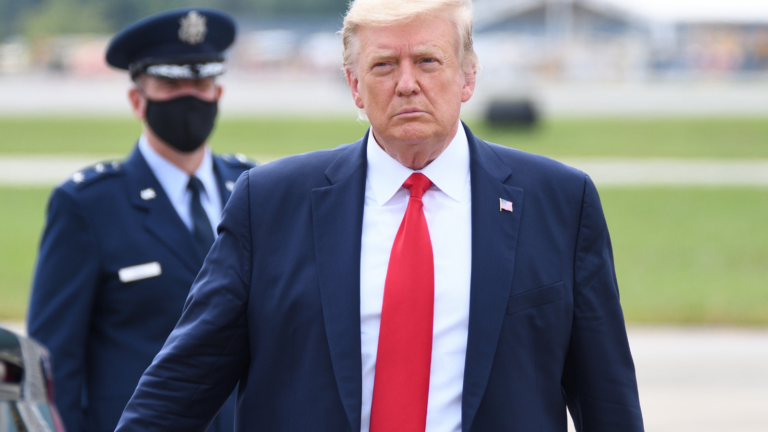
Trump’s appearance at Butler High School came as Republican Senator Jon Husted faced Democrat Sherrod Brown in a competitive race. Republican gubernatorial candidate Vivek Ramaswamy also appeared at the event. For the president, Ohio offered a stage to promote his economic program and argue that investment commitments demonstrated its success. Bloomberg reported that he highlighted projects involving Stellantis, aircraft developer Electra and pharmaceutical company Bayer, crediting his tariff policies with helping attract them.
Investment announcements deserve attention, but they answer a different question from whether existing exporters are keeping their customers. A proposed plant can promise future employment while another business struggles with the cost of reaching an established market. That is the tension behind the Ohio visit. The relevant comparison is not simply optimism against pessimism; it is between promised gains, their delivery dates and the measurable pressures already facing companies. Neither a rally speech nor an export-exposure estimate, by itself, settles that balance.
What the $3 Billion Figure Actually Measures
The central number is a measure of trade exposure based on 2025 commerce, rather than a running total of losses. Reporting by the USA TODAY Network put the affected share at roughly 12% of Canadian imports from Ohio and the value of those goods at approximately $3 billion. The products involved include steel, compressors, fans and washing machines—goods connected to both industrial operations and everyday purchases.
Exposure does not mean every shipment stops, every contract disappears or exporters collectively lose that amount. Some transactions may continue at higher prices. Others may involve discounts, smaller orders or a switch to another supplier. Those outcomes depend on individual products, contracts and available alternatives. For a manufacturer, the practical question is how much business remains profitable after the additional charge. For a worker, it is whether orders support the same hours and staffing. The headline number identifies the scale of goods in the dispute; it does not yet provide the bill for Ohio’s economy.
A September Escalation, Not a Rally-Day Surprise
The latest Canadian measures were already in force before Trump arrived in Ohio. Canada’s Department of Finance says they took effect on September 8, 2026, covering C$27.6 billion in U.S. goods. Ottawa described them as a dollar-for-dollar response to Washington’s decision to impose 50% tariffs on the same value of Canadian goods from August 22. Canadian rates vary by product, with the new schedule including 15%, 25% and 50% charges.
The distinction between the announcement and the rally matters. October 3 brought renewed political attention to an existing trade barrier; it was not the day Canada suddenly placed the entire reported Ohio total under tariff. The Canadian list reaches across steel and aluminum, dairy, appliances, agricultural equipment, pulp and paper, plastics and electronics. Existing counter-tariffs on U.S. automobiles also continued. For a business managing several product lines, that means the relevant burden depends on exactly what it sells and how those goods are classified—not a single uniform rate applied to everything crossing the border.
Canada Is a Customer—and an Ohio Employer
Ohio’s relationship with Canada extends beyond selling goods across a border. Canada’s March 2026 state profile identifies the country as Ohio’s largest foreign customer and lists 289 Canadian-owned businesses employing 28,650 people in the state. Those figures describe a commercial relationship with factories, payrolls and local suppliers on American soil. They also complicate any suggestion that Canadian and Ohio industrial interests are always on opposing sides.
The same profile offers a concrete example in Magna, the Canadian automotive supplier, which it says employs approximately 2,700 Ohioans. Its account describes investment in a Columbus-area seating operation beginning in 2019, followed by further expansion spending in 2022. These are established links rather than projects announced for the current political debate. Their significance is not that cross-border investment makes every tariff ineffective. It is that a policy meant to help American manufacturing operates within an industry where ownership, customers and production do not necessarily share the same national boundary. A Canadian company can also be an Ohio employer.
Who Actually Pays at the Border
A tariff is collected from the importer, rather than automatically deducted from the exporting country’s treasury. For Canada’s counter-tariffs, the importer bringing covered U.S. goods into Canada must account for the applicable charges. That does not mean Ohio suppliers escape the economic consequences. The legal payment and the eventual commercial burden are different questions: an importer may seek a lower purchase price, charge customers more or look for another source.
Consider a simplified example, not a reported transaction. A shipment with a customs value of C$100,000 facing a 25% surtax would attract C$25,000 in that surtax before considering other applicable charges or relief. Whether the Canadian buyer absorbs it, negotiates with the Ohio seller or passes costs onward depends on the deal. The calculation explains why a tariff can put pressure on both sides of the border. It also shows why multiplying all affected exports by one headline rate would produce a misleading estimate when product rates and commercial responses differ.
Protection for One Factory Can Raise Costs for Another
There is evidence that tariffs can increase production in protected industries. A U.S. International Trade Commission study released in March 2023 examined the effects of earlier steel and aluminum tariffs during 2018–2021. It estimated that the measures increased domestic steel production by 1.9% and aluminum production by 3.6%, while also raising prices. Those findings help explain why a metal producer might support protection even when other manufacturers object.
The same study identified a cost further along the production chain. Industries using steel and aluminum produced an estimated US$3.5 billion less in 2021 because of those tariffs. This was a historical assessment of specified measures, not a forecast for Ohio in 2026 or a complete verdict on national economic welfare. Still, it illustrates the balancing act. A company making metal and a company turning that metal into equipment may experience the same policy differently. Judging the current dispute requires examining both the producers receiving protection and the businesses paying more for materials or confronting retaliation abroad.
Supply Chains Do Not Fit Neatly Behind Borders
Concerns about trade barriers are also coming from U.S. industry groups that support stronger domestic manufacturing. On July 22, the American Forest & Paper Association warned that broad tariffs on Canadian inputs could disrupt integrated North American supply chains for pulp, paper, packaging and tissue. Its statement backed action against unfair trade practices while arguing for an approach that would preserve access to the materials American producers need.
That is an industry position, not an independent finding that every tariff damages every mill. Nevertheless, it identifies a practical dilemma for manufacturers caught between policies in both countries. A hypothetical Ohio business might face higher costs for a Canadian input while its finished product encounters a Canadian retaliatory duty. Those are separate pressures that can operate together. Changing suppliers may help, but only when an alternative meets price, quality and delivery requirements. The question for such a company is less about choosing a national side than keeping production competitive under the rules on both sides.
For Workers, the Timing of New Jobs Matters
In Springfield, nearly 1,400 workers were laid off from the former Navistar truck factory on September 30, the Associated Press reported. Among them was Kyle Bos, a father of two expecting another daughter in January. Canadian armoured-vehicle maker Roshel is buying the plant, and workers told AP they expected rehiring in six to 12 months. That prospect does not remove the immediate loss of income. Nor does the reporting establish that Canada’s September tariffs caused the layoffs.
Aircraft developer Electra separately announced plans on July 21 for a US$850 million Springfield production facility expected to create 1,975 jobs. That offers grounds for optimism, but a planned job and an available paycheck are not interchangeable. A displaced worker needs to know when hiring begins, which skills are required and whether the work is accessible. The important test is whether new projects turn into sustained employment—and how families manage the interval between losing one opportunity and gaining another.
A Trade Agreement Has Not Ended the Dispute
The confrontation is unfolding within a trading relationship that already has a negotiated framework. The Canada–United States–Mexico Agreement, known as CUSMA in Canada and USMCA in the United States, entered into force on July 1, 2020. Its design included a joint review on its sixth anniversary in 2026. Global Affairs Canada explains that this review was not an automatic expiration date: the agreement was written with an original 16-year term extending to 2036, alongside provisions for extension.
That distinction helps separate a contentious political argument from what the agreement’s calendar actually says. A review date, an extension decision and the treatment of a particular shipment are not interchangeable. The existence of the pact has plainly not prevented the current tariff confrontation. For an Ohio exporter, its value ultimately depends on usable market access and predictable conditions. A business cannot price a contract solely around assurances that a trade agreement exists; it needs to establish the rules and charges applying to the goods it will deliver.
Canada Is Looking Beyond Its Largest Market
Canada’s broader trade figures show why the relationship remains difficult to replace. Global Affairs Canada’s summary of the State of Trade 2026 report says the United States received 72% of Canadian goods exports in 2025. Yet Canadian exports to other markets grew 11.1% that year. Both numbers matter: the American market remains dominant, while business outside it is growing. Diversification is a process, not an overnight departure from North America.
Those statistics concern Canadian exports, not purchases of Ohio products, and they predate the September 2026 countermeasures. They therefore cannot demonstrate that this tariff round has redirected Ohio’s customers elsewhere. Their relevance is the longer-term commercial backdrop. Repeated disputes may encourage businesses to consider additional markets or suppliers when contracts come up for renewal. That possibility is harder to measure than a customs charge but potentially important. For an Ohio exporter with a longstanding Canadian customer, retaining the relationship may require more than waiting for a tariff announcement to be reversed.
Talks Continue Without a Promise of Zero Tariffs
Diplomacy has not stopped, but neither has it produced a promise that all duties will disappear. On October 1, U.S. Trade Representative Jamieson Greer said technical discussions with Canada continued and that difficult issues remained unresolved. The Canadian Press reported that he had spoken with Canadian International Trade Minister Maninder Sidhu the previous day at the G20 gathering in Milwaukee. Greer also said Washington was “not inclined to go to zero tariffs.”
For Ohio companies, that leaves an important distinction between a possible agreement and a complete return to earlier trading conditions. A negotiated outcome could change particular rates or rules without eliminating every barrier. Until its terms are published, however, any such outcome remains a possibility rather than a basis for firm cost assumptions. The immediate business question is what happens to the next order, not simply whether officials are still talking. Predictable terms would make that calculation easier; continued dialogue alone does not tell a supplier what to charge for a delivery months ahead.
The Real Test Comes After the Applause
The broader manufacturing picture provides another reason to look beyond campaign claims. Federal Reserve figures show U.S. manufacturing output fell 0.3% in August 2026 after seven consecutive monthly increases, while total industrial production was unchanged. Those readings cover a period before Canada’s September 8 measures and cannot establish their effect on Ohio. They are a starting point for judging subsequent developments, not evidence that a particular tariff caused a particular factory’s troubles.
The more revealing tests will be whether Ohio exporters retain Canadian orders, whether announced investments reach production and whether workers find stable jobs at comparable pay. Changes in shipments, prices and employment must also be distinguished from movements caused by demand, exchange rates or individual company decisions. The roughly $3 billion exposure figure makes the trade confrontation significant; it does not decide its eventual outcome. Trump’s rally offered a case for the benefits of his approach. The durable verdict will depend on what appears in order books, on factory floors and in household budgets after the political attention moves elsewhere.
This Options Discord Chat is The Real Deal
While the internet is scoured with trading chat rooms, many of which even charge upwards of thousands of dollars to join, this smaller options trading discord chatroom is the real deal and actually providing valuable trade setups, education, and community without the noise and spam of the larger more expensive rooms. With a incredibly low-cost monthly fee, Options Trading Club (click here to see their reviews) requires an application to join ensuring that every member is dedicated and serious about taking their trading to the next level. If you are looking for a change in your trading strategies, then click here to apply for a membership.