35,000+ smart investors are already getting financial news, market signals, and macro shifts in the economy that could impact their money next with our FREE weekly newsletter. Get ahead of what the crowd finds out too late. Click Here to Subscribe for FREE.
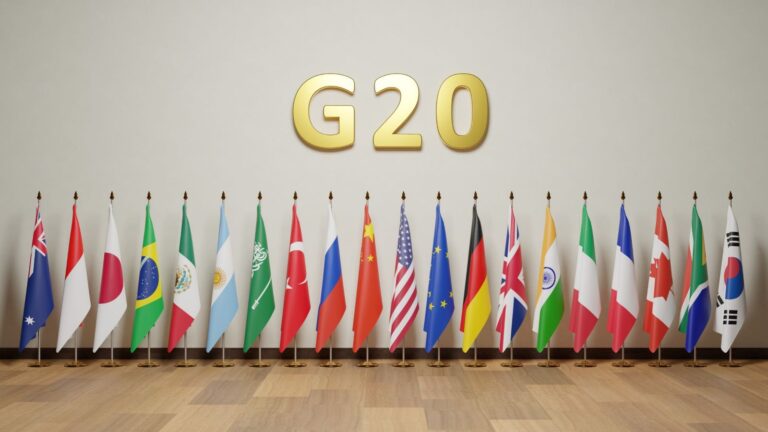
A G20 trade meeting in Milwaukee produced an unusual split on an issue that normally attracts broad agreement in principle: forced labour. The United States secured Mexico and Argentina as the only two other governments to join its separate statement calling for stronger action against goods made with forced labour, while Canada was not among the signatories.
That absence stands out because Canada already bans forced-labour imports, shares a North American trade agreement with the United States and Mexico that requires such prohibitions, and is trying to strengthen its own enforcement system. Ottawa also took part in the G20 discussion on eliminating forced labour. What remains publicly unexplained is why Canada chose not to sign the U.S.-led text. The distinction matters because non-signature is not the same as opposition to the underlying objective.
The Milwaukee Statement Drew a Very Small Coalition
Canada Not Among Two Countries Backing U.S.-Led G20 Forced-Labour Statement
- The Milwaukee Statement Drew a Very Small Coalition
- What the U.S.-Led Statement Actually Asks Countries to Do
- Canada Already Accepted a North American Obligation on Forced Labour
- Ottawa Has Built a System That Goes Beyond a Single Import Ban
- Enforcement, Not the Existence of a Ban, Has Become the Pressure Point
- Washington Has Already Turned the Issue Into a Tariff Dispute
- Canada Is Trying to Strengthen Its Own Border Regime
- Canada’s G20 Readout Supports the Goal but Does Not Explain the Missing Signature
- The Wider G20 Split Shows How Trade Issues Are Becoming Harder to Separate
The U.S. Trade Representative announced on October 2 that the trade ministers of the United States, Mexico and Argentina had agreed to a separate statement on eliminating forced labour from global supply chains. The agreement came on the margins of the G20 Trade Ministerial in Milwaukee, held under the United States’ 2026 G20 presidency. In practical terms, Mexico and Argentina were the only two other governments to join Washington’s initiative.
Canada attended the same meeting through International Trade Minister Maninder Sidhu but was not listed as a signatory. That is more precise than describing Canada as rejecting action against forced labour. U.S. officials said the wider G20 could not reach consensus on the proposal, but neither Washington’s announcement nor Canada’s post-meeting account identified Ottawa as opposing the objective. The public record establishes Canada’s absence from the three-country statement. It does not establish the government’s reason for withholding its signature, an important distinction when interpreting what happened in Milwaukee.
What the U.S.-Led Statement Actually Asks Countries to Do
The two-page statement contains policy commitments rather than simply condemning forced labour. It describes the practice as both a serious human-rights violation and a trade concern, arguing that goods produced through coercion can gain an artificial cost advantage over companies operating under stronger labour standards. It cites International Labour Organization estimates showing roughly 28 million people were in forced labour in 2021, approximately 2.7 million more than in 2016.
The three governments call for countries to prohibit the importation or sale of goods produced wholly or partly with forced labour, effectively enforce those measures and exchange information about risky products and supply chains. They also encourage World Trade Organization members to use WTO bodies to discuss the trade effects of forced labour and share enforcement information. That goes beyond corporate reporting requirements. For an importer, the difference can ultimately determine whether a product merely requires additional disclosure or whether a shipment is detained, rejected or prevented from entering a national market.
Canada Already Accepted a North American Obligation on Forced Labour
Canada’s absence is especially notable because the basic principle is already embedded in the Canada-United States-Mexico Agreement. Article 23.6 of CUSMA requires each of the three countries to prohibit imports produced wholly or partly using forced or compulsory labour, including forced child labour. The agreement also calls for cooperation among the three governments in identifying and tracking goods associated with forced labour. Canada implemented its import prohibition through the Customs Tariff in July 2020.
That creates an unusual contrast with the Milwaukee statement. Mexico joined the latest U.S.-led initiative while Canada, the third CUSMA partner, did not. Argentina, which is outside CUSMA, became Washington’s other supporter. Canada’s decision does not alter its obligations under the North American agreement; those remain in force regardless of what Ottawa signed in Milwaukee. It does, however, make the non-signature more notable because Canada, Mexico and the United States have already formally accepted a treaty commitment covering the same fundamental concern addressed by the new statement.
Ottawa Has Built a System That Goes Beyond a Single Import Ban
Canada’s existing framework has several layers. Since July 2020, goods mined, manufactured or produced wholly or partly with forced labour have been prohibited from entering Canada. The Canada Border Services Agency handles enforcement at the border, supported by information from other federal departments. Canadian importers are also responsible for conducting due diligence and ensuring the products they bring into the country comply with the law.
Another layer arrived in January 2024 when the Fighting Against Forced Labour and Child Labour in Supply Chains Act took effect. Certain companies and federal institutions must now report annually on measures taken to identify and reduce forced- and child-labour risks in their supply chains. The law is principally a transparency regime, however, rather than a comprehensive mandatory due-diligence system. Ottawa itself has noted that transparency requirements do not necessarily require businesses to identify, prevent, mitigate or remedy labour abuses. That distinction has helped drive discussions about whether Canada needs stronger tools beyond annual corporate reporting.
Enforcement, Not the Existence of a Ban, Has Become the Pressure Point
The central disagreement between Ottawa and Washington is not whether Canada has a forced-labour import prohibition. It clearly does. In June 2026, however, the U.S. Trade Representative placed Canada among six economies that already had such prohibitions but, in Washington’s assessment, had failed to enforce them effectively. Ottawa responded by emphasizing that Canada already has a substantial legal framework, shares the American objective and is working to strengthen enforcement.
Canada’s relatively small number of intercepted shipments has nevertheless generated scrutiny. In June, the CBSA said it had intercepted and detained 50 shipments over forced-labour concerns since the Canadian prohibition began. Two shipments were determined to have involved forced labour: a textile shipment in 2024 and frozen seafood in 2025. The figures cannot simply be compared one-for-one with U.S. enforcement statistics because the countries use different systems and reporting methods. Still, they illustrate why implementation has become as important as legislation. A prohibition written into law has limited effect if authorities struggle to identify problematic products moving through complicated international supply chains.
Washington Has Already Turned the Issue Into a Tariff Dispute
Forced labour is no longer solely a human-rights or customs-enforcement question in Canada-U.S. relations. In July, the Trump administration imposed Section 301 tariffs on 60 economies following USTR investigations into their handling of forced-labour imports. Canada was assigned a 10 per cent tariff rate, compared with 12.5 per cent for many of the economies targeted. Importantly for cross-border manufacturers, goods qualifying for preferential treatment under CUSMA were exempted, alongside other specified product exemptions.
Ottawa described the measure as part of a broader series of unilateral U.S. trade actions while emphasizing that it shares Washington’s objective of excluding forced-labour goods. That history gives the Milwaukee statement an economic dimension beyond its diplomatic wording. Joining the declaration would not automatically eliminate the American tariff, and Washington made no such promise. But the same U.S. administration seeking international support for the statement is already using tariffs to push trading partners toward stronger enforcement. For Canadian companies, forced-labour policy is therefore increasingly connected to customs compliance, market access and North American trade rules.
Canada Is Trying to Strengthen Its Own Border Regime
Ottawa has proposed significant new tools of its own. In June, the federal government introduced Bill C-35, the Ban on Importing Goods Made with Forced Labour Act. The legislation would move the prohibition from the Customs Tariff into a standalone statute and authorize the foreign affairs minister to establish a public list of goods considered high risk because of the producer, country or region associated with them. Importers handling listed goods could then be required to provide additional supply-chain tracing information.
The proposed legislation would also allow designated customs officers to determine whether imported products were made wholly or partly with forced labour and to detain goods for up to 90 days while conducting that assessment. Separate federal consultations this summer considered possible due-diligence requirements and civil-liability measures. As of the current parliamentary record, Bill C-35 remains at second reading in the House of Commons. In other words, Canada already has an import ban, but the stronger enforcement structure proposed by the government has not yet become law.
Canada’s G20 Readout Supports the Goal but Does Not Explain the Missing Signature
Global Affairs Canada’s account of the Milwaukee meeting says Sidhu participated in discussions about eradicating forced labour from global supply chains, alongside negotiations concerning food-related economic coercion, excess industrial capacity and the WTO’s most-favoured-nation principle. Ottawa also reiterated its support for open, predictable and rules-based trade. What the release does not contain is an explanation for Canada’s absence from the U.S.-Mexico-Argentina statement.
That silence limits what can responsibly be concluded. Canada might have had concerns about wording, process, enforcement expectations or the wider trade environment, but no public explanation located for the Milwaukee decision confirms any of those possibilities. Earlier Canadian government statements are much clearer about the underlying issue: Ottawa describes forced labour as a serious human-rights violation and says it shares Washington’s objective of preventing products made with forced labour from entering supply chains. The defensible conclusion is therefore narrower. Canada participated in the G20 discussion and maintains policies against forced labour, but it did not join this particular three-country declaration.
The Wider G20 Split Shows How Trade Issues Are Becoming Harder to Separate
Milwaukee produced consensus on one major trade question but divisions on several others. G20 trade ministers agreed to condemn the weaponization of food through coercive trade actions. They did not achieve group-wide agreement on forced labour or on the U.S. push for coordinated action against structural excess industrial capacity. American officials also used the gathering to promote discussion about whether the WTO’s most-favoured-nation principle remains suited to a global economy increasingly shaped by subsidies, tariffs and economic-security concerns.
That broader context is important. The objective of eliminating forced labour has extensive international support, but governments are debating how import restrictions should interact with tariffs, domestic industrial policy and supply-chain security. For Canada, the more concrete measures will be its border enforcement record, the progress of Bill C-35 and continued negotiations with the United States. Unless Ottawa provides a specific explanation for the Milwaukee decision, Canada’s non-signature should not be presented as evidence that it has abandoned its forced-labour commitments. It is a significant diplomatic omission whose motivation remains publicly unexplained.
This Options Discord Chat is The Real Deal
While the internet is scoured with trading chat rooms, many of which even charge upwards of thousands of dollars to join, this smaller options trading discord chatroom is the real deal and actually providing valuable trade setups, education, and community without the noise and spam of the larger more expensive rooms. With a incredibly low-cost monthly fee, Options Trading Club (click here to see their reviews) requires an application to join ensuring that every member is dedicated and serious about taking their trading to the next level. If you are looking for a change in your trading strategies, then click here to apply for a membership.