35,000+ smart investors are already getting financial news, market signals, and macro shifts in the economy that could impact their money next with our FREE weekly newsletter. Get ahead of what the crowd finds out too late. Click Here to Subscribe for FREE.
Canada’s latest opportunity to reopen a channel with Washington is emerging far from the formal negotiating table. International Trade Minister Maninder Sidhu is expected to speak with U.S. Trade Representative Jamieson Greer during the G20 Trade Ministerial in Milwaukee, Wisconsin, although Sidhu’s office says no specific time or format has been set.
The encounter comes at a particularly strained moment. Canada suspended formal trade negotiations with the United States on August 21, both governments have since imposed additional trade measures, and new U.S. import bans took effect September 29. A conversation in Wisconsin would not by itself restart negotiations, but it could offer an early indication of whether the two governments are prepared to move beyond public pressure and back toward structured discussions.
Milwaukee Creates an Opening Without Restarting the Talks
Canada’s Trade Minister Expected to Speak With Trump’s Trade Chief at Wisconsin G20 as Talks Remain Stalled
- Milwaukee Creates an Opening Without Restarting the Talks
- Why the August Negotiations Fell Apart
- Tariffs and Import Bans Have Hardened the Standoff
- Washington Is Sending Two Different Signals
- CUSMA Is Still Alive, but Its Future Is Unsettled
- The Economic Relationship Is Still Enormous
- Canada Is Using the G20 to Diversify at the Same Time
- What Would Count as Real Movement After Wisconsin
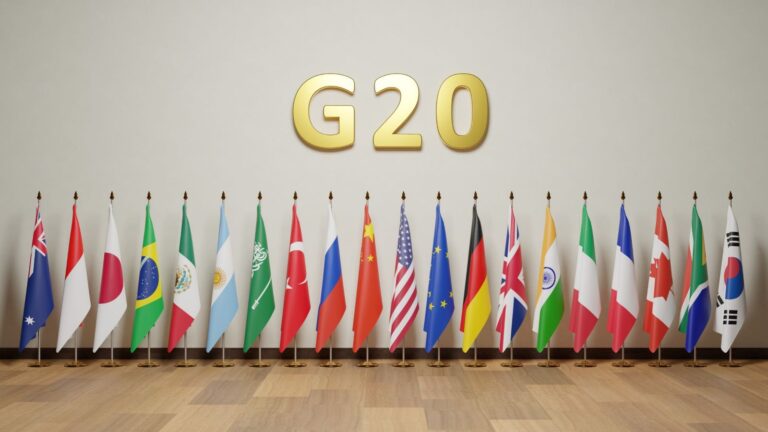
Greer is hosting the G20 Trade Ministerial in Milwaukee from September 30 through October 1, bringing together ministers from the world’s largest economies at a time when tariffs, industrial policy and supply-chain security are reshaping global trade. The U.S. agenda includes forced labour in supply chains, structural excess production, the Most-Favoured-Nation principle and what Washington describes as the weaponization of food trade. Sidhu is attending on Canada’s behalf and is expected to have some form of contact with Greer while both are in Wisconsin.
That distinction matters because the expected exchange is not being described as a new negotiating round. Sidhu is Canada’s International Trade Minister, but Dominic LeBlanc holds the dedicated cabinet responsibility for Canada-U.S. trade, while Janice Charette serves as Canada’s chief trade negotiator to the United States. That makes Sidhu well positioned to keep political communication open without implying that the negotiating machinery suspended in August has formally restarted. In practical terms, Milwaukee provides an opportunity to test the temperature of the relationship before either government commits to something more substantial.
Why the August Negotiations Fell Apart
Only weeks ago, the two governments appeared much closer to an agreement. Prime Minister Mark Carney said on August 18 that substantial progress had been made, while Washington briefly postponed the implementation of new 50 per cent tariffs to provide negotiators with more time. Three days later, Carney announced that Canada was suspending the negotiations. Ottawa said late changes to the American proposal were economically unacceptable and raised concerns about Canadian sovereignty, including Ottawa’s freedom to negotiate with other countries and protections surrounding French language and Canadian culture.
Washington has presented the breakdown very differently. Greer has said Canada walked away from what he described as a near-final agreement offering unusually favourable treatment. He also accused Canadian negotiators of raising requests for additional tariff relief on heavy-duty trucks during the closing stages. Canada disputes the broader American characterization of what happened. Those competing accounts are important because they show that the gap is no longer limited to individual tariff rates. The two sides also disagree about what was actually agreed, which concessions were reasonable and how much policy flexibility Canada should retain under a broader deal.
Tariffs and Import Bans Have Hardened the Standoff
The failed negotiations quickly produced measures affecting actual shipments rather than simply negotiating positions. Canada imposed new counter-tariffs effective September 8 covering $27.6 billion worth of imports from the United States. Depending on the product, rates of 15, 25 or 50 per cent were applied, with targeted categories including steel and aluminum, dairy products, appliances, agricultural equipment, pulp and paper, plastics and electronics. Ottawa said the measures were designed to match the value of U.S. tariffs imposed on Canadian goods.
Washington escalated again by moving beyond duties on some products to outright import restrictions. Beginning September 29, certain Canadian alcoholic beverages, dairy-related products and motorcycles were excluded from the U.S. market. An American Action Forum estimate cited by The Canadian Press put the affected 2025 trade at roughly US$967 million, with alcoholic beverages accounting for most of that amount. Quebec-based BRP, for example, confirmed that its three-wheeled Can-Am Spyder and Canyon motorcycles were caught by the restrictions. Those examples illustrate how what can sound like an abstract diplomatic dispute translates into cancelled shipments, inventory problems and difficult production decisions for individual companies.
Washington Is Sending Two Different Signals
Greer publicly suggested on September 25 that the United States was in no hurry to reopen negotiations. He said President Trump was comfortable with the existing situation and argued that the United States continued receiving important Canadian commodities, including oil, natural gas, potash and agricultural products. Greer acknowledged that Canadian officials continued to make occasional contact with Washington, but said there was “no urgency” on the American side. That position suggested the administration believed the existing tariff structure gave it sufficient leverage to wait.
President Donald Trump sounded more optimistic just three days later, although his comments did not amount to an announcement that negotiations were resuming. Speaking to reporters on September 28, Trump said he expected Canada to return within “three or four weeks” and predicted Ottawa would seek to remove tariffs. The contrast is notable: the U.S. trade representative has publicly emphasized Washington’s willingness to wait, while the president has spoken about renewed engagement within weeks. Sidhu’s interaction with Greer in Milwaukee could therefore be closely watched for evidence of which message better reflects Washington’s immediate negotiating posture.
CUSMA Is Still Alive, but Its Future Is Unsettled
The broader North American trade agreement adds another layer of uncertainty. At the mandatory July 1 joint review of the Canada-United States-Mexico Agreement, the United States declined to extend CUSMA in its current form. Canada and Mexico supported an extension. That decision did not terminate the agreement. CUSMA remains in force, and Canadian officials have stressed that its existing rules and market-access provisions continue to apply while the review process remains unresolved.
Under CUSMA’s review mechanism, failure to agree on an extension in 2026 triggers annual reviews beginning in 2027. The agreement can still be extended for another 16-year period if all three countries later agree. If no consensus is ever reached, the current agreement is scheduled to expire in 2036. That timetable gives governments years to negotiate, but it also creates uncertainty for businesses making investments that can last decades. The issue is especially significant for capital-intensive sectors such as automotive manufacturing, metals, energy and advanced manufacturing, where companies must make plant and supply-chain decisions well before the eventual fate of the agreement is settled.
The Economic Relationship Is Still Enormous
Canada has been reducing its dependence on the American market, but the underlying commercial relationship remains exceptionally large. Statistics Canada reported that Canadian merchandise exports to the United States fell 5.8 per cent in 2025, while imports from the U.S. declined 2.9 per cent. The American share of Canadian merchandise exports dropped from 75.9 per cent in 2024 to 71.7 per cent in 2025. Canada nevertheless recorded an $81.6-billion merchandise trade surplus with the United States for the year.
More recent U.S. Census Bureau figures underline the continuing scale of the connection. From January through July 2026, the United States exported approximately US$205.5 billion worth of goods to Canada and imported roughly US$233.7 billion from Canada. That puts two-way merchandise trade at about US$439 billion in just seven months. Numbers of that size help explain why even a limited diplomatic conversation receives significant attention. Tariffs affecting only a portion of bilateral commerce can still reach billions of dollars, touching industries with factories, suppliers, workers and customers on both sides of the border.
Canada Is Using the G20 to Diversify at the Same Time
Sidhu is not travelling to Wisconsin solely to discuss the United States. His schedule also includes meetings with representatives from France, Australia, Türkiye and India. Canadian officials have identified several diversification priorities around the G20 gathering, including advancing a digital trade agreement with the European Union, continuing negotiations with the Mercosur bloc in South America and pushing ahead with an economic partnership agreement with India. That approach reflects Ottawa’s broader effort to create more options for Canadian exporters as access to the American market becomes less predictable.
There has already been movement on several of those fronts. Canada and India had completed four rounds of negotiations toward a comprehensive economic partnership agreement by late September, with both governments targeting completion by the end of 2026. Two-way Canadian goods and services trade with India reached $30.4 billion in 2025. Canada has also been accelerating negotiations with ASEAN and the Philippines. Merchandise trade between Canada and ASEAN reached $52.5 billion in 2025, up 23.7 per cent from the previous year. Those markets remain far smaller than the U.S. relationship, but Ottawa increasingly views them as part of a long-term strategy to reduce concentration risk.
What Would Count as Real Movement After Wisconsin
Because no formal Sidhu-Greer meeting format has been announced, the existence of a conversation alone would be a modest development rather than a breakthrough. A clearer change in the relationship would require something more concrete: an agreement to schedule formal negotiations, a new mandate for the officials who led the earlier talks, specific discussions about reducing sectoral tariffs, or a framework for resolving disagreements connected to the CUSMA review. Until one of those steps occurs, Canada and the United States remain in a period of political contact without an active comprehensive negotiating process.
The setting also matters. Greer’s official G20 agenda is focused primarily on the architecture of global trade, including excess industrial capacity, forced labour, food-related trade restrictions and the future of Most-Favoured-Nation treatment. Sidhu, meanwhile, is using the gathering to develop relationships with several other trading partners. The Canada-U.S. dispute is therefore only one part of a much larger meeting. Still, with tariffs already affecting businesses and CUSMA heading toward annual reviews, the significance of Milwaukee will ultimately depend on whether informal contact produces a path back to structured talks.
This Options Discord Chat is The Real Deal
While the internet is scoured with trading chat rooms, many of which even charge upwards of thousands of dollars to join, this smaller options trading discord chatroom is the real deal and actually providing valuable trade setups, education, and community without the noise and spam of the larger more expensive rooms. With a incredibly low-cost monthly fee, Options Trading Club (click here to see their reviews) requires an application to join ensuring that every member is dedicated and serious about taking their trading to the next level. If you are looking for a change in your trading strategies, then click here to apply for a membership.