35,000+ smart investors are already getting financial news, market signals, and macro shifts in the economy that could impact their money next with our FREE weekly newsletter. Get ahead of what the crowd finds out too late. Click Here to Subscribe for FREE.
Toronto-listed i-80 Gold has put new numbers around one of the key assets in its Nevada growth plan, assigning the Granite Creek underground operation an after-tax net present value of US$118 million under its newly completed feasibility study. The figure is based on a US$2,750-per-ounce gold assumption and comes as the mine is already ramping up production rather than waiting for construction to begin.
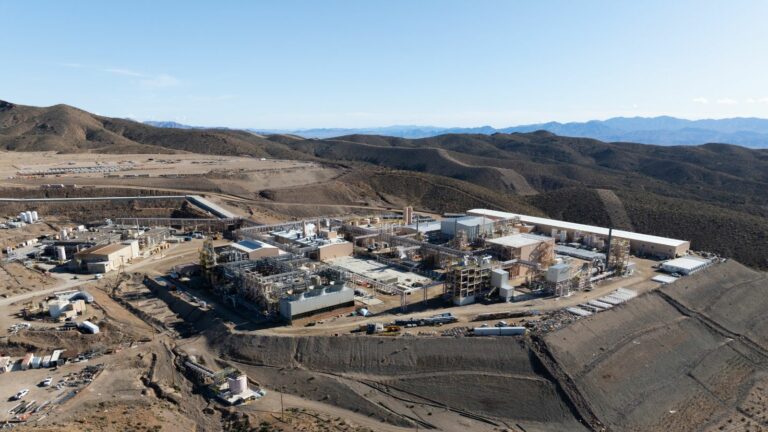
For the Canadian-incorporated miner, Granite Creek is becoming more than a standalone underground operation. Its reserves, rising production profile and future connection to i-80’s Lone Tree processing complex are central to a broader plan to build a larger Nevada gold business. The latest study shows both the opportunity and the execution challenge: substantially more value becomes available at higher gold prices, but costs, processing infrastructure, water management and development work still matter.
What the US$118 Million Mine Value Actually Represents
Toronto-Listed i-80 Gold Puts Nevada Mine Value at US$118 Million as Canadian Miner Expands U.S. Production
- What the US$118 Million Mine Value Actually Represents
- Granite Creek Now Has Its First Formal Mineral Reserve
- Production Is Expected to Move Toward a Much Higher Level
- Lone Tree Could Change the Economics of Every Ounce
- Costs Show Why the Processing Transition Matters
- Underground Mining Still Comes With Real Operating Challenges
- A Canadian-Listed Company Is Building Its Business Deep Inside Nevada
- Granite Creek Is Only One Part of a Much Larger Expansion Plan
The US$118 million figure is an after-tax net present value, or NPV, calculated using a 5% discount rate and a base-case gold price of US$2,750 per ounce. It should not be confused with a sale price for Granite Creek or with i-80 Gold’s market capitalization. NPV estimates the present value of projected future mine cash flows after accounting for the timing of those cash flows, taxes and the assumptions built into the feasibility study. At the same base-case gold price, Granite Creek is projected to generate US$153 million in undiscounted after-tax cash flow over its modeled life.
The project’s sensitivity to gold prices is particularly striking. At an illustrative US$4,500-per-ounce gold price, the study calculates an after-tax NPV of US$598 million and undiscounted after-tax cash flow of US$744 million. At US$6,000 gold, the modeled NPV rises to US$985 million. Those scenarios are sensitivities rather than price forecasts, meaning the mine plan and other major assumptions are held constant while the gold price changes. For investors, that distinction is important: Granite Creek offers substantial commodity-price leverage, but the US$118 million base case remains the study’s central economic reference point.
Granite Creek Now Has Its First Formal Mineral Reserve
One of the most consequential changes in the feasibility study is the establishment of Granite Creek Underground’s first proven-and-probable mineral reserve. The operation now carries 2.20 million tonnes of reserves grading 7.87 grams of gold per tonne, containing approximately 556,500 ounces. Most of those ounces are classified as probable reserves, while roughly 80,600 ounces fall within the proven category. The South Pacific Zone is especially important, accounting for approximately 389,200 ounces of the combined reserve inventory.
The underlying resource base also became much larger and more defined. Measured and indicated underground resources reached roughly 859,500 ounces at 7.17 grams per tonne, while another 202,800 ounces remain in the inferred category. Compared with the 2025 preliminary economic assessment, measured and indicated resources increased by 229%, while inferred resources declined by 38% as drilling upgraded material into higher-confidence categories. The new estimate incorporated approximately 36,470 metres of drilling from 164 core holes completed between 2023 and the end of 2025. Even after accounting for mining depletion, the company says roughly 65,000 ounces were added to the mineable inventory compared with the previous assessment.
Production Is Expected to Move Toward a Much Higher Level
Granite Creek is not a project whose economics depend on production beginning years from now. The underground mine is already operating and ramping up, with i-80 forecasting between 30,000 and 40,000 recovered ounces of gold from Granite Creek during 2026. The feasibility study then points to a considerably larger production profile once the company’s processing strategy reaches its planned steady state. From 2028 through 2032, average annual production is estimated at approximately 75,100 ounces, about 15,000 ounces per year higher than contemplated in the earlier preliminary economic assessment.
Across the full modeled mine life, the study assumes roughly 2.17 million tonnes of ore will be mined and approximately 2.20 million tonnes processed, including stockpiled material. The average processed grade is estimated at 7.87 grams per tonne with an average recovery of 87%, resulting in roughly 485,000 recovered ounces. Average annual production over the entire mine life is lower, at about 53,900 ounces, because the model includes the current ramp-up and later wind-down years. That difference highlights why the 2028-to-2032 period matters so much: it represents the years when Granite Creek is expected to operate closest to its intended production rhythm.
Lone Tree Could Change the Economics of Every Ounce
Processing is at the heart of i-80 Gold’s Nevada strategy. Granite Creek currently sends sulfide material to a third-party processing facility, while oxide material is handled through separate arrangements. The feasibility plan expects third-party processing to continue through roughly the middle of 2027. After that, approximately six months of material would be stockpiled ahead of the planned commissioning of i-80’s wholly owned Lone Tree autoclave and carbon-in-leach plant during the fourth quarter of 2027.
That transition is intended to reduce the company’s dependence on outside processors and give i-80 more control over recoveries, schedules and costs. Lone Tree is undergoing a refurbishment estimated at US$430 million for the overall facility, with first gold targeted by year-end 2027. The company has said its December 2025 engineering work indicated that moving from toll processing to its own plant could improve cash margins by an estimated US$1,000 to US$1,500 per ounce, depending on grade and gold prices. Granite Creek’s feasibility study allocates approximately US$49.3 million of Lone Tree refurbishment capital to the project. In practical terms, Lone Tree is being built as the processing hub connecting several mines rather than as infrastructure serving Granite Creek alone.
Costs Show Why the Processing Transition Matters
Granite Creek’s economics look noticeably different once Lone Tree is expected to be operating. During the five-year steady-state period from 2028 through 2032, the feasibility study estimates cash costs of US$1,827 per ounce and all-in sustaining costs of US$1,915 per ounce, excluding the allocated capital required to refurbish Lone Tree. At the study’s US$2,750 base-case gold price, that leaves a simple difference of US$835 per ounce between the assumed gold price and steady-state AISC before corporate costs and other items not captured by that comparison.
Across the entire 8.5-year modeled life, however, cash costs rise to US$2,076 per ounce and AISC to US$2,273. That higher life-of-mine figure reflects the more expensive third-party processing period at the front end as well as lower production during the final years. Granite Creek is also expected to require about US$82.9 million of sustaining capital. Including its US$49.3 million allocation of Lone Tree capital and approximately US$12.7 million of closure and reclamation costs brings modeled capital and closure spending to about US$144.9 million. The numbers help explain why simply counting ounces is not enough; where and how those ounces are processed can materially change their economic value.
Underground Mining Still Comes With Real Operating Challenges
The improved feasibility numbers do not eliminate the practical difficulties of operating an underground mine. During the second quarter of 2026, ground conditions temporarily restricted access to two of Granite Creek’s higher-grade headings. The company subsequently completed remediation and restored access, while underground development continued ahead of its mine plan. Processing created another bottleneck: more than 5,300 recoverable ounces were sitting in process at a third-party facility at the end of June, and roughly 1,800 additional ounces were held in inventory.
Water management is another major operational issue. Granite Creek’s underground pumping system has been operating close to capacity, and the feasibility work estimates residual passive inflows could remain above roughly 2,500 to 2,700 gallons per minute until additional dewatering infrastructure advances below the mine workings. A second water-treatment plant has therefore been constructed with approximately 3,500 gallons per minute of additional treatment capacity. Higher-capacity pumps and expanded underground sumps are also being installed. These are less eye-catching numbers than reserves or NPV, but they illustrate the day-to-day engineering work required before a high-grade geological resource consistently becomes saleable gold.
A Canadian-Listed Company Is Building Its Business Deep Inside Nevada
Although much of i-80 Gold’s physical footprint is American, its corporate structure retains clear Canadian roots. The company was incorporated in British Columbia in November 2020, maintains an executive office in Toronto and trades on the Toronto Stock Exchange under the symbol IAU. Its shares also trade in the United States under IAUX, while its operational head office is in Reno. Its principal mining and development properties — Granite Creek, Ruby Hill, Cove and Lone Tree — are concentrated in Nevada.
That concentration places i-80 in the most important gold-producing state in the United States. Nevada produced about 3.48 million troy ounces of gold in 2024, according to state mineral-industry reporting, and U.S. Geological Survey data estimated that the state represented roughly 70% of American mine production that year. Granite Creek itself lies near the intersection of the Getchell and Battle Mountain-Eureka mineral trends and close to established Nevada gold operations including Turquoise Ridge and Twin Creeks. For a company attempting to operate several deposits through centralized processing infrastructure, that geographic concentration can be strategically valuable: mines, technical teams and processing assets can be developed within one established mining jurisdiction rather than scattered across multiple countries.
Granite Creek Is Only One Part of a Much Larger Expansion Plan
Granite Creek’s feasibility study arrives while i-80 is advancing several projects simultaneously. At the end of June 2026, the company reported US$464.6 million in cash and cash equivalents, although it also used US$49.6 million in operating cash during the second quarter as development activity accelerated. Archimedes at the Ruby Hill property is intended to become the company’s second underground mine, with first gold mining targeted for the fourth quarter of 2026. Lone Tree construction is expected to intensify around the same period before the processing plant’s targeted start-up near the end of 2027.
That makes the Granite Creek study important beyond its US$118 million headline valuation. The operation is intended to become one source of high-grade feed for a regional processing system that could ultimately serve multiple mines. Whether that plan delivers the anticipated economics will depend on several variables: completion of Lone Tree on schedule and budget, continued underground productivity, water management, permitting, future drilling success and gold prices. What has changed is the level of definition. Granite Creek now has an initial reserve, an 8.5-year modeled mine life and a clearer path toward approximately 75,000 ounces of annual production during its expected steady-state years. For i-80 Gold, the next phase is increasingly about execution rather than simply demonstrating that the Nevada portfolio contains gold.
This Options Discord Chat is The Real Deal
While the internet is scoured with trading chat rooms, many of which even charge upwards of thousands of dollars to join, this smaller options trading discord chatroom is the real deal and actually providing valuable trade setups, education, and community without the noise and spam of the larger more expensive rooms. With a incredibly low-cost monthly fee, Options Trading Club (click here to see their reviews) requires an application to join ensuring that every member is dedicated and serious about taking their trading to the next level. If you are looking for a change in your trading strategies, then click here to apply for a membership.