35,000+ smart investors are already getting financial news, market signals, and macro shifts in the economy that could impact their money next with our FREE weekly newsletter. Get ahead of what the crowd finds out too late. Click Here to Subscribe for FREE.
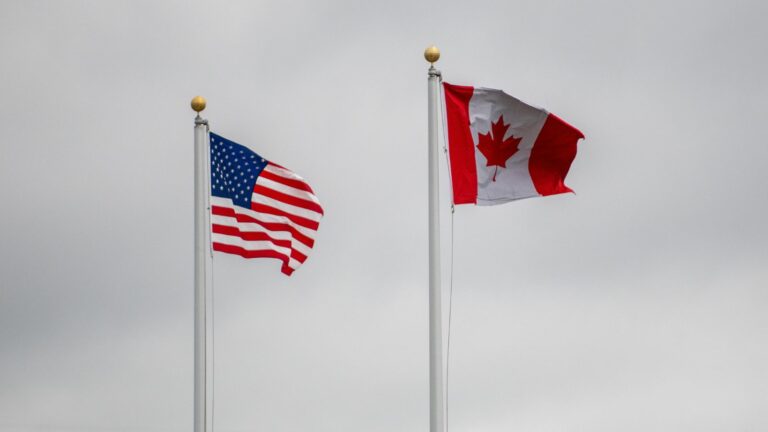
Canada has emerged at the top of a new measure of international confidence at a moment when faith in the traditional great powers is under strain. A 34-country study commissioned by the Rockefeller Foundation and conducted by Focaldata found that 60% were comfortable with Canada taking a leading role in world affairs, compared with 39% for the United States and 37% for China.
The result does not mean Canada has suddenly replaced Washington as the world’s dominant power. It measures comfort with leadership, not military strength, economic size or diplomatic influence. Still, the gap is striking. Respondents were increasingly open to countries working together without either Washington or Beijing, while trust in several international institutions also increased. The findings point to a global environment in which credibility, predictability and cooperation may be carrying more weight alongside traditional power.
Canada Takes the Top Spot in the Leadership Measure
Canada Hits 60% in Global Leadership Poll as U.S. Falls to 39%
- Canada Takes the Top Spot in the Leadership Measure
- The 60% and 39% Numbers Need Some Important Context
- The Results Give New Weight to the Idea of “Middle Powers”
- The U.S. Result Shows Division Rather Than Universal Rejection
- Threat Perceptions Make the Leadership Gap More Significant
- A Majority Is Open to Cooperation Without Either Superpower
- Trust in International Institutions Is Moving in the Opposite Direction
- Canada’s Global Reputation Does Not Remove Its Domestic Challenges
Canada received the highest rating among the countries and international bodies tested for taking a leading role in world affairs. Its 60% level of comfort put it narrowly ahead of Japan at 58% and Australia at 55%. The United Kingdom received 54%, while Germany, Spain and Italy each registered 53%. The United Nations stood at 52%, France at 51%, and the United States considerably farther down the table at 39%. China followed at 37%, while Russia received just 26%. The pattern is notable because several countries without superpower-sized militaries or economies attracted considerably more comfort than Washington, Beijing or Moscow.
Canada’s showing was also unusually consistent across different economic groups. Among the wealthier economies surveyed, 57% were comfortable with Canadian leadership; among developing economies, the figure was 63%. Australia was similarly balanced, at 55% and 56% respectively. China showed a much larger divide: only 23% in wealthier economies expressed comfort with Chinese leadership, compared with 53% across developing economies. The United States registered 30% among wealthier economies and 47% in the developing group.
The 60% and 39% Numbers Need Some Important Context
The research is substantial, but the percentages should be understood precisely. Focaldata conducted nationally representative polling in 34 countries between July 21 and August 5, 2026, gathering responses from roughly 35,400 adults. Individual country samples ranged from 754 to 1,338 people, with approximate margins of error of two to four percentage points at the 95% confidence level. Samples were designed and weighted using factors including age, gender, region and education, with ethnicity and previous political vote incorporated where those measures are commonly collected.
The leadership figures are averages of country-level percentages rather than a simple pooled vote by every respondent worldwide. Respondents also did not rate their own country, preventing Canadians from boosting Canada’s score or Americans from directly determining the American figure. Another important qualification concerns the wording of the headline: the 2026 report puts U.S. leadership comfort at 39%, but the foundation’s published 2025 study did not include the same “comfortable with a leading role” question. That means the 39% result should not be treated as a precisely measured year-over-year decline from an equivalent 2025 number.
The Results Give New Weight to the Idea of “Middle Powers”
One of the most striking features of the ranking is that Canada, Japan and Australia occupy its top three positions. None has the economic or military scale of the United States or China, yet all three received substantially greater comfort as potential international leaders. The European Union also scored 55%. Taken together, the results suggest that respondents were not simply equating leadership with raw national power. Countries perceived as capable of cooperating within alliances and institutions could still command relatively broad acceptance even when they lacked the ability to dictate outcomes independently.
That finding intersects with a foreign-policy argument Prime Minister Mark Carney has been making throughout 2026. In speeches in Australia and at the World Economic Forum, Carney has argued that middle powers can gain leverage by building flexible coalitions around trade, technology, security and critical minerals rather than relying exclusively on bilateral relations with the biggest powers. The poll does not establish that respondents were reacting to Carney’s strategy, and correlation should not be mistaken for endorsement of a particular government. It does, however, show unusually high international comfort with several countries that fit the middle-power model he has described.
The U.S. Result Shows Division Rather Than Universal Rejection
The American number is more nuanced than a simple 39% approval-versus-rejection story. Globally, 39% said they were comfortable with the United States playing a leading role, while 40% were uncomfortable. That effectively leaves opinion almost evenly divided, with the remainder neutral or unsure. China produced a similarly mixed picture at 37% comfortable and 36% uncomfortable. Russia was different: only 26% expressed comfort with Russian leadership while 50% were uncomfortable, making its balance markedly more negative than either Washington’s or Beijing’s.
Views of U.S. leadership also varied substantially depending on where respondents lived. Comfort reached 47% across the developing economies studied but only 30% in wealthier economies, a 17-point difference. That geographic split complicates broad claims that the United States has simply “lost the world.” Washington retains considerable support in many places, and attitudes toward it are far from uniform. What the study does demonstrate is that the United States no longer received majority comfort across the countries surveyed and was outpaced on this particular measure by Canada, Japan, Australia and several major European actors.
Threat Perceptions Make the Leadership Gap More Significant
The study asked a separate question about whether the United States, China and Russia represented major threats to respondents’ countries. Russia recorded the highest global median at 42%, followed by the United States at 34% and China at 30%. Yet the country-by-country picture was striking: the United States was the most widely identified of the three as a major threat in 15 countries, Russia in 14 and China in five. Researchers stressed that respondents rated each country separately rather than ranking the three directly, an important distinction when interpreting those results.
Canada produced one of the more politically consequential findings. Among Canadians surveyed, 52% identified the United States as a major threat, compared with 50% for Russia and 35% for China. The U.S. was also identified as the greatest threat of the three in 13 of the 16 developing economies where all three could be rated. Those numbers emerged during a period of significant Canada-U.S. trade friction, with new U.S. tariffs affecting categories of Canadian imports and Ottawa seeking greater economic diversification. The poll establishes the attitudes, though it cannot by itself determine exactly which events caused them.
A Majority Is Open to Cooperation Without Either Superpower
Perhaps the clearest sign of changing attitudes is not Canada’s 60% result but another question in the study. Respondents in 32 countries were asked whether they would support a coalition of nations tackling global challenges even if neither the United States nor China participated. The global figure was 61% in favour and only 12% opposed — roughly a five-to-one difference. Twenty-nine of the 32 countries recorded majority support, while Hungary, Saudi Arabia and Romania were just below that threshold at 49%.
Canada was above the global level, with 66% supporting such a coalition and 12% opposed. Kenya registered the strongest support at 79%, followed by Nigeria at 71% and South Korea and Ghana at 70%. The finding crossed the economic divide as well: support stood at 60% in wealthier economies and 62% in developing ones. This does not mean respondents wanted the United States and China excluded from world affairs. The question tested whether cooperation could proceed without them. The answer from most countries was that other states should still be capable of acting when the two largest powers are absent or unable to agree.
Trust in International Institutions Is Moving in the Opposite Direction
The leadership findings arrived alongside an unexpected shift in views of international institutions. All six organizations tracked from the 2025 study gained trust in 2026. The World Health Organization climbed eight percentage points to 69%, while trust in the United Nations rose four points to 62%. The World Trade Organization reached 57%, up seven points. The World Bank gained nine points to 55%, the International Criminal Court rose six points to 54%, and the International Monetary Fund increased eight points to 51%.
Those changes matter because public attitudes toward the global system were otherwise deeply pessimistic. Some 69% across the surveyed countries said the world had become worse during the previous year, and only 38% were optimistic that their national economy would improve over the next five years. Yet 57% still said their country should cooperate on global challenges even when doing so required compromising on some national interests, compared with 55% in the 2025 wave. Rather than producing a straightforward retreat from international engagement, worsening conditions appear to have coexisted with continued demand for cooperation and stronger trust in several institutions.
Canada’s Global Reputation Does Not Remove Its Domestic Challenges
Canada’s leadership score is therefore best understood as an international reputational advantage, not evidence that the country is immune to the same economic anxiety affecting other advanced economies. Only 31% of Canadian respondents said they were optimistic that Canada’s economy would improve over the next five years, down three percentage points from the previous wave. Across the combined United States-and-Canada region, 72% said the world had become worse during the past year. The same study found only 37% in that region believed global cooperation was currently working effectively.
That contrast may be the most useful way to read Canada’s 60% showing. People abroad can be relatively comfortable with Canadian international leadership while Canadians themselves remain worried about economic conditions and the effectiveness of the international system. Diplomatic goodwill is an asset, but it is different from economic scale, defence capacity or the ability to compel other governments. Canada’s challenge is turning reputational credibility into practical partnerships that produce measurable results. The poll suggests there may be unusually strong room for that approach, while offering no guarantee that goodwill alone can deliver it.
This Options Discord Chat is The Real Deal
While the internet is scoured with trading chat rooms, many of which even charge upwards of thousands of dollars to join, this smaller options trading discord chatroom is the real deal and actually providing valuable trade setups, education, and community without the noise and spam of the larger more expensive rooms. With a incredibly low-cost monthly fee, Options Trading Club (click here to see their reviews) requires an application to join ensuring that every member is dedicated and serious about taking their trading to the next level. If you are looking for a change in your trading strategies, then click here to apply for a membership.