35,000+ smart investors are already getting financial news, market signals, and macro shifts in the economy that could impact their money next with our FREE weekly newsletter. Get ahead of what the crowd finds out too late. Click Here to Subscribe for FREE.
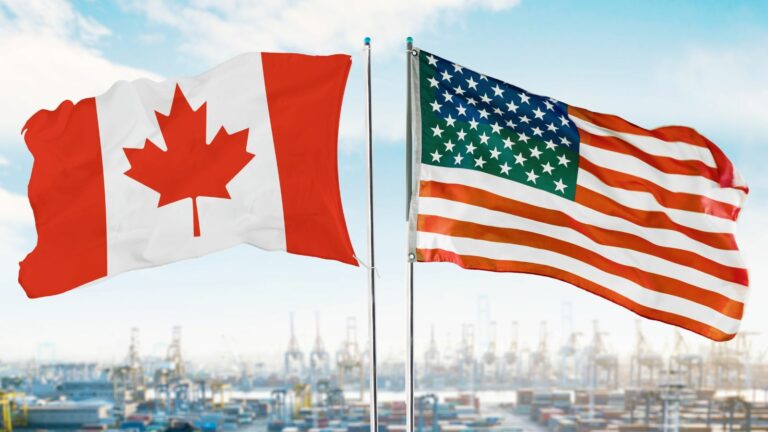
Canada has emerged with the highest level of public comfort for taking a leading role in world affairs in a new 34-country study, opening a striking gap over the United States. The result comes at a moment when economic anxiety, wars, trade friction and questions about the international order are reshaping how people view established powers.
The finding does not mean respondents were choosing Canada to replace the United States as the world’s dominant power. Rather, it measures how comfortable people across the countries studied would feel with different nations and institutions exercising global leadership. That distinction matters. Still, Canada’s 60% result, compared with 39% for the United States and 37% for China, adds another data point to a broader shift toward cooperation involving a wider group of countries.
Canada Opens a 21-Point Gap Over the United States
Canada Tops U.S. 60% to 39% on Comfort With Global Leadership in 34-Country Poll
- Canada Opens a 21-Point Gap Over the United States
- How the 34-Country Poll Was Actually Conducted
- Canada’s Rating Crosses the Wealthier-Developing Economy Divide
- Most Support a Coalition That Excludes Both Washington and Beijing
- Threat Perceptions Add a More Complicated Dimension
- International Institutions Are Gaining Trust at the Same Time
- A Darker Global Mood Is Making Security More Important
- The Result Fits Canada’s Middle-Power Push, but It Has Limits
Canada recorded a 60% comfort level when respondents were asked about countries and organizations playing a leading role in world affairs. The United States stood at 39%, creating a 21-percentage-point gap. China came in slightly below the U.S. at 37%, while Russia registered just 26%. The comparison is particularly notable because the world’s two largest economies both remained below the 50% mark on this measure.
Canada was not alone near the top. Japan reached 58%, while Australia recorded 55%. The European Union and several major European countries also performed considerably better than either the United States or China. That produces a picture in which public comfort is spread among several established democracies and international institutions rather than concentrated around a single dominant state. The finding should not be interpreted as a measure of military, economic or diplomatic power, however. Respondents were answering a narrower question: whether they felt comfortable with each country or organization taking a leading role in world affairs.
How the 34-Country Poll Was Actually Conducted
The figures come from research commissioned by the Rockefeller Foundation and carried out by polling firm Focaldata between July 21 and August 5, 2026. The full methodology report says more than 35,000 adults participated across 34 countries spanning North America, Latin America, Europe, Africa, the Middle East, Asia and Oceania. Individual national samples ranged from 754 to 1,338 respondents, with estimated margins of error generally falling between roughly two and four percentage points at the 95% confidence level.
That methodology adds important context to the 60%-to-39% headline. Countries and organizations were rated independently; respondents were not presented with a simple Canada-versus-America choice. People also did not rate their own country, preventing Canadians from boosting Canada’s score or Americans from directly influencing the U.S. score through a domestic self-assessment. The report generally uses country-level percentages rather than weighting countries according to their populations. As a result, the findings describe attitudes across the countries studied rather than the opinion of humanity calculated by population size.
Canada’s Rating Crosses the Wealthier-Developing Economy Divide
One of the more revealing findings is how differently the United States and China were viewed across the two economic groups used by the researchers. Among the 17 economies classified as wealthier, comfort with U.S. global leadership stood at 30%. It increased to 47% among the 17 developing economies. China’s divide was substantially wider: 23% in wealthier economies versus 53% in developing ones.
Canada’s numbers were considerably closer together. Comfort with Canadian leadership was 57% among the wealthier economies and 63% among developing economies, according to the report’s country-group breakdown. Japan displayed a similar pattern, reaching 53% and 63%, respectively. The contrast illustrates why the global figures require more than a single ranking. Attitudes toward Washington, Beijing and Moscow differ sharply depending on where respondents live, while several other countries attract more consistent results between economic groups. Russia showed one of the widest divides, with comfort at 13% in wealthier economies but 40% among developing ones.
Most Support a Coalition That Excludes Both Washington and Beijing
The research went beyond asking which countries people were comfortable seeing lead. Respondents in 32 countries were also asked whether they would support a coalition of countries addressing global challenges even if it excluded both the United States and China. The global median supporting that proposition was 61%, compared with only 12% opposing it. Neither Americans nor Chinese respondents received that question because their countries were specifically named in it.
The result was geographically broad. Twenty-nine of the 32 countries recorded majority support, while Hungary, Saudi Arabia and Romania each came in at 49%. Kenya registered the highest support at 79%. Canada was above the overall median, with 66% supporting such a coalition and 12% opposing it. Support was also similar between the researchers’ economic groupings: 60% among wealthier economies and 62% among developing ones. Rather than demonstrating a universal rejection of either superpower, the numbers indicate substantial openness to international action that does not depend on Washington or Beijing being present.
Threat Perceptions Add a More Complicated Dimension
A separate part of the research asked whether the actions of the United States, China and Russia represented a major threat, minor threat or no threat to respondents’ own countries. The global median identifying Russia as a major threat was 42%, compared with 34% for the United States and 30% for China. Respondents did not assess their own country, and the three powers were rated individually rather than being directly ranked against each other.
Country-level responses varied dramatically. Among the 32 countries where all three powers could be assessed, the United States produced the largest “major threat” share of the three in 15 countries, Russia did so in 14 and China in five, with ties and overlapping comparisons reflected in the report’s analysis. In Canada, 52% classified U.S. actions as a major threat, compared with 50% for Russia and 35% for China. By contrast, concern about China was particularly high in its regional neighbourhood, reaching 70% in the Philippines, 67% in Japan and 62% in South Korea.
International Institutions Are Gaining Trust at the Same Time
The leadership results sit alongside another trend: all six international institutions tracked in both the 2025 and 2026 editions of the research gained trust. The World Health Organization recorded the highest level, rising eight percentage points from 61% to 69%. Trust in the United Nations increased from 58% to 62%, even as international organizations continue to face criticism and political pressure from different governments.
Several economic and legal institutions posted larger gains. Trust in the World Bank rose nine points to 55%, while the World Trade Organization increased seven points to 57%. The International Monetary Fund advanced eight points to 51%, and the International Criminal Court rose six points to 54%. Those findings complicate the idea that dissatisfaction with established powers necessarily translates into rejection of multilateral institutions. In this poll, respondents were simultaneously uneasy about major-power leadership and more trusting of several international bodies. The pattern points toward interest in collective structures rather than simply replacing one dominant country with another.
A Darker Global Mood Is Making Security More Important
The poll was conducted against a decidedly pessimistic backdrop. Sixty-nine per cent said the world had become worse over the previous year, while the median share expecting their own national economy to improve over the next five years slipped from 42% in 2025 to 38% in 2026. Despite that mood, 57% said their country should cooperate on global challenges even when cooperation required some compromise of national interests, up modestly from 55% a year earlier.
Security stands out as the most widely shared priority. Preventing wars and conflicts was selected by 44% as one of the world’s three most important areas for countries to work together on. It ranked first in 21 of the 34 countries and in the top two in 33. Canada was among the countries where concern increased in comparable polling: 47% selected preventing wars and conflicts as a top-three issue, nine points higher than in the November 2025 G20-focused wave. Economic pessimism, in other words, has not eliminated public demand for cooperation on cross-border problems.
The Result Fits Canada’s Middle-Power Push, but It Has Limits
Prime Minister Mark Carney has repeatedly argued in 2026 that countries such as Canada, Australia, Japan and European partners can increase their influence by building flexible coalitions rather than relying entirely on the largest powers. In speeches in Davos and Australia, he described a strategy in which “middle powers” cooperate issue by issue, including on trade, defence, critical minerals, technology and economic security. Rockefeller Foundation vice-president Eric Pelofsky told Reuters that he saw the new polling as evidence of credibility for that kind of approach.
The poll itself does not establish that conclusion. Respondents were not asked whether they approved of Carney, endorsed Canadian foreign policy or supported any particular Canadian initiative. Nor can Canada’s 60% leadership number be presented as an improvement from 2025: Reuters reported that this leadership question was not asked in the previous year’s study. Canada’s two-point difference from Japan is also small relative to typical national sampling margins. The much larger Canada-U.S. gap is more striking numerically, but the safest interpretation remains narrow: across the countries studied, respondents expressed substantially greater comfort with Canadian than U.S. global leadership at the time the polling was conducted.
This Options Discord Chat is The Real Deal
While the internet is scoured with trading chat rooms, many of which even charge upwards of thousands of dollars to join, this smaller options trading discord chatroom is the real deal and actually providing valuable trade setups, education, and community without the noise and spam of the larger more expensive rooms. With a incredibly low-cost monthly fee, Options Trading Club (click here to see their reviews) requires an application to join ensuring that every member is dedicated and serious about taking their trading to the next level. If you are looking for a change in your trading strategies, then click here to apply for a membership.