35,000+ smart investors are already getting financial news, market signals, and macro shifts in the economy that could impact their money next with our FREE weekly newsletter. Get ahead of what the crowd finds out too late. Click Here to Subscribe for FREE.
The Canada-U.S. trade fight widened again just after midnight on September 15, as a reshuffled American tariff regime pulled more Canadian products into a punishing 50% duty. The change is not an entirely new tariff program—the underlying Section 338 duties have been in force since August 22—but Washington has significantly rewritten which goods are caught.
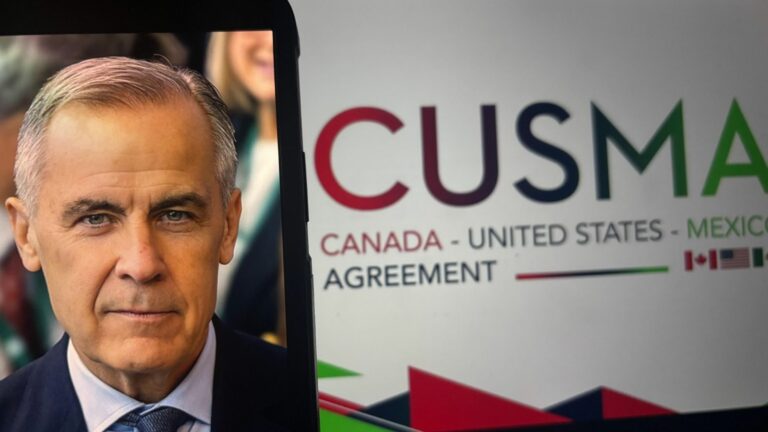
The new scope reaches far beyond the political disputes over Canadian alcohol, dairy and automobiles that originally triggered the measures. Cheese, paper products, metal goods, boats, furniture and several recreational-vehicle categories are among the additions. Just as significantly, qualifying under the Canada-United States-Mexico Agreement does not provide an escape. For Canadian exporters accustomed to treating CUSMA compliance as their strongest tariff shield, that is one of the most consequential parts of the latest escalation.
The 50% Tariff Net Got Wider at 12:01 A.M.
Trump’s New 50% Tariffs Hit More Canadian Goods at Midnight — Even CUSMA Products Aren’t Shielded
- The 50% Tariff Net Got Wider at 12:01 A.M.
- The New List Reaches Well Beyond Alcohol and Autos
- Recreational Vehicles and Boats Are Among the New Pressure Points
- Some Canadian Products Actually Received Relief
- CUSMA Compliance Does Not Protect the Covered Goods
- The New Rules Can Stack on Top of Section 232 Tariffs
- Trump Is Using a Rarely Invoked Trade Power
- Nearly $20 Billion of Canadian Trade Was Already in the Crosshairs
- September 29 Brings an Even Tougher Threat
- CUSMA Still Exists, but Its Protective Power Looks Less Certain
At 12:01 a.m. Eastern time on September 15, revised product lists under President Donald Trump’s Section 338 actions formally took effect. The White House had announced the changes on September 8, giving importers and exporters only a week to determine whether specific customs classifications were moving into—or out of—the tariff regime. The rate on newly covered goods is an additional 50% of their customs value.
The distinction matters because Washington did not simply raise a broad Canadian tariff from one rate to another overnight. Section 338 duties had already applied to a substantial basket of Canadian imports since August 22. What changed September 15 was the composition of that basket. New Harmonized Tariff Schedule classifications were inserted while others were removed. For businesses operating close to the border, that can turn a shipment that was economical last week into one facing an enormous new cost simply because its tariff classification now appears in an annex.
The New List Reaches Well Beyond Alcohol and Autos
The political justification for the Section 338 measures centres on three disputes: alcoholic beverages, dairy products and motor vehicles. The products selected for punishment, however, reach well outside those industries. One September 15 annex adds numerous cheese classifications, chemically modified fats and oils, bovine and equine hides, prepared leather, several categories of furskins and Canadian motorboats.
A separate motor-vehicle-related modification sweeps in writing and drawing paper, steel structures, aluminum bars and profiles, aluminum tubing, flexible metal tubing, fasteners and other base-metal goods. The list continues through seats, furniture, mattress supports, mattresses and table or floor lamps. That breadth is important for Canadian companies assessing exposure. A furniture manufacturer or paper producer may have little connection to the policy disagreement that gave the proclamation its name, yet its exports can still be caught. Under this system, the customs code—not the exporter’s industry label—ultimately determines whether the 50% duty applies.
Recreational Vehicles and Boats Are Among the New Pressure Points
Several classifications added September 15 could be particularly noticeable in Canadian manufacturing regions with strong recreational-product industries. The motor-vehicle annex includes golf carts and similar vehicles as well as small spark-ignition passenger vehicles with engines not exceeding 1,000 cubic centimetres. Industry guidance has identified the latter category as one encompassing all-terrain vehicles. Additional motorboat classifications were also placed under the Section 338 duty.
That can create an uncomfortable reality for manufacturers whose North American supply chains were designed around relatively open access to the U.S. market. A Canadian-built recreational product that previously crossed the border with manageable customs costs can become substantially more expensive once a 50% additional duty is attached. The RV Industry Association has warned members that the latest revisions affect several components even when complete recreational vehicles are not captured. For manufacturers, dealers and distributors, the immediate task becomes determining exactly where every finished product and component sits within the U.S. tariff schedule.
Some Canadian Products Actually Received Relief
The September 15 revisions are not exclusively an expansion. Washington simultaneously removed several products from the Section 338 tariff lists, illustrating how targeted the administration is attempting to make the pressure. Canadian salt and pure sodium chloride were removed, along with most Portland cement, certain chemically pure sugars, tissue and towel stock, specified paper household or hospital products, refined lead, some low-voltage switchgear assemblies and fishing-rod parts.
There was also a notable adjustment involving alcohol. Specific tariff classifications for whisky, liqueurs and cordials shipped in containers larger than four litres are no longer subject to the additional 50% Section 338 duty under the revised alcohol annex. That does not amount to a broad reprieve for Canadian alcohol exporters, particularly because much tougher restrictions are scheduled later in September. Still, the removals demonstrate that Washington is recalibrating the list rather than simply adding everything possible. U.S. Trade Representative Jamieson Greer described the process as targeting strategic Canadian sectors while removing products considered less sensitive.
CUSMA Compliance Does Not Protect the Covered Goods
For many Canadian exporters, the most unsettling feature is what the tariffs ignore: CUSMA status. Ottawa’s Trade Commissioner Service states explicitly that there is no exemption from the U.S. Section 338 tariffs for goods that otherwise qualify for preferential duty-free treatment under the Canada-United States-Mexico Agreement. A valid CUSMA origin claim therefore does not erase the additional 50% duty when a product is specifically covered by Section 338.
That differs from parts of the wider American tariff system. CUSMA compliance can still protect Canadian exports from certain other U.S. duties, making certificates of origin extremely valuable. But companies cannot assume that being North American-made guarantees tariff-free access anymore. A Canadian product can satisfy the trade agreement’s rules of origin and still encounter the Section 338 charge. For businesses that spent years restructuring sourcing to comply with CUSMA, that creates a frustrating new layer of uncertainty: trade-agreement compliance remains valuable, but it is no longer a universal defence against U.S. trade measures.
The New Rules Can Stack on Top of Section 232 Tariffs
The September proclamations contain another major change for products already exposed to American sectoral tariffs. The White House says the revised Section 338 duties apply in addition to tariffs imposed under Section 232 of the Trade Expansion Act. Industry guidance similarly warns that Section 338 charges can stack on top of Section 232 tariffs rather than replacing them. That makes classification increasingly important for metal-heavy Canadian exports.
Section 232 already covers major categories including steel, aluminum, copper and vehicles, with rates varying by product and circumstances. The revised Section 338 annex now includes steel structures, aluminum profiles, bars, rods, tubes and several other metal products. Where both legal regimes apply, a Canadian exporter can therefore confront more than one additional U.S. duty on the same shipment. Companies must examine not just whether a product appears on the new Section 338 list, but whether another sectoral trade measure also covers it. A single tariff percentage no longer tells the complete cost story.
Trump Is Using a Rarely Invoked Trade Power
The legal engine behind the escalation is Section 338 of the Tariff Act of 1930. It gives the U.S. president authority, under specified circumstances, to impose additional duties of as much as 50% against a country deemed to be discriminating against American commerce. The administration first invoked that authority against Canada in July, focusing on what it described as discriminatory Canadian treatment of American alcohol, dairy and motor-vehicle exports.
Washington says Canada has restricted U.S. alcoholic beverages, disadvantaged American dairy exporters and imposed discriminatory treatment on American vehicles. Ottawa disputes important elements of that case. Canada maintains, for example, that its administration of dairy tariff-rate quotas complies with its CUSMA obligations and notes that several Canadian trade measures were imposed in retaliation for earlier U.S. tariffs. The disagreement has therefore moved far beyond a technical customs dispute. Both governments increasingly portray their measures as responses to the other side’s escalation, creating a cycle in which retaliation itself becomes justification for further retaliation.
Nearly $20 Billion of Canadian Trade Was Already in the Crosshairs
When the Trump administration originally announced the Section 338 actions in July, the U.S. Trade Representative said the 50% measures would affect nearly US$20 billion in imports from Canada. The duties eventually took effect August 22 after a short three-day suspension intended to give negotiations additional time. The September 15 revisions alter that product mix, although Washington has not published a comparable headline value for the newly reconfigured basket.
Canada answered the earlier U.S. action with its own substantial countermeasure package. Effective September 8, Ottawa imposed tariffs of 15%, 25% and 50% on C$27.6 billion worth of goods imported from the United States, drawing heavily from products affected by American Section 338 and Section 232 measures. Ottawa also announced C$7.5 billion in new and enhanced support for workers and businesses dealing with tariff disruptions. What began as a disagreement over selected sectors has consequently developed into a trade confrontation measured in tens of billions of dollars on both sides of the border.
September 29 Brings an Even Tougher Threat
Canadian exporters cannot treat September 15 as the endpoint. Trump has already signed proclamations that will move certain Canadian products from steep tariffs to outright exclusion from the U.S. market beginning September 29. The measures target selected dairy products, alcoholic beverages and motor-vehicle-related goods. Associated Press reporting has identified products including most Canadian alcoholic beverages, certain whey products and some motorcycles among those facing the coming restrictions.
For covered businesses, a 50% tariff at least leaves open the possibility of selling into the United States if margins, contracts or customers can absorb the additional cost. An import prohibition eliminates that option. The White House proclamations also specify how goods imported before the ban but not yet entered for consumption will be treated, leaving some products subject to the existing 50% rate rather than escaping the measure entirely. That looming deadline means Canadian manufacturers and distributors have another major customs transition to prepare for less than two weeks after the September 15 revisions.
CUSMA Still Exists, but Its Protective Power Looks Less Certain
The larger significance goes beyond individual tariff codes. CUSMA remains legally in force, but the United States declined in July to extend the agreement for another full 16-year term during its scheduled joint review. That decision left the pact subject to annual reviews and started a 10-year path toward possible expiration unless the three governments eventually agree to extend it. Meanwhile, Washington is pursuing separate negotiations with Mexico while its dispute with Ottawa grows more hostile.
For Canadian businesses, September 15 offers a stark illustration of what that uncertainty can mean in practice. CUSMA still provides crucial preferential treatment across enormous portions of bilateral trade, yet it cannot shield products specifically targeted through Section 338, and other U.S. sectoral tariffs can also reach CUSMA-compliant goods. Canada remains deeply tied to the American economy—72.5% of Canadian merchandise exports still went to the United States in 2025. As tariff barriers multiply, diversification is shifting from a long-term policy ambition toward an immediate commercial necessity.
This Options Discord Chat is The Real Deal
While the internet is scoured with trading chat rooms, many of which even charge upwards of thousands of dollars to join, this smaller options trading discord chatroom is the real deal and actually providing valuable trade setups, education, and community without the noise and spam of the larger more expensive rooms. With a incredibly low-cost monthly fee, Options Trading Club (click here to see their reviews) requires an application to join ensuring that every member is dedicated and serious about taking their trading to the next level. If you are looking for a change in your trading strategies, then click here to apply for a membership.