35,000+ smart investors are already getting financial news, market signals, and macro shifts in the economy that could impact their money next with our FREE weekly newsletter. Get ahead of what the crowd finds out too late. Click Here to Subscribe for FREE.
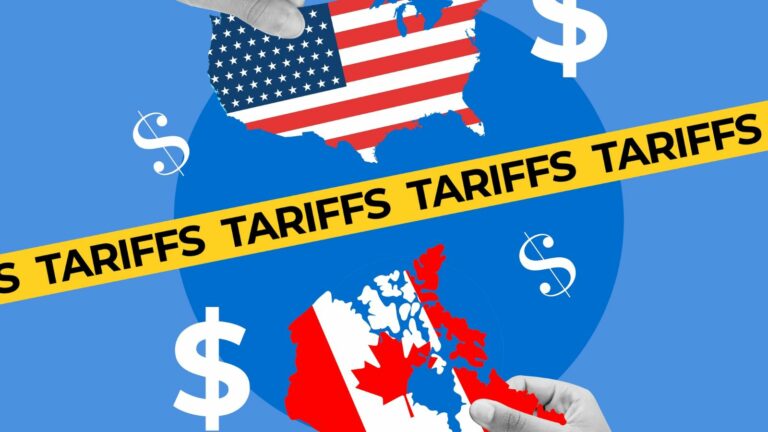
Pennsylvania is discovering how quickly a national trade fight can become a local economic problem. Canada, already the Commonwealth’s biggest foreign customer, is preparing another round of retaliatory tariffs on U.S. goods after negotiations with Washington collapsed, bringing products ranging from aluminum and lumber to machinery into a rapidly widening dispute.
An analysis of trade data by The Philadelphia Inquirer estimates that roughly $2 billion of Pennsylvania exports to Canada, about 16% of the state’s shipments to its northern neighbour, are exposed to higher tariffs. Some duties reach 50%. For manufacturers and exporters accustomed to treating the Canadian border almost like an extension of the domestic market, the September 8 measures create a new calculation: absorb part of the cost, raise prices, renegotiate contracts, or risk losing Canadian customers to competitors elsewhere.
Canada Is Pennsylvania’s Biggest Foreign Customer
Canada’s Tariff Retaliation Puts $2 Billion of Pennsylvania Exports in the Crossfire
- Canada Is Pennsylvania’s Biggest Foreign Customer
- The $2 Billion Exposure Is Concentrated but Significant
- Aluminum Faces One of the Steepest Tariff Walls
- Lumber and Paper Producers Are Pulled Into the Dispute
- Auto Trade Shows How the Conflict Has Been Building
- Smaller Exporters Have Less Room to Absorb the Shock
- Ottawa Says the Tariffs Are Designed to Create Pressure
- September 8 Becomes the Next Test for Pennsylvania Businesses
Canada is not a marginal destination for Pennsylvania businesses. Federal trade data show the state exported about $14 billion in goods to Canada during 2025, representing roughly 27% of all Pennsylvania merchandise exports. Mexico, the state’s second-largest foreign market, purchased less than $5 billion. Pennsylvania therefore sells substantially more merchandise to Canada than to any other individual country, making disruptions in the relationship unusually important for the Commonwealth.
The connection becomes even clearer at the provincial level. Pennsylvania officials reported in June that almost three-quarters of the state’s Canadian-bound exports went to Ontario. The two governments recently signed an economic cooperation agreement covering manufacturing, energy, agriculture, technology, life sciences and critical minerals. That is what makes the tariff confrontation particularly uncomfortable: companies were being encouraged to deepen cross-border supply relationships at almost the same moment that national governments were erecting new barriers around them. For businesses operating on both sides of the border, those two trends are now colliding.
The $2 Billion Exposure Is Concentrated but Significant
The headline number does not mean every Pennsylvania export to Canada suddenly faces a 50% charge. The new Canadian countermeasures cover a selected group of American products, with tariff rates of 15%, 25% or 50% depending on the category. The Philadelphia Inquirer calculated that approximately $2 billion of Pennsylvania exports, equivalent to about 16% of the state’s sales to Canada, fall within the affected trade categories.
Canada says its September 8 measures will cover roughly C$27.6 billion in U.S. imports, about US$20 billion at the values cited when Ottawa announced the retaliation. Around 700 product categories are involved. Steel, aluminum, dairy products, appliances, agricultural equipment, pulp and paper, plastics, electronics and other manufactured goods feature prominently. For Pennsylvania, the exposure is therefore concentrated in industries rather than evenly distributed throughout the state economy. That matters because a tariff affecting 16% of exports overall can feel far larger inside a factory, mill or distributor whose Canadian customers account for a substantial share of annual sales.
Aluminum Faces One of the Steepest Tariff Walls
Pennsylvania’s industrial base makes the treatment of metals especially important. The Canadian tariff schedule places a 50% surtax on numerous U.S.-origin aluminum products, including unwrought aluminum, aluminum alloys, bars, profiles, sheets, plates, foil, tubes and several fabricated products. The Inquirer identified raw aluminum among Pennsylvania’s most valuable exports caught in the latest retaliation.
That exposure sits inside a much larger manufacturing economy. U.S. trade data show Pennsylvania exported roughly $4.7 billion of primary metal products worldwide in 2025, making metals one of the Commonwealth’s major manufacturing export categories. A 50% Canadian tariff does not automatically translate into a 50% loss for Pennsylvania producers, but it dramatically changes the economics of a transaction. Canadian importers can seek alternative suppliers, negotiate lower prices with American producers or pass some costs downstream. For a Pennsylvania mill competing against untariffed material from another country, even a longstanding customer relationship may become difficult to preserve once such a large price disadvantage appears at the border.
Lumber and Paper Producers Are Pulled Into the Dispute
Wood products are another area where the tariff list becomes tangible. Canada’s September measures cover an extensive collection of U.S. wood and paper goods. Various forms of plywood and laminated veneer lumber face tariffs of as much as 50%, while selected pulp, paper and paperboard products are also included at rates reaching 50%. Reuters reported that lumber, wood pulp and paper products are among the categories targeted by Ottawa.
Pennsylvania businesses are exposed because the state’s economy includes manufacturers operating well beyond its better-known pharmaceutical, technology and steel sectors. Lumber processors, packaging suppliers, furniture businesses and companies that sell intermediate materials into Canadian manufacturing networks can all encounter the same problem: a product that was competitively priced in August may become substantially less attractive after September 8. The disruption can travel further than the exporter itself. When an order disappears, trucking companies, warehouse operators and component suppliers may lose business as well. That multiplier effect is why trade disputes can become noticeable locally even when the overall percentage of a state’s exports under tariff remains relatively modest.
Auto Trade Shows How the Conflict Has Been Building
Vehicles illustrate that Pennsylvania businesses are dealing with more than a single new tariff announcement. Canada has imposed 25% countertariffs on certain U.S.-made vehicles since April 9, 2025. Non-CUSMA-compliant vehicles face the levy, while qualifying U.S.-assembled vehicles can be taxed on the value of content that is neither Canadian nor Mexican. Ottawa says those measures will remain while U.S. tariffs against Canada’s auto sector continue.
The Inquirer identified passenger vehicles among Pennsylvania’s significant tariff-exposed exports to Canada. The important distinction is that the automotive barrier predates the newest September package rather than originating entirely from it. That makes autos an example of how tariff layers can accumulate over time. North American vehicle production is particularly sensitive because components regularly cross national borders before a finished vehicle reaches a dealership. The broader dispute has become serious enough that automobiles and medium- and heavy-duty trucks were among the sticking points in the latest U.S.-Canada negotiations. Canada has made preservation of its domestic assembly and parts industry a central condition for any future agreement.
Smaller Exporters Have Less Room to Absorb the Shock
Large corporations can sometimes redirect shipments, negotiate with suppliers or tolerate temporarily thinner margins. Smaller businesses often have fewer options. U.S. trade data show that nearly 14,700 companies exported from Pennsylvania locations in 2024, and approximately 88% were small or medium-sized businesses with fewer than 500 workers. Although those firms account for a smaller share of total export value than major corporations, individual Canadian contracts can still represent meaningful revenue.
Tariffs are legally collected from the importer entering the product into Canada, not automatically from the Pennsylvania company that produced it. Economic pressure, however, does not remain neatly on one side of the transaction. A Canadian buyer facing a large new duty can demand a discount, order less, seek a domestic alternative or switch suppliers entirely. Past tariff research has shown why exporters take that possibility seriously. Studies of earlier trade disputes found retaliatory tariffs reduced U.S. exports in targeted categories, while tariff costs can migrate through prices, margins and supply chains rather than being absorbed by a single participant. A Pennsylvania exporter may never write the tariff cheque and still feel its effect.
Ottawa Says the Tariffs Are Designed to Create Pressure
Canada has presented the measures primarily as protection for domestic workers and businesses, but political leverage has also entered the discussion. Industry Minister Mélanie Joly said when the tariff package was announced that Canada was selecting products strategically and seeking to place pressure on particular U.S. states before the November midterm elections. That approach resembles previous trade disputes in which retaliatory tariffs were designed to make the economic consequences especially visible in politically important regions.
Pennsylvania is naturally sensitive to that strategy because it combines major cross-border trade with closely watched elections. The Inquirer reported that Pennsylvania itself did not appear to be a principal Canadian target, describing the state instead as being caught in the crossfire because of the sheer volume of commerce it conducts with Canada. There has also been mixed messaging from Ottawa: Canadian Ambassador Mark Wiseman later told Reuters the targets were not chosen with congressional elections in mind. Whatever the political calculation, exporters care most about the practical result — access to their largest foreign customer is becoming more expensive.
September 8 Becomes the Next Test for Pennsylvania Businesses
The countertariffs are scheduled to take effect at 12:01 a.m. on September 8. Canada says products already in transit when the measures come into force will not be subject to the new surtaxes, giving companies a limited transition period. Ottawa has simultaneously announced a C$7.5 billion support package for Canadian businesses and workers affected by the trade conflict, including financing programs intended to help companies manage cash-flow pressures.
For Pennsylvania exporters, there is no comparable certainty that the tariff environment will remain unchanged for long. Canada’s ambassador said this week that Ottawa intends to keep talking with Washington when negotiations can produce progress, but no date for renewed formal talks has been announced. The economic relationship is too large to disappear: Pennsylvania exports roughly $14 billion in goods to Canada annually, and manufacturers on both sides have spent decades building interconnected markets. Yet that integration also creates vulnerability. If September’s tariffs remain in place or the dispute expands, the roughly $2 billion currently in the crossfire could become the beginning of the problem rather than its final size.
This Options Discord Chat is The Real Deal
While the internet is scoured with trading chat rooms, many of which even charge upwards of thousands of dollars to join, this smaller options trading discord chatroom is the real deal and actually providing valuable trade setups, education, and community without the noise and spam of the larger more expensive rooms. With a incredibly low-cost monthly fee, Options Trading Club (click here to see their reviews) requires an application to join ensuring that every member is dedicated and serious about taking their trading to the next level. If you are looking for a change in your trading strategies, then click here to apply for a membership.