35,000+ smart investors are already getting financial news, market signals, and macro shifts in the economy that could impact their money next with our FREE weekly newsletter. Get ahead of what the crowd finds out too late. Click Here to Subscribe for FREE.
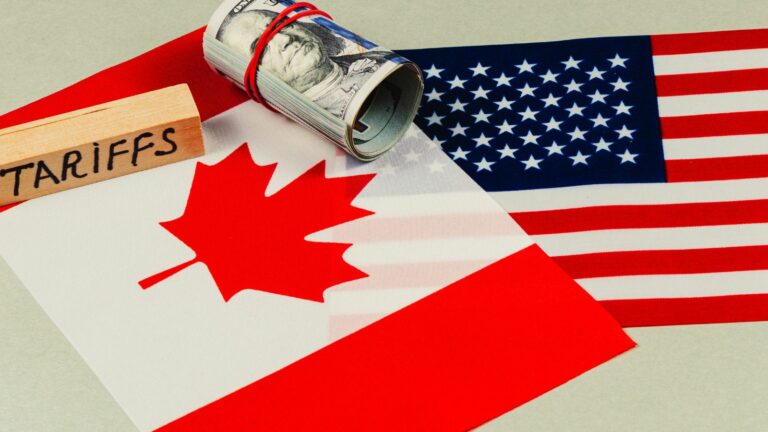
The newest escalation in the Canada–U.S. trade fight is landing at an awkward moment for American businesses already adjusting to a year of higher import costs. On August 22, the Trump administration put 50% tariffs into effect on roughly $20 billion worth of selected Canadian goods, adding another layer to existing U.S. duties on metals, vehicles and lumber. Canada has responded by announcing dollar-for-dollar countermeasures beginning September 8. While tariffs are designed to pressure foreign producers and protect domestic industries, the immediate financial mechanics are more complicated. American importers typically encounter the duty first, leaving companies to choose between thinner margins, higher prices, altered supply chains or reduced purchases. Evidence from Federal Reserve research, industry data and corporate disclosures suggests all four responses are already occurring.
The Latest 50% Tariffs Add Another Layer to an Already Costly Trade Fight
Trump’s Canada Tariffs Are Already Squeezing U.S. Businesses as Import Costs Shift
- The Latest 50% Tariffs Add Another Layer to an Already Costly Trade Fight
- U.S. Importers Receive the Tariff Bill Before Anyone Else
- Small Businesses Have Less Room to Absorb the Shock
- Higher Costs Can Take Months to Reach the Checkout
- Metal Tariffs Create Winners Upstream but Higher Costs Downstream
- Detroit Automakers Are Counting Tariff Costs in Billions
- Housing Shows How Tariffs Can Travel Into Domestic Prices
- Retailers and Hospitality Businesses Face Another Pricing Decision
- Canada’s Retaliation Could Squeeze U.S. Exporters From the Other Direction
- Changing Suppliers Is Possible, but It Is Neither Instant nor Free
The August 22 measures do not amount to a 50% tariff on everything Canada sells to the United States. They target roughly $20 billion in Canadian goods, including products such as alcohol, sporting equipment, food items, furniture and other manufactured products. That distinction is important. U.S. goods imports from Canada totaled approximately $381.9 billion in 2025, meaning much of the bilateral trading relationship remains outside this newest tariff package. Even so, the measures broaden the number of American companies that must now calculate whether buying familiar Canadian products still makes financial sense.
They also arrive on top of separate tariff regimes. Canadian steel and aluminum have already faced heavy U.S. duties, vehicles have been subject to Section 232 measures, and softwood lumber remains caught in a long-running system of trade duties. Businesses therefore are not responding to one clean tariff rate. A manufacturer may face metal costs under one policy, imported components under another and newly tariffed finished goods under the August measures. That layering makes budgeting and procurement increasingly difficult, especially for companies whose contracts were negotiated before the newest duties appeared.
U.S. Importers Receive the Tariff Bill Before Anyone Else
A tariff imposed by Washington is collected when a product enters the United States, meaning the importer of record is normally responsible for paying the duty to U.S. Customs and Border Protection. Foreign suppliers can respond by cutting their prices, but they are not automatically the party writing the tariff check. That difference between who legally pays and who ultimately bears the economic burden has become central to the debate over whether tariffs primarily hurt foreign producers or American companies and households.
Recent Federal Reserve Bank of New York research offers unusually clear evidence. Studying the broad U.S. tariff increases implemented during 2025, researchers estimated that American importers bore about 94% of tariff incidence during the first eight months of that year. The figure declined somewhat as foreign exporters adjusted, but U.S. importers were still estimated to bear 86% by November. For a business importing Canadian merchandise today, that history matters. Unless a Canadian supplier accepts a large price reduction, the American company must initially finance the higher landed cost and decide whether to absorb it, negotiate elsewhere or charge customers more.
Small Businesses Have Less Room to Absorb the Shock
Large corporations can sometimes soften tariff pressure through long-term contracts, global sourcing teams, sophisticated customs strategies and enough financial capacity to tolerate weaker margins temporarily. A neighborhood retailer, independent manufacturer or regional distributor has fewer options. Federal Reserve research published in July 2026 found that 55% of small businesses in the goods sector and 67% of retailers reported tariff-related financial challenges during 2025. Services companies were less exposed, but even there the figure reached 34%.
Import dependence was also widespread. About 70% of goods firms and 80% of retail firms participating in the Federal Reserve survey reported using at least some inputs sourced from outside the United States. Roughly 80% of surveyed firms experiencing imported-input increases said those prices had risen compared with 2024. Their response was rarely painless: around 80% of goods and retail businesses passed at least some higher costs to customers, while approximately 60% absorbed some costs internally. Many did both. That combination illustrates the squeeze clearly—customers pay more while owners may simultaneously accept smaller margins.
Higher Costs Can Take Months to Reach the Checkout
Tariff inflation rarely appears everywhere on the day a tariff begins. Importers may have inventories purchased under an earlier tariff structure, retailers may be locked into advertised prices, and manufacturers may have contracts that temporarily prevent them from charging customers more. That creates a lag between a policy announcement at the border and the moment households notice it in stores. The newest Canadian tariffs could therefore add pressure even while companies are still processing increases introduced during earlier rounds of U.S. trade policy.
A July 2026 National Bureau of Economic Research study estimated that about 26% of the 2025 tariff increase ultimately passed through to consumer prices in the products examined. Importantly, researchers found that tariffs affected domestic products as well as imported ones. Roughly 36% of the estimated consumer-price effect came indirectly through more expensive imported inputs and changes in competition, with those indirect effects taking roughly nine to 12 months to work through supply chains. Separate Federal Reserve research found higher tariff exposure associated with price increases of roughly 1% to 2% and a decline in household spending of about 4% at the mean exposure level.
Metal Tariffs Create Winners Upstream but Higher Costs Downstream
Steel and aluminum show why tariff effects can look very different depending on where a company sits in the supply chain. U.S. metal producers can benefit when tariffs make imported material more expensive and give domestic production greater pricing power. Companies that consume large amounts of metal, however, face the opposite calculation. Automakers, beverage-can manufacturers, construction companies, aerospace suppliers and equipment producers care less about protecting the price of raw metal than about obtaining reliable material at internationally competitive costs.
Canadian aluminum demonstrates the tension. U.S. policy has imposed a 50% tariff on many aluminum and steel imports, while Canada historically supplied a major portion of American primary-aluminum needs. As Canadian producers redirected some shipments toward Europe, the premium paid for aluminum delivered to U.S. buyers climbed sharply. Reuters reported in May that the U.S. aluminum premium had reached about $2,557 per metric ton, with estimated delivered metal costs around $6,200 per ton in the United States compared with roughly $4,300 in Europe at the time. Domestic smelters may welcome stronger pricing, but businesses turning that metal into vehicles, cans or machinery confront a larger input bill.
Detroit Automakers Are Counting Tariff Costs in Billions
Few industries illustrate North American integration better than automobiles. Engines, transmissions, electronics, metals and other components can move through several plants before a finished vehicle reaches a dealership. A tariff imposed at one point in that chain can therefore become a cost for a company headquartered somewhere else. Canadian-built vehicles currently face a 25% U.S. Section 232 tariff structure, with treatment depending partly on U.S. content, while automakers are simultaneously dealing with tariffs on metals and other imported components.
The sums have become large enough to appear prominently in corporate planning. Reuters reported in August that General Motors expects roughly $2.5 billion to $3.5 billion in tariff-related expenses during 2026, while Ford anticipates approximately a $1 billion impact. Detroit automakers have also warned that proposed changes to North American trade rules could potentially add at least $2 billion in annual costs per company. These firms manufacture extensively inside the United States, which underlines the complication: producing a vehicle in America does not eliminate tariff exposure when its components, materials or partially assembled systems come from an integrated Canadian or Mexican supply base.
Housing Shows How Tariffs Can Travel Into Domestic Prices
Canadian softwood lumber has been disputed for decades, but the current tariff environment gives the issue renewed significance because U.S. housing is already struggling with affordability and construction costs. The National Association of Home Builders estimates that Canada supplies roughly 85% of U.S. softwood lumber imports and close to one-quarter of the total softwood lumber available in the American market. That dependence means builders cannot necessarily replace Canadian supply immediately simply because crossing the border becomes more expensive.
NAHB has reported that more than 60% of builders surveyed experienced higher costs from recent tariff actions, with respondents estimating an average impact of approximately $10,900 on the cost of constructing a typical home. That estimate covered broader tariff effects rather than only Canadian lumber, but it demonstrates how quickly border policy can reach an American construction site. Lumber duties are separate from the newest 50% Canadian tariff package, which means builders are dealing with an existing problem rather than a newly created one. When imported material becomes more expensive, builders can accept lower margins, reduce specifications, delay projects or attempt to recover the added cost through higher home prices.
Retailers and Hospitality Businesses Face Another Pricing Decision
The latest tariffs expand pressure beyond factories and heavy industry. Canadian whisky, wine, hockey equipment, furniture, cosmetics, honey, certain food products, paper goods and other consumer-facing products are among the categories affected by the new measures. For an American retailer or distributor, a 50% tariff can radically alter the economics of an item. A product that previously generated a comfortable margin may suddenly require a substantial retail increase, a supplier concession or removal from the assortment.
Spirits provide a particularly human example of how quickly trade retaliation spreads beyond the original dispute. The Distilled Spirits Council of the United States has warned that imposing a 50% tariff on Canadian spirits could add pressure on American restaurants, bars, distributors and retailers already dealing with difficult operating conditions. At the same time, American distillers have suffered from Canadian provincial restrictions introduced during the broader trade conflict. The council says U.S. spirits exports to Canada fell by more than 70% year over year between the beginning of provincial restrictions in March 2025 and the end of that year. Businesses can therefore be squeezed both when importing Canadian products and when losing Canadian customers.
Canada’s Retaliation Could Squeeze U.S. Exporters From the Other Direction
The next stage of the dispute will not occur solely at the American border. Prime Minister Mark Carney announced that Canada intends to impose dollar-for-dollar counter-tariffs beginning September 8, with sectors including steel, dairy, electronics, appliances and agricultural equipment identified as targets. Specific implementation details were still being finalized when the measures were announced, but the direction is significant: American businesses that export north could face a second channel of pressure even if they do not import anything from Canada themselves.
That matters because Canada remains one of the largest markets in the world for U.S. companies. U.S. goods exports to Canada reached approximately $333.6 billion in 2025, according to U.S. trade data, and total bilateral goods trade exceeded $715 billion. An agricultural-equipment manufacturer in the Midwest, for example, could face higher domestic material costs because of American tariffs while simultaneously confronting weaker Canadian demand because Ottawa has placed a duty on its finished product. Such two-way exposure is why escalating trade disputes can become increasingly difficult to contain. Each additional measure creates incentives for another round of sourcing changes, price increases and political retaliation.
Changing Suppliers Is Possible, but It Is Neither Instant nor Free
Tariffs are intended partly to change corporate behavior, and there is evidence that businesses are already moving supply chains. KPMG’s 2026 tariff research found that 26% of surveyed large U.S. companies had reached the formal-planning or active-execution stage of reshoring, up from 10% six months earlier. Yet 60% of executives said fully reshoring their operations would require one to three years. New factories need capital, workers and equipment. New suppliers must meet quality standards, contracts may need renegotiation, and specialized components cannot always be replaced with an American-made equivalent overnight.
Until those adjustments are complete, companies must manage the financial gap. KPMG found sourcing costs had risen by more than 25% among surveyed businesses, while 55% of executives planned price increases of as much as 15% within the next six months. The survey covered 300 executives at U.S. organizations with annual revenue above $1 billion, so the figures should not be treated as representative of every American business. They nonetheless reinforce the broader evidence: tariffs can redirect investment and sourcing, but the transition itself carries costs. For U.S. companies tied closely to Canada, the immediate chal
This Options Discord Chat is The Real Deal
While the internet is scoured with trading chat rooms, many of which even charge upwards of thousands of dollars to join, this smaller options trading discord chatroom is the real deal and actually providing valuable trade setups, education, and community without the noise and spam of the larger more expensive rooms. With a incredibly low-cost monthly fee, Options Trading Club (click here to see their reviews) requires an application to join ensuring that every member is dedicated and serious about taking their trading to the next level. If you are looking for a change in your trading strategies, then click here to apply for a membership.