35,000+ smart investors are already getting financial news, market signals, and macro shifts in the economy that could impact their money next with our FREE weekly newsletter. Get ahead of what the crowd finds out too late. Click Here to Subscribe for FREE.
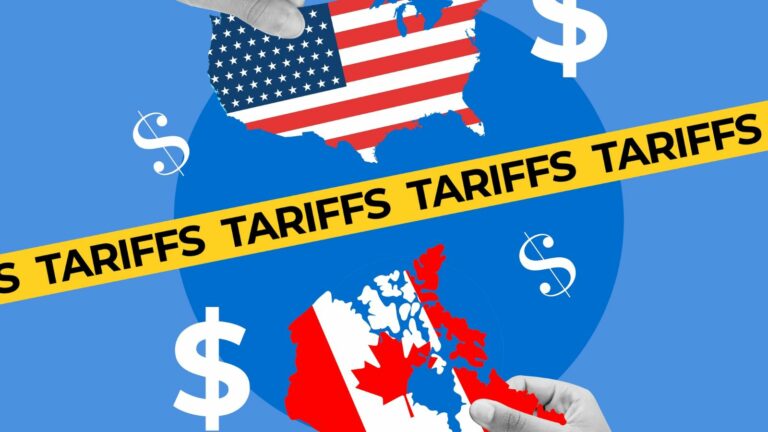
Canada and the United States have gone from appearing close to a trade agreement to having no new negotiations scheduled, a reversal that underscores how quickly the relationship has deteriorated. U.S. Trade Representative Jamieson Greer said Washington does not currently have fresh talks planned with Canadian negotiators after Prime Minister Mark Carney suspended negotiations and recalled his team from Washington. The breakdown allowed new 50% U.S. tariffs to take effect on roughly US$20 billion, or about C$28 billion, of Canadian goods. Ottawa is preparing a dollar-for-dollar response beginning September 8. Both governments insist the other side disrupted an agreement that had been taking shape, leaving businesses, workers and provincial governments confronting a dispute that now reaches beyond tariffs into questions about autos, sovereignty and the future of CUSMA.
Greer Says Washington Is Moving On, at Least for Now
Trump Trade Chief Says No New Canada Talks Are Planned After Ottawa Walks Away
- Greer Says Washington Is Moving On, at Least for Now
- A Deal Looked Close Before It Fell Apart
- Ottawa Says the Final Terms Crossed Its Red Lines
- Washington Says Canada Walked Back an Earlier Understanding
- The New 50% Tariffs Are Narrower Than They Sound—but Still Painful
- Canada’s Counter-Tariffs Arrive September 8
- Trucks Became a Symbol of a Much Bigger Auto Fight
- The CUSMA Problem Is Now Harder to Ignore
- The Economic Relationship Is Too Large for Either Side to Escape Easily
- Political Unity May Be Easier Than Managing the Economic Fallout
The clearest sign that the latest negotiating push is over came from Greer himself. Speaking after the breakdown, the U.S. trade representative said there were no new talks planned with Canadian officials and that Washington was instead moving ahead with measures responding to Canadian retaliation. That does not necessarily mean negotiations are permanently finished. Trade disputes between deeply integrated economies often move through periods of escalation followed by renewed bargaining. But as of August 23, there is no announced timetable for another formal negotiating round, and neither side is publicly presenting an immediate route back to the table.
That is a dramatic change from only days earlier. Canadian Trade Minister Dominic LeBlanc and Greer had been meeting repeatedly in Washington, while technical teams worked through sector-specific issues. President Donald Trump even granted a three-day delay to the latest tariffs so negotiations could continue. For companies operating on both sides of the border, the sudden switch from near-agreement to no scheduled talks creates a different kind of problem: tariffs can be priced into contracts, but uncertainty over how long they will remain is far harder to manage.
A Deal Looked Close Before It Fell Apart
The collapse was especially striking because public signals had become increasingly optimistic. On August 18, the White House postponed the new 50% tariffs for three days after U.S. officials said negotiations had progressed sufficiently to justify more time. Canada likewise acknowledged substantial progress. By August 20, LeBlanc emerged from another lengthy meeting with Greer saying the countries were very close to a final agreement, although important work remained. The prospective arrangement was expected to address at least some of the tariffs affecting steel, aluminum, vehicles and lumber.
That momentum disappeared late Friday, August 21. Negotiations continued toward the deadline, but Carney ultimately instructed the Canadian delegation to return to Ottawa. The prime minister said changes made to the U.S. position near the end of the process reduced the economic value and reliability of the proposed deal. American officials gave almost the mirror-image account, saying Canada introduced new demands and reversed earlier commitments. Because the complete negotiating text has not been publicly released, several disputed details remain claims made by one side or reported by sources familiar with confidential discussions rather than independently verifiable terms of a completed agreement.
Ottawa Says the Final Terms Crossed Its Red Lines
Carney has provided considerably more detail about what Canada says it was prepared to concede. Ottawa was willing to remove remaining retaliatory tariffs on strategic sectors such as steel, aluminum and automobiles if Washington substantially reduced its corresponding duties. Canada was also prepared to encourage provinces to return American alcoholic beverages to store shelves. On dairy, the government said it could make administrative changes while preserving supply management, existing U.S. quotas and the tariff structure protecting the system. Those positions suggest Ottawa was not approaching the negotiations with a simple refusal to compromise.
The limits became clearer as talks approached their deadline. Carney said Canada would not accept provisions that undermined its ability to pursue independent trade relationships or weakened protections involving sovereignty, culture and the French language. Vehicle treatment was another critical issue. Reporting from Reuters and Bloomberg indicated that medium- and heavy-duty Canadian vehicles became a major late sticking point. Carney said the proposed U.S. treatment risked leaving Canadian-made trucks such as Ford F-350, F-450 and F-550 models, as well as certain General Motors Silverados, outside tariff relief available to other vehicles.
Washington Says Canada Walked Back an Earlier Understanding
The Trump administration disputes Ottawa’s description of how the agreement collapsed. Greer said Canadian negotiators declined to finalize terms that Washington believed had already been substantially settled earlier in the week. According to the American account, Canadian demands and reversals disturbed the balance of a package that would have provided Canada with unusually favourable access to the U.S. market. Washington has therefore characterized the breakdown as a missed opportunity rather than evidence that its own late changes made the agreement unacceptable.
The American description also shows that the proposed arrangement was broader than a simple tariff reduction. Greer said the U.S. had offered meaningful relief on steel, aluminum, automobiles and lumber while pursuing cooperation involving aerospace supply chains, critical minerals, export controls, forced-labour enforcement and other economic-security issues. The proposed package also would have moved the countries toward more formal CUSMA negotiations. Those elements matter because they explain why both governments can plausibly say substantial progress occurred while still disagreeing fundamentally about the finish line. Without a public final text, the safest conclusion is that a tentative package existed, but the two governments never reached the same understanding of what concessions were necessary to complete it.
The New 50% Tariffs Are Narrower Than They Sound—but Still Painful
The new U.S. duties impose a 50% additional tariff on roughly US$20 billion worth of Canadian imports, an amount Ottawa describes as approximately C$28 billion. That represents only about 5% of Canada’s annual exports to the United States, making this round considerably narrower than a blanket 50% tariff on everything Canada sells south of the border. Covered products nevertheless span recognizable industries and consumer goods, including wine, furniture, cement, clothing, sporting equipment and hockey-related products. For individual exporters concentrated in one of those categories, the distinction between 5% of national exports and their own sales can be enormous.
The measures are also unusual because Washington invoked Section 338 of the Tariff Act of 1930, a rarely used provision allowing the president to respond to what the administration considers discriminatory foreign treatment of U.S. commerce. The White House tied its actions to disputes involving Canadian alcohol restrictions, dairy-market administration and motor-vehicle policy. Covered products do not automatically receive an exemption simply because they qualify under CUSMA. Energy, potash, certain critical minerals and products already subject to some Section 232 measures are among categories treated differently under the proclamations.
Canada’s Counter-Tariffs Arrive September 8
Ottawa has decided not to absorb the new U.S. measures without retaliation. Carney announced that Canada intends to match Washington’s tariffs dollar for dollar, with the next package scheduled to take effect September 8, the Tuesday after Labour Day. The government has identified steel, dairy products, appliances, agricultural equipment, pulp and paper, and electronics among the sectors that will be targeted. Detailed product lists and implementation rules are expected separately, meaning importers will need to watch the final tariff schedule rather than assume every American product within a broad category will automatically face the same treatment.
Carney also acknowledged something governments sometimes minimize during trade confrontations: retaliation carries costs at home. Tariffs can protect targeted domestic producers from foreign competition, but they can also raise input costs, reduce consumer choice and squeeze companies that depend on imported components. Ottawa says additional assistance for affected Canadian businesses and workers will be announced, adding to nearly C$25 billion in support the government says has already been provided during the broader trade dispute. Academic research on previous U.S. tariff rounds reinforces the concern, finding that substantial portions of import duties ultimately show up in prices, margins or other costs borne within the importing economy.
Trucks Became a Symbol of a Much Bigger Auto Fight
Few issues illustrate the final negotiating gap better than trucks. Bloomberg reported that an emerging deal would have reduced the regular U.S. auto tariff from 25% to 15%, but Canada wanted comparable relief extended to medium- and heavy-duty vehicles. Washington regarded that as an additional Canadian demand, while Canadian officials and industry representatives argued that separating larger vehicles from the rest of the sector could leave important Canadian production structurally disadvantaged. The disagreement became particularly sensitive because North American vehicle manufacturing does not fit neatly within national borders; components can cross the border several times before a finished vehicle reaches a dealership.
The fight also comes after more than a year of pressure on Canada’s auto sector. Existing U.S. measures impose a 25% tariff on autos and trucks, though U.S. content in qualifying CUSMA vehicles can receive different treatment. The Bank of Canada has found that exports from tariff-exposed industries, including vehicles, steel, aluminum and lumber, weakened after the trade restrictions intensified. For Ottawa, accepting a deal that provided partial auto relief while leaving significant Canadian truck production exposed could have solved an immediate deadline while creating a much larger competitiveness problem later.
The CUSMA Problem Is Now Harder to Ignore
The timing could hardly be worse for the broader North American trade framework. CUSMA entered into force in July 2020 with a formal six-year review mechanism. At the first joint review on July 1, 2026, Canada and Mexico supported extending the agreement, while the United States declined to renew it in its current form. That decision did not terminate CUSMA. Instead, the agreement remains in force while the three countries enter annual reviews, with the existing treaty potentially expiring in 2036 if they never reach an agreement to extend it.
The failed Canada-U.S. negotiations now sit directly on top of that uncertainty. Greer had said the proposed bilateral package could have led toward formal discussions about the North American agreement. Carney acknowledged that the latest breakdown is not good news for the CUSMA process, although he argued that Canada has gained a clearer understanding of Washington’s objectives. Businesses considering factories, distribution networks or long-term supply contracts therefore face two layers of uncertainty: today’s tariffs and the rules governing North American commerce over the next decade. The treaty still functions, but the political confidence surrounding it has weakened substantially.
The Economic Relationship Is Too Large for Either Side to Escape Easily
Canada has reduced its dependence on the American market, but the numbers remain extraordinary. Statistics Canada reported that 71.7% of Canadian merchandise exports went to the United States in 2025, down from 75.9% the year before. Meanwhile, the U.S. Trade Representative’s office estimates total U.S.-Canada goods and services trade reached US$872.3 billion in 2025. These are not two economies exchanging a few finished products at the border. Manufacturers, energy companies, farmers, transportation firms and retailers operate through supply chains developed over decades of progressively deeper integration.
Evidence from the previous rounds of restrictions shows why concentrated tariffs can still hurt even when their share of the overall economy appears manageable. The Bank of Canada estimated earlier in 2026 that industries exposed to sectoral U.S. tariffs represented about 15% of Canadian exports, with steel exports falling by roughly half after tariffs were imposed. More recent academic research examining the 2025 U.S. tariffs estimated that about 26% of the tariff increase passed through to consumer prices, including indirect effects as domestic producers faced higher input costs and reduced foreign competition. A prolonged Canada-U.S. escalation therefore risks spreading well beyond the companies whose products appear on a tariff list.
Political Unity May Be Easier Than Managing the Economic Fallout
Carney’s decision to walk away has produced substantial political support in Canada, even among leaders who disagree over the best response. Ontario Premier Doug Ford backed the prime minister and argued that accepting the terms would have been particularly damaging to autos, steel and manufacturing. Unifor also supported the decision, saying Canada should not exchange good industrial jobs for an agreement that entrenches damaging tariffs. Alberta Premier Danielle Smith struck a more cautious tone, expressing disappointment that an agreement was not reached and warning that tariffs and counter-tariffs hurt workers, businesses and families on both sides of the border.
Business groups are preparing for a difficult period regardless of the politics. Canadian Chamber of Commerce president Candace Laing described the breakdown as a serious blow to North American competitiveness and said businesses across regions and industries would need to prepare for the impact. Greer’s statement that no new talks are planned therefore matters beyond diplomatic theatre. Every week without negotiations increases the likelihood that companies begin adjusting sourcing, investment and hiring decisions around tariffs that may last longer than originally expected. The door to another deal is not legally closed, but for now neither government is standing at it with a scheduled meeting.
This Options Discord Chat is The Real Deal
While the internet is scoured with trading chat rooms, many of which even charge upwards of thousands of dollars to join, this smaller options trading discord chatroom is the real deal and actually providing valuable trade setups, education, and community without the noise and spam of the larger more expensive rooms. With a incredibly low-cost monthly fee, Options Trading Club (click here to see their reviews) requires an application to join ensuring that every member is dedicated and serious about taking their trading to the next level. If you are looking for a change in your trading strategies, then click here to apply for a membership.