35,000+ smart investors are already getting financial news, market signals, and macro shifts in the economy that could impact their money next with our FREE weekly newsletter. Get ahead of what the crowd finds out too late. Click Here to Subscribe for FREE.
For more than a year, bottles of American wine and spirits have been caught in the middle of a much larger Canada-U.S. confrontation. At one Montreal restaurant, however, the decision about what comes next may no longer depend on politicians.
David Ferguson, chef-owner of Restaurant Gus in Montreal’s Rosemont–La Petite-Patrie area, says American alcohol will remain unwelcome at his establishment even if Quebec eventually allows it back onto SAQ shelves. His position turns a government-imposed restriction into a personal business choice — and comes as Canadian attitudes toward U.S. products have hardened during an increasingly disruptive trade dispute. Quebec has not formally ended its restrictions, and the latest Canada-U.S. negotiations collapsed on August 21, adding another layer of uncertainty over when, or whether, American bottles will return to normal circulation.
Gus Is Making Its Own Decision About American Alcohol
Montreal Restaurant Says U.S. Booze Is Off the Menu Even if Quebec Ends Its Ban
- Gus Is Making Its Own Decision About American Alcohol
- Quebec’s Restriction Went Far Beyond Empty SAQ Shelves
- American Booze Became Bargaining Leverage in a Much Bigger Trade Fight
- The Provincial Boycotts Have Already Cost U.S. Producers Real Money
- Ending the Ban Would Not Guarantee Canadians Start Buying Again
- Quebec and Canadian Alternatives Have Had Time to Take Their Place
- A Government Policy Can End Faster Than a Consumer Boycott
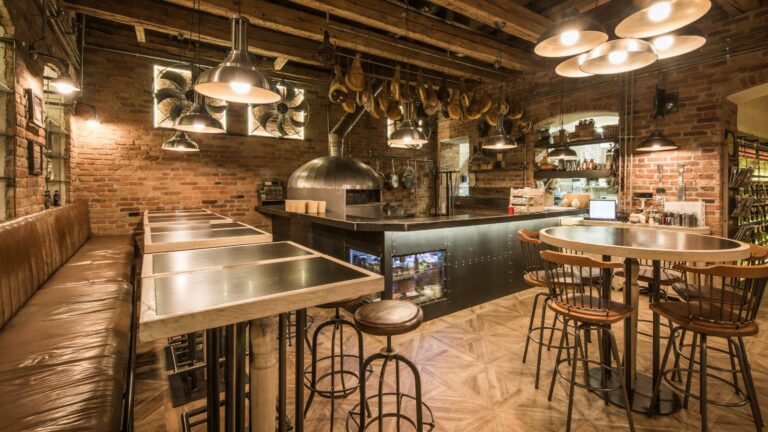
Restaurant Gus is a small, deeply neighbourhood-oriented establishment on Beaubien Street East, where Ferguson has built a reputation around bold food, personal service and meals designed to linger over a bottle of wine. Tourisme Montréal describes the restaurant as an intimate spot known for grilled meat and fish, its Caesar salad and a steady crowd of regulars. Ferguson has spent decades in Montreal after originally moving from Ontario as a young student, eventually building a restaurant career and putting down deep roots in Quebec. That history makes his latest position more personal than a simple adjustment to an inventory spreadsheet.
Ferguson says he does not intend to begin serving U.S. alcohol again simply because the provincial government might eventually authorize its return. American bourbon and wines disappeared from his selection as the Canada-U.S. confrontation intensified, but the political reasoning behind that choice has now developed into an independent purchasing policy. That distinction matters. Quebec can determine what the SAQ imports and distributes, but reopening the provincial market would not require individual restaurateurs to rebuild their former American selections. For Gus, the menu has effectively become another place where the economic dispute is being expressed.
Quebec’s Restriction Went Far Beyond Empty SAQ Shelves
Quebec’s response to American tariffs was unusually visible because alcohol distribution in the province is heavily concentrated through the government-owned Société des alcools du Québec. On March 4, 2025, the SAQ announced that all U.S. products would be removed from its stores and website at the Quebec government’s request. The directive did much more than remove California wine and Kentucky bourbon from retail displays. The corporation also stopped supplying American alcohol to agencies, grocery stores, bars and restaurants and halted new imports intended for the Quebec market.
The restriction covered wines, spirits, American products bottled locally and certain beers moving through the distribution system. An unusual exception arrived in February 2026, when Quebec authorized the SAQ to sell selected American inventory whose quality could begin deteriorating by March 2027. The SAQ said an amount equal to the cost of those products — potentially as much as $8.6 million — would be transferred to Food Banks of Quebec. Importantly, the corporation stressed that the broader prohibition on ordering new American products and selling ineligible existing stock remained in force. That means Gus’s current absence of U.S. alcohol began within a province-wide supply interruption, not simply as an individual boycott.
American Booze Became Bargaining Leverage in a Much Bigger Trade Fight
Alcohol represents only one piece of the enormous Canada-U.S. commercial relationship, yet provincial liquor restrictions became disproportionately important during the latest negotiations. As Ottawa tried to prevent another round of U.S. tariffs, Prime Minister Mark Carney pressed premiers to consider putting American alcohol back on provincial shelves. Several premiers publicly confirmed receiving the request. Quebec Premier Christine Fréchette was more cautious, maintaining that Quebec itself would decide what returned to the SAQ and saying any concession needed to be weighed against gains for industries exposed to U.S. trade measures.
That debate changed dramatically on August 21. Carney announced that Canada was suspending negotiations after what he described as unfair last-minute changes to the U.S. proposal. Washington proceeded with a 50% tariff affecting roughly $28 billion in Canadian goods, while Ottawa said it would respond dollar for dollar. The breakdown is important to Ferguson’s story because an imminent reopening of Quebec’s American-alcohol market is now far less certain than it appeared only days earlier. Alcohol had been discussed as a possible concession in exchange for broader tariff relief. With that bargain failing to materialize, Quebec has even less immediate reason to surrender the leverage voluntarily.
The Provincial Boycotts Have Already Cost U.S. Producers Real Money
What can look like a symbolic dispute from a restaurant table has produced measurable losses for American alcohol businesses. The Distilled Spirits Council of the United States reported that U.S. spirits exports worldwide fell 3.8% in 2025 to $2.37 billion. Canada was one of the biggest reasons. From March through December, after provincial removals began, U.S. spirits exports to Canada dropped by more than 70% year over year — from approximately $203 million in the comparable 2024 period to about $60 million in 2025. Excluding Canada, American spirits exports actually increased 2.5% during the year.
Wine producers have experienced an even sharper disruption. The Wine Institute reported that American wine exports to Canada fell about 92%, illustrating how quickly provincial purchasing decisions can cut producers off from an established market. California winemaker Bill Easton of Terre Rouge Wines offered a particularly tangible example. Before Quebec’s withdrawal, cases of his Syrah moved regularly to Montreal. He later reported paying roughly $1,200 every four weeks to store wine intended for Quebec, including bottles already carrying bilingual labels. The dispute therefore reaches far beyond politicians: warehouses, small wineries, distributors and longstanding restaurant relationships are all caught inside it.
Ending the Ban Would Not Guarantee Canadians Start Buying Again
The biggest challenge facing American producers may eventually be consumer behaviour rather than government regulation. Nanos Research found in late July 2026 that 74% of Canadians were either unlikely or somewhat unlikely to purchase American alcohol if it returned to store shelves. The research involved 1,104 Canadian adults and carried a margin of error of plus or minus three percentage points, 19 times out of 20. That level of resistance suggests more than temporary frustration. After more than a year of finding alternatives, many households have learned that California wine, American whiskey and other familiar imports are easier to replace than they once assumed.
Other polling captures an important nuance. Pollara found that 80% of Canadians in provinces where U.S.-alcohol restrictions were still operating supported the bans, although 54% would accept lifting them if that produced meaningful U.S. tariff relief. Abacus Data similarly found relatively little enthusiasm for making concessions simply to end the dispute: only 18% nationally favoured offering measures such as easing alcohol or dairy restrictions, with support in Quebec at just 12%. In other words, many Canadians may accept an alcohol concession as diplomacy without changing their own shopping habits. Ferguson’s decision at Gus fits squarely inside that distinction.
Quebec and Canadian Alternatives Have Had Time to Take Their Place
More than a year without normal American supply has given Quebec producers something difficult to buy through advertising alone: shelf space, attention and repeated exposure. The SAQ said interest in local products remained strong during the first quarter of its 2026-27 fiscal year. During the first province-wide promotion dedicated exclusively to Quebec-made spirits on June 6, category sales increased 10.8% compared with the preceding weekend. Quebec government data also show that sales volumes of wine carrying the “Origine Québec” identification increased 13.1% in 2025 compared with 2024.
Those gains stand out because Quebec’s overall alcohol market has not been booming. The SAQ reported total sales of $4.07 billion in fiscal 2025-26, an increase of just 0.7%, while total volume fell 3% to 209.8 million litres. Consumers were therefore drinking less overall even as some local categories gained momentum. For restaurants, this changing market means replacing an American bottle does not necessarily require compromising the beverage program. Quebec wine and spirits have become more visible, while Canadian and overseas producers can fill many of the same price points and styles. Once a restaurant has developed new supplier relationships and customers have adapted, returning to the previous mix becomes a choice rather than an inevitability.
A Government Policy Can End Faster Than a Consumer Boycott
Quebec will ultimately have to weigh trade policy, provincial interests and international obligations when deciding what happens to American alcohol. The SAQ itself recently noted that alcohol-marketing rules must comply with international trade agreements, pointing to a 2018 dispute in which Australia challenged favourable treatment for Quebec wine through the World Trade Organization. Province-wide rules therefore operate inside legal and diplomatic constraints that individual purchasing decisions generally do not face in the same way. A restaurant choosing which wines or spirits to feature represents a fundamentally different kind of economic pressure.
Research on consumer boycotts helps explain why that distinction can matter long after a formal dispute changes. Studies of consumer animosity have found that political conflict and social attitudes toward a country can influence boycott intentions and willingness to buy products associated with it. Canadian experimental research on consumer activism during trade disputes similarly found substantial willingness to reduce purchases of American goods or avoid them altogether. The current polling on alcohol suggests that dynamic is no longer theoretical in Canada. Even if Quebec eventually tells the SAQ to reopen the door, government approval will only settle the regulatory question. Restaurants such as Gus — and the customers sitting at their tables — will still decide which bottles are actually opened.
This Options Discord Chat is The Real Deal
While the internet is scoured with trading chat rooms, many of which even charge upwards of thousands of dollars to join, this smaller options trading discord chatroom is the real deal and actually providing valuable trade setups, education, and community without the noise and spam of the larger more expensive rooms. With a incredibly low-cost monthly fee, Options Trading Club (click here to see their reviews) requires an application to join ensuring that every member is dedicated and serious about taking their trading to the next level. If you are looking for a change in your trading strategies, then click here to apply for a membership.