35,000+ smart investors are already getting financial news, market signals, and macro shifts in the economy that could impact their money next with our FREE weekly newsletter. Get ahead of what the crowd finds out too late. Click Here to Subscribe for FREE.
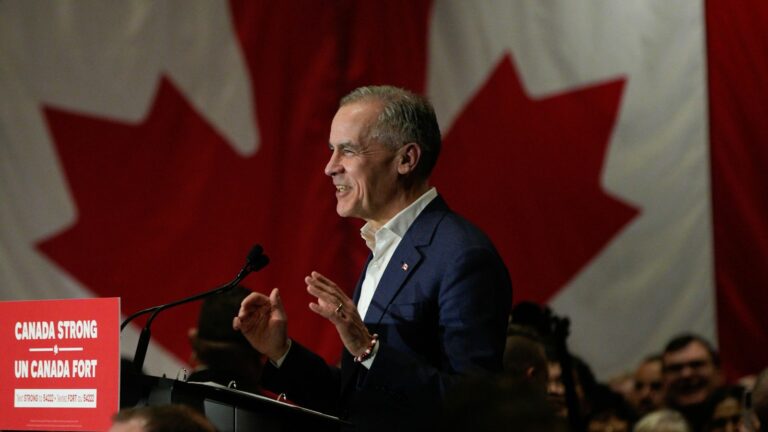
Prime Minister Mark Carney’s push for a Canada-U.S. trade agreement unexpectedly put one of Ontario Premier Doug Ford’s most visible retaliation measures back under the microscope: the removal of American alcohol from LCBO shelves. Carney asked provincial premiers to restore U.S. alcohol as negotiators tried to eliminate a major Washington trade complaint. Ford, normally outspoken on the issue, did not say whether Ontario would comply. The timing made the silence notable because he had spent more than a year defending the ban as leverage against U.S. tariffs. The situation changed dramatically before the weekend was over. Canada suspended the negotiations after rejecting last-minute U.S. terms, new 50% American tariffs took effect, and Ford publicly backed Carney’s tougher response — without announcing that American booze would return to Ontario stores.
Carney Turned Liquor Shelves Into a Last-Minute Bargaining Chip
Ford Goes Silent as Carney Presses Ontario to Put U.S. Booze Back on LCBO Shelves
- Carney Turned Liquor Shelves Into a Last-Minute Bargaining Chip
- Ford’s Silence Stood Out Because His Position Had Been So Clear
- A Relatively Small Product Category Became a Major U.S. Grievance
- Ontario Consumers Filled Much of the Empty Shelf Space With Local Products
- Restocking American Booze Was Becoming a Political Risk for Carney and Ford
- The Collapse of Trade Talks Has Rewritten the LCBO Debate
The alcohol dispute moved from provincial retaliation to the centre of federal trade diplomacy during the final days of negotiations. After Carney briefed premiers on August 19, Nova Scotia Premier Tim Houston said the prime minister had asked provinces to put U.S. alcohol back on store shelves. Manitoba Premier Wab Kinew later described the request in even stronger terms, saying he understood that restoring American alcohol was effectively necessary if Ottawa wanted the emerging agreement completed. The request mattered because Ottawa could negotiate the broader trade package, but provincial governments control measures such as liquor distribution. Carney therefore needed cooperation from premiers rather than simply issuing an order from the federal government. That arrangement gave Ford unusual influence over a dispute reaching far beyond Ontario’s liquor stores.
Ontario was particularly important because of the scale of the LCBO market. When the province imposed its restrictions in March 2025, the LCBO said it was the importer of record for all U.S. beverage alcohol sold in Ontario and handled annual U.S. product sales worth as much as C$965 million. More than 3,600 American products from 35 states were listed at the time. The prohibition extended beyond bottles displayed in LCBO locations: the agency stopped purchasing U.S. products, removed them from its online channels and prevented wholesale customers such as bars, restaurants, grocery stores and convenience retailers from placing new orders through the LCBO. For American producers trying to regain access to Canada, a decision by Ontario could therefore restore one of their largest provincial markets in a single move.
Ford’s Silence Stood Out Because His Position Had Been So Clear
Ford had rarely been ambiguous about American alcohol before Carney’s request. Ontario ordered U.S. products removed on March 4, 2025, as part of its response to American tariffs, and Ford repeatedly portrayed the measure as economic pressure Washington could actually feel. In July 2026, after the White House explicitly identified provincial alcohol restrictions as a grievance, Ford again refused to reverse course. His message was that American products would remain unavailable until the tariff dispute was resolved. He had also previously linked the LCBO decision to a successful broader agreement, telling reporters during a June visit to Washington that American booze could return once a deal was completed. Those statements created a fairly simple political condition: meaningful tariff relief first, restored access to Ontario’s liquor market afterward.
That is why his lack of an immediate answer during Carney’s final push was conspicuous. Global News reported that questions sent to both Ford’s office and Ontario’s Ministry of Finance about the request went unanswered, while Ford had not held a news conference since August 13. His silence did not last on the broader trade fight. After negotiations collapsed late on August 21, Ford publicly said Carney had his full support for a strong, tariff-for-tariff response and declared that everything needed to be on the table. But that statement did not announce a change to the LCBO policy. The distinction matters: Ford eventually spoke about Canada’s retaliation, yet Ontario still had not publicly committed to putting American bottles back on shelves as the dispute entered a more confrontational phase.
A Relatively Small Product Category Became a Major U.S. Grievance
Alcohol does not dominate the enormous Canada-U.S. commercial relationship, but provincial control over distribution made it unusually powerful as a retaliatory tool. The Trump administration formally singled out Canadian restrictions when it invoked Section 338 of the U.S. Tariff Act of 1930 in July. The White House argued that provincial bans disadvantaged American alcohol relative to products from other countries and used that complaint as part of its justification for additional 50% duties on selected Canadian goods. Unlike a conventional tariff that merely raises a product’s price, removing American labels from provincial distribution systems can sharply reduce access to consumers. That made bottles of bourbon, California wine and American beer symbols of a much larger argument over whether Canada was responding proportionately to U.S. trade measures.
Export figures explain why the issue gained Washington’s attention. The Distilled Spirits Council of the United States, using U.S. trade data, reported that American spirits exports to Canada between March and December fell from US$203 million in 2024 to US$60 million in 2025, a 70% decline. The Wine Institute reported an even larger disruption for U.S. wine: export value to Canada dropped from US$460 million in 2024 to US$103 million in 2025, a decline of 78%. Those organizations represent American producers and advocate for reopening the Canadian market, so their policy conclusions should be viewed in that context. The underlying trade numbers nevertheless illustrate why provincial liquor boards became far more than a symbolic annoyance for distillers and wineries that had spent years building Canadian sales.
Ontario Consumers Filled Much of the Empty Shelf Space With Local Products
Ontario’s restrictions also changed what shoppers encountered inside stores. The LCBO removed U.S.-made wine, spirits, beer, cider, ready-to-drink beverages and even non-alcoholic products covered by its directive. Familiar American labels disappeared while merchandising increasingly emphasized Ontario and Canadian alternatives. That transition was not insignificant considering the LCBO had previously listed thousands of U.S. products. For shoppers accustomed to a particular California cabernet or Kentucky bourbon, the practical result was often a substitution rather than simply a postponed purchase. By June 2026, the LCBO said customers had access to more than 4,600 Ontario-made beverages and nearly 600 additional Canadian offerings, including hundreds of newly added VQA wines and Ontario craft beers.
Sales trends suggest local producers gained substantial exposure during the same period, although the alcohol ban should not be treated as the sole cause of every increase. For the year from April 1, 2025, through March 31, 2026, the LCBO reported Canadian product sales rising 18%. Sales of Ontario products increased about 20%, adding more than half a billion dollars, while Ontario VQA wine sales climbed 44%. Ontario-made spirits rose 9%, and both beer and ready-to-drink products recorded increases of roughly 25%. Other retail changes and consumer trends also influenced those figures. Still, after more than a year without normal U.S. supply, Ontario producers gained valuable shelf space and consumers became accustomed to alternatives — creating a commercial reality that would not automatically disappear simply because the government authorized American products to return.
Restocking American Booze Was Becoming a Political Risk for Carney and Ford
The hardest part of reversing the restrictions may not have been logistics but public sentiment. A Leger poll released on August 18 found that 64% of Canadians supported banning the sale of U.S. liquor, while only 33% supported fully resuming American alcohol sales. The same research found 56% wanted Ottawa to take a hard line in the broader negotiations and make no further concessions, compared with 31% who favoured flexibility when necessary. Leger conducted the online poll from August 15 to 17 among 1,622 Canadian adults and weighted the results to reflect national demographics. Because it was a non-probability online sample, Leger noted that a conventional margin of error technically does not apply, although a probability sample of that size would carry a margin of roughly 2.4 percentage points.
Premiers were consequently being asked to make a concession that many consumers did not appear eager to see. Kinew said Manitoba was considering Carney’s request but urged Canadians to continue choosing domestic products if American liquor returned. Quebec Premier Christine Fréchette said her province would make its own decision about restoring products to SAQ shelves after assessing the overall trade package. Alberta and Saskatchewan had already reopened their markets to American spirits, demonstrating that provincial responses were not uniform. For Ford, the dilemma was especially sharp. Reversing the LCBO ban in exchange for substantial tariff relief could be presented as the payoff from successful negotiations. Restoring U.S. products without a convincing economic win, however, risked surrendering a popular bargaining tool while asking Ontario businesses and workers to continue absorbing the effects of American tariffs.
The Collapse of Trade Talks Has Rewritten the LCBO Debate
The tentative bargain that prompted Carney’s request ultimately did not survive. Late on August 21, Carney announced that Canada was suspending negotiations and recalling its negotiators from Washington. He said last-minute changes in the American proposal were unfair, uneconomic and raised doubts about the reliability of an agreement. New U.S. tariffs of 50% subsequently took effect on roughly C$28 billion of Canadian goods, according to the prime minister’s statement, and Ottawa pledged to match the measures dollar for dollar. Ford quickly backed that position, saying Ontario supported a strong response and was ready to do its part. His reaction marked a return to the forceful tone that had defined much of his approach to the trade confrontation.
That collapse makes an immediate LCBO reversal considerably harder to justify politically. Carney’s request to the provinces was made when restoring U.S. alcohol could potentially help secure tariff relief and a wider agreement. With that agreement gone and Ottawa preparing retaliation instead, the original exchange no longer exists. As of August 22, Ontario had not announced that U.S. alcohol would return to LCBO shelves. The question could re-emerge if negotiations restart, particularly because Washington has formally identified the provincial bans as a trade grievance. But even an eventual government decision to reopen the market would not guarantee a return to pre-dispute buying patterns. After more than a year of product substitution — and with recent polling showing strong support for maintaining pressure — the larger challenge for American producers may eventually be persuading Canadian customers to put their bottles back in shopping carts.
This Options Discord Chat is The Real Deal
While the internet is scoured with trading chat rooms, many of which even charge upwards of thousands of dollars to join, this smaller options trading discord chatroom is the real deal and actually providing valuable trade setups, education, and community without the noise and spam of the larger more expensive rooms. With a incredibly low-cost monthly fee, Options Trading Club (click here to see their reviews) requires an application to join ensuring that every member is dedicated and serious about taking their trading to the next level. If you are looking for a change in your trading strategies, then click here to apply for a membership.