35,000+ smart investors are already getting financial news, market signals, and macro shifts in the economy that could impact their money next with our FREE weekly newsletter. Get ahead of what the crowd finds out too late. Click Here to Subscribe for FREE.
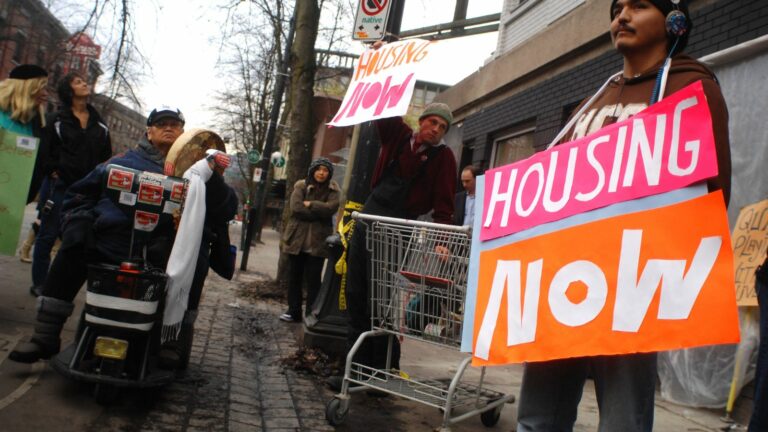
A long-running argument over how Delta should absorb more housing has moved from council chambers and planning documents into public view at a politically sensitive moment. Residents gathered Sunday, August 16, to voice concerns about density plans in their community, just as the calendar reached exactly two months before Delta’s October 17 municipal election.
The timing gives the dispute added weight. Provincial law has already rewritten many of the rules governing low-density neighbourhoods, while Delta is still working through how new housing forms should fit locally. With housing targets, infrastructure pressures, neighbourhood character and municipal authority all colliding, the debate is becoming a test of how much influence residents and the next council can still exercise over changes that are partly being driven from Victoria.
The Rally Puts Housing Squarely Into the Election Conversation
B.C. Housing-Density Fight Hits the Street as Delta Residents Rally Two Months Before Municipal Vote
- The Rally Puts Housing Squarely Into the Election Conversation
- The Biggest Zoning Shift Started With the Province, Not Delta
- Delta Has Already Rewritten What Can Be Built on Many Lots
- Delta’s Newest Proposals Are About More Than Adding Units
- Delta Has Heard the Anxiety Before — and in Large Numbers
- Provincial Housing Targets Keep the Pressure on City Hall
- Roads, Sewers and Delta’s Geography Make Density a Practical Question
- Research Suggests Upzoning Can Work — but It Is Not an Instant Fix
- The Fight Is Also About How Much Local Control B.C. Cities Still Have
- October 17 Can Change Delta’s Approach, but Not Erase the Provincial Floor
Global News reported that Delta residents gathered on Sunday to make their concerns known about proposed density plans, putting a visible public face on a dispute that has been building through years of provincial legislation and local planning changes. The demonstration came on August 16, one day before the city reached the two-month mark to its October 17 general local election. No reliable public count of rally attendance was available, making the significance of the event more political than numerical at this stage.
That timing matters because Delta’s formal nomination period has not even begun. Across B.C., nominations for the 2026 local elections open September 1 and close September 11, while the official campaign period begins September 19. In other words, residents are pushing housing density into the conversation before the final ballot is known. For candidates seeking a mayoral or council seat, the issue now touches several politically potent questions at once: neighbourhood change, housing affordability, traffic, infrastructure and how aggressively municipalities should challenge provincial direction.
The Biggest Zoning Shift Started With the Province, Not Delta
The roots of the current fight extend back to B.C.’s 2023 housing legislation. Under the small-scale multi-unit housing requirements associated with Bill 44, affected municipalities had to rewrite zoning bylaws so that many parcels previously intended for single-detached homes or duplexes could accommodate additional dwellings. Local governments were generally required to complete those changes by June 30, 2024.
The provincial regulation establishes a minimum capacity of three housing units on qualifying parcels of 280 square metres or less and four on larger qualifying parcels. In designated areas close to frequent transit, the framework can require capacity for six units. Municipalities can permit more density, but they cannot simply zone qualifying land below the provincial minimum. That distinction is important in Delta: some residents may direct anger toward city hall because neighbourhood changes are experienced locally, yet council is operating inside a provincial framework that substantially narrowed the option of preserving traditional single-detached zoning across large areas.
Delta Has Already Rewritten What Can Be Built on Many Lots
Delta adopted its first major set of small-scale multi-unit housing changes in June 2024 to comply with the provincial requirements. The city’s current guidance permits a maximum of three units on qualifying properties up to 280 square metres and four units on properties larger than that threshold. Larger properties within 400 metres of frequent transit along Scott Road can accommodate as many as six units under the applicable rules.
Those numbers can sound abstract until translated into a familiar residential street. A parcel that might once have been associated with one principal home can now support combinations involving duplexes, secondary suites, coach houses, garden suites or other permitted configurations, depending on the property. Delta’s rules also address parking, setbacks and other physical characteristics rather than simply counting doors. The result is an incremental form of density that may look very different from a high-rise project but can still change the scale, population and parking patterns of an established block over time.
Delta’s Newest Proposals Are About More Than Adding Units
The next stage of Delta’s zoning work is more technical, but those details help explain why the debate remains active. In its latest small-scale housing consultation, the city outlined five proposed changes, including explicitly permitting houseplexes containing three or four principal dwelling units. Delta has also proposed raising the maximum height for sloped-roof buildings from 9.5 metres to 10.5 metres, while saying the change would not add another storey.
Other proposals would remove the floor-space-ratio cap, consolidate 12 similar small-scale residential zones and increase minimum frontage for newly subdivided lots from 11 metres to 15 metres while retaining a 30-metre minimum depth. After reviewing feedback gathered in November 2025, staff reported in April 2026 that residents tended to focus on growth and the pace of change, while development-industry participants emphasized project feasibility. Rather than immediately settling every issue, staff said they planned to keep monitoring the existing regulations and explore a separate houseplex zone for future council consideration.
Delta Has Heard the Anxiety Before — and in Large Numbers
The August rally did not emerge from a vacuum. During Delta’s 2024 Official Community Plan process, the city mounted an unusually broad engagement effort as it prepared for provincially driven housing changes. Its project webpage recorded roughly 10,700 visits, information was mailed to 44,000 homes and businesses, and four open houses attracted about 1,200 community members. Another 1,034 responses arrived through online and paper feedback forms.
The messages were more nuanced than a simple rejection of new housing. Delta’s own summary said residents recognized the need for growth and greater density, but many remained cautious about its scale and speed. Traffic congestion, water and sewer capacity, schools, health services, recreation facilities and the preservation of neighbourhood character appeared repeatedly in the feedback. The city responded that growth areas had been chosen partly around existing or expandable infrastructure and access to transportation and services. Even so, the persistence of similar concerns into 2026 suggests that providing consultation does not automatically produce public confidence in the eventual outcome.
Provincial Housing Targets Keep the Pressure on City Hall
Delta does not have the luxury of treating housing growth solely as a discretionary planning exercise. The province placed the municipality under a five-year Housing Target Order requiring 3,607 net new homes. By September 30, 2025, Delta reported delivering 1,146 net new units over the first two years, slightly exceeding its cumulative target of 1,098. Its broader 2024 Housing Needs Report calculated a 20-year housing requirement of 29,457 units.
Federal policy adds another incentive to accelerate change. In January 2025, Canada and Delta announced a $14.2-million Housing Accelerator Fund agreement. CMHC said the agreement was intended to fast-track 424 additional homes over three years and help spur approximately 4,100 homes over a decade. Delta committed to measures including infill housing initiatives, parking reductions, zoning modernization, development-approval technology and opportunities for non-market housing on public or institutional lands. Those targets and funding agreements mean the next council will inherit a housing system already carrying commitments from three levels of government, not a blank planning map.
Roads, Sewers and Delta’s Geography Make Density a Practical Question
Some of the most persistent objections to density are less ideological than physical. During the OCP process, residents told the city that growth should be concentrated where water, sewer and road infrastructure either has capacity or can realistically be expanded. Traffic and congestion were also repeatedly identified as concerns. Delta says infrastructure capacity influenced its selection of growth areas and that major developments can be required to undergo traffic-impact assessments.
Even the seemingly minor proposal to add one metre to allowable sloped-roof height reflects Delta’s unusual geography. The city says deeper excavation can be difficult and expensive because of floodplain conditions, so allowing basements to sit slightly higher can reduce excavation and pumping while providing larger windows and more usable living space. Parking is similarly tangible: Delta generally requires an on-site space for each SSMUH unit outside applicable exemptions. These details show why residents experience housing policy not as an abstract unit target, but through driveways, trees, construction sites, drainage systems and the morning commute.
Research Suggests Upzoning Can Work — but It Is Not an Instant Fix
The economic argument behind zoning reform is straightforward: if regulations allow more homes to be built on scarce urban land, developers have more opportunities to increase supply. Research on Auckland, New Zealand — one of the most closely studied large-scale upzoning experiments — has found meaningful increases in housing construction after the city substantially expanded residential development capacity. The research has become influential because Auckland changed zoning across a large enough area to provide a useful real-world test.
But academic evidence also warns against treating zoning permission as the same thing as completed affordable housing. Construction responses depend on land values, financing, building costs, market demand and whether the old zoning rules were actually constraining development. Benefits can also emerge over years rather than months. That distinction fits Delta’s experience: permitting additional units creates capacity, but property owners still need to choose to redevelop and projects still need to be financially viable. The legitimate policy argument is therefore increasingly about pace, location, infrastructure and design rather than whether zoning matters at all.
The Fight Is Also About How Much Local Control B.C. Cities Still Have
Delta’s dispute is part of a broader municipal backlash against Victoria’s housing reforms. In late 2025, a large group of Metro Vancouver mayors, including Delta Mayor George Harvie, urged the province to reconsider major elements of its housing agenda, including mandatory housing targets and small-scale multi-unit and transit-oriented density requirements. Premier David Eby rejected calls for a broad rollback. The province also moved in 2025 to strengthen consistency in SSMUH implementation and prevent local restrictions that could undermine the required housing capacity.
Public-process rules have changed as well. B.C.’s Local Government Act prohibits a municipality from holding a public hearing on a zoning bylaw whose sole purpose is to comply with the provincial small-scale multi-unit housing requirements. That can create a difficult political dynamic: residents may expect municipal hearings to provide an opportunity to stop a change even when council has little legal ability to reject the underlying provincial requirement. The result is a debate about democratic accountability as much as building form.
October 17 Can Change Delta’s Approach, but Not Erase the Provincial Floor
Delta voters will elect one mayor, six councillors and seven school trustees on October 17. For housing, the mayor and council races will carry the most direct consequences. A new council can influence local development priorities, capital spending, servicing plans, design regulations and the pace or form of discretionary zoning initiatives. It can also decide how forcefully Delta advocates for legislative changes in Victoria. Staff’s plan to explore a standalone houseplex zone is one example of an issue that could eventually come before council.
What the election cannot realistically do is return Delta to the regulatory environment that existed before B.C.’s housing legislation. Provincial minimum-density requirements remain law unless the legislature changes them, and municipalities are required to comply. That leaves voters with a more complicated decision than simply choosing between “density” and “no density.” The practical choice is increasingly about who should manage an unavoidable period of growth, how much additional change Delta should pursue beyond provincial requirements, and whether residents believe their next council can balance new homes with the qualities that made existing neighbourhoods worth fighting over.
This Options Discord Chat is The Real Deal
While the internet is scoured with trading chat rooms, many of which even charge upwards of thousands of dollars to join, this smaller options trading discord chatroom is the real deal and actually providing valuable trade setups, education, and community without the noise and spam of the larger more expensive rooms. With a incredibly low-cost monthly fee, Options Trading Club (click here to see their reviews) requires an application to join ensuring that every member is dedicated and serious about taking their trading to the next level. If you are looking for a change in your trading strategies, then click here to apply for a membership.