35,000+ smart investors are already getting financial news, market signals, and macro shifts in the economy that could impact their money next with our FREE weekly newsletter. Get ahead of what the crowd finds out too late. Click Here to Subscribe for FREE.
The World Cup final was supposed to showcase North American cooperation. Instead, a conversation inside the leaders’ suite became the latest pressure point between Ottawa and Washington. After sitting with Prime Minister Mark Carney at the July 19 match in New Jersey, U.S. President Donald Trump said he had told the Canadian leader that the fires sending smoke south had to be brought under control. He then floated financial damages or new tariffs as possible responses.
The comments transformed a shared environmental emergency into another test of Carney’s ability to manage an unpredictable U.S. relationship. Canada is battling hundreds of active fires across an immense landscape, while American cities have faced unhealthy air and disrupted outdoor activity. The smoke is real, but so is the political calculation surrounding it.
A World Cup Celebration Becomes a Diplomatic Warning
Trump Uses World Cup Meeting to Put Carney ‘On Notice’ Over Canadian Wildfires
- A World Cup Celebration Becomes a Diplomatic Warning
- Trump Turns Smoke Into Another Tariff Threat
- Canada Is Facing a Large and Fast-Moving Fire Emergency
- The Smoke Reached Far Beyond the Flames
- Carney Points to a Nationwide Firefighting Mobilization
- Forest Management Is More Complicated Than a Political Sound Bite
- Wildfire Smoke Moves in Both Directions
- The Economic Stakes Are Much Larger Than the Smoke Dispute
- Carney’s Next Test Is Containing Both the Fires and the Fallout
Carney attended the final at New York New Jersey Stadium with his wife, Diana Fox Carney, alongside Trump, first lady Melania Trump, Mexican President Claudia Sheinbaum and FIFA president Gianni Infantino. The setting was symbolic: the three North American countries had just completed the first men’s World Cup jointly hosted by three nations. Yet the conversation between the Canadian and U.S. leaders quickly moved beyond soccer. Trump later told reporters at Joint Base Andrews that he had raised the wildfire smoke directly with Carney and insisted Canada had to stop the fires from “poisoning” American air.
That public retelling effectively put Carney on notice only hours after the two leaders appeared together at the tournament’s biggest event. It also ensured that a private exchange would become a domestic political message in both countries. For Trump, the issue fit his broader strategy of linking cross-border grievances to financial penalties. For Carney, it created an awkward split-screen: celebrating a successful international event while facing accusations that Canada was failing to contain a disaster already displacing residents at home.
Trump Turns Smoke Into Another Tariff Threat
Trump did not limit his complaint to forest management. He suggested Canada might have to pay damages and again raised the possibility of tariffs, a day after saying the cost of smoke-related pollution should be added to duties already affecting Canadian goods. No detailed tariff plan, product list or legal rationale was announced. Canadian reporting noted that it remained unclear what authority the administration would use to impose a new border charge specifically because smoke had travelled into the United States.
The threat matters even without an immediate order. Tariffs have become one of Trump’s preferred tools for pressuring governments, companies and industries, often before formal negotiations begin. By attaching the wildfire dispute to trade, he widened the potential consequences far beyond forestry or emergency management. Canadian exporters already operate in a relationship where policy changes can quickly affect steel, aluminum, autos, lumber and agriculture. A smoke tariff may sound unusual, but businesses cannot easily dismiss it when the same administration has repeatedly used import duties to pursue political objectives.
Canada Is Facing a Large and Fast-Moving Fire Emergency
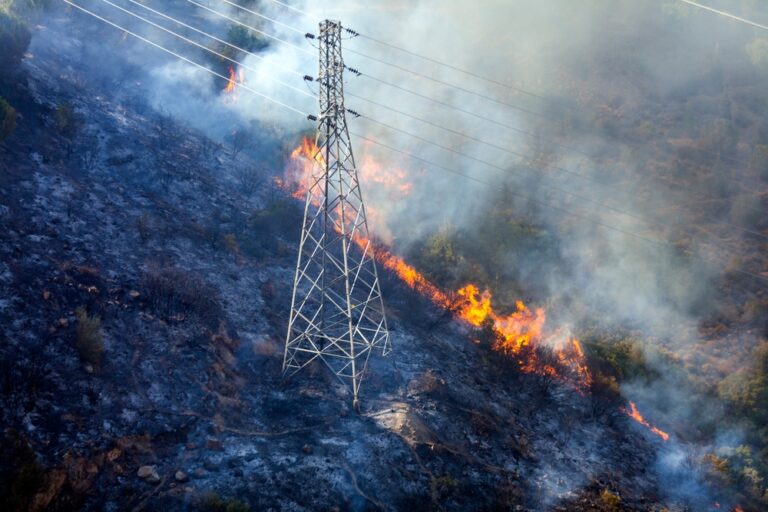
The dispute erupted during a severe stretch of Canada’s 2026 wildfire season. Government data showed that roughly 2.4 million hectares, or 5.9 million acres, had burned by mid-July. On July 16, officials were tracking 858 active fires nationally, including 111 classified as out of control. By July 20, the active count remained above 800. Ontario was among the hardest-hit provinces, with close to 200 fires and more land burned than during the province’s entire 2025 season.
Those numbers represent more than dots on a fire map. Northern communities have faced evacuation orders, road disruptions and repeated uncertainty about when residents can return. More than 1,800 people had been displaced in northern Ontario as the crisis intensified. In Thunder Bay, the city’s fire chief described the season as unprecedented in more than 35 years of service. British Columbia also saw its fire count jump sharply after thousands of lightning strikes. The scale helps explain why stopping every fire immediately is not a realistic operational standard.
The Smoke Reached Far Beyond the Flames
Smoke from Canadian fires spread across the U.S. Midwest, Northeast and Mid-Atlantic, affecting cities including Detroit, Chicago, New York and Washington. In the New York region, officials urged residents to reduce outdoor activity as the Air Quality Index reached unhealthy levels. Free KN95 masks were distributed at hundreds of public locations. The haze also intruded on World Cup preparations: Spain temporarily suspended an outdoor training session after severe weather and smoky conditions complicated the final build-up.
The main health concern in wildfire smoke is fine particulate matter known as PM2.5. These particles are small enough to travel deep into the lungs and are associated with respiratory and cardiovascular harm. Health Canada says smoke can affect people even at low concentrations and can travel hundreds or thousands of kilometres from a fire. That makes the American concern legitimate, even if the proposed response is disputed. A community does not need to be near burning trees to experience the consequences; shifting winds can turn a distant forest emergency into a major urban health event.
Carney Points to a Nationwide Firefighting Mobilization
Carney has pushed back against the suggestion that Canada is standing idle. He said more than 5,300 firefighting personnel had been deployed across the country and that responders were using data, drones and advanced thermal imaging for real-time detection and mitigation. Aircraft support crews on the ground by conducting surveillance, transporting personnel, assisting evacuations and dropping water or fire retardant in areas that can be difficult to reach by road.
The prime minister has also framed the fires as part of a wider climate problem rather than a failure belonging to one government. He argued that fighting climate change is the responsibility of all countries, including the United States. That response may satisfy Canadians who see Trump’s criticism as politically convenient, but it does not remove pressure on Ottawa to show measurable results. Carney must demonstrate that federal resources are reaching provinces and communities quickly, while explaining that most frontline fire decisions are made by provincial and territorial agencies rather than the Prime Minister’s Office.
Forest Management Is More Complicated Than a Political Sound Bite
Trump has accused Canada of inadequate forest management and debris removal, but responsibility is spread across multiple levels of government. Natural Resources Canada states that provinces and territories, working with local authorities, generally decide whether and how wildland fires are controlled within their jurisdictions. The federal government manages fires on federal lands and can provide support when provincial or territorial capacity is exceeded. Some fires are aggressively suppressed, while others in remote areas may be monitored if they pose limited risk to people or infrastructure.
Prevention also involves more than clearing forests. Agencies use prescribed burns, thinning, fuel breaks, community planning and FireSmart measures to reduce danger around populated areas. These tools can protect specific communities, but Canada’s boreal forest covers an enormous and often inaccessible landscape. Weather remains decisive. Research on the record 2023 season found that persistent heat, low precipitation and dry soils were major drivers of extreme fire activity. Better management can reduce risk, but it cannot eliminate lightning, drought, wind or the effects of a warming climate.
Wildfire Smoke Moves in Both Directions
The politics became more complicated when smoke from large fires in Washington and Oregon began drifting north into southeastern British Columbia. Provincial officials said American smoke was contributing to warnings in the Kootenay Lake and Cranbrook regions. The reversal reinforced a basic reality: the border does not control wind patterns, and neither country can guarantee that smoke generated inside its territory will remain there.
Canada and the United States have traditionally responded to major fires through mutual aid rather than financial retaliation. Canadian personnel and equipment have assisted during American emergencies, including the destructive California fires of January 2025. Ontario Premier Doug Ford cited that history while criticizing Trump’s remarks and arguing that neighbours should send help instead of threats. His response was blunt, but it reflected a long-standing operational model. Fire agencies share crews, aircraft and expertise because both countries can face simultaneous shortages. Turning smoke into a trade weapon risks weakening the cooperative habits needed when the next emergency moves the other way.
The Economic Stakes Are Much Larger Than the Smoke Dispute
Canada and the United States exchanged an estimated US$719.5 billion in goods during 2025. The relationship includes tightly connected supply chains, cross-border energy systems and factories that depend on components moving in both directions. Statistics Canada reported that monthly Canadian exports to the United States exceeded C$51 billion in May 2026 alone. Against that backdrop, even an undefined tariff threat can influence contracts, investment decisions and pricing.
The timing is especially sensitive because Canada, the United States and Mexico are already navigating the 2026 joint review of CUSMA. The review is not an automatic expiry date, but it gives all three governments an opportunity to raise disputes and demand changes. Adding wildfire smoke to the list of bilateral grievances could create another bargaining chip in negotiations already covering autos, energy, agriculture and industrial policy. Carney therefore has to treat Trump’s comments as more than a passing complaint. The practical question is whether the White House turns the rhetoric into policy or uses it to extract concessions elsewhere.
Carney’s Next Test Is Containing Both the Fires and the Fallout
As of Trump’s remarks, Carney’s office had not issued a direct response to the damages-or-tariffs suggestion. That restraint may be deliberate. A heated exchange could give the U.S. president more attention and make cooperation harder, while silence can be portrayed by domestic critics as weakness. The more durable response will depend on visible firefighting support, credible public data and continued coordination with American officials responsible for emergency management and air quality.
The episode also shows how quickly a ceremonial meeting can become a negotiating arena. Carney went to New Jersey as the leader of a World Cup co-host and left facing another potential trade confrontation. Trump’s message was designed to be simple: Canada must fix the problem or risk paying a price. The reality is far more complicated. Wildfires are influenced by climate, geography, lightning, land management and weather, while smoke crosses borders without permission. Whether the dispute fades with the next change in wind or becomes a new tariff battle will reveal much about the direction of Canada–U.S. relations.
This Options Discord Chat is The Real Deal
While the internet is scoured with trading chat rooms, many of which even charge upwards of thousands of dollars to join, this smaller options trading discord chatroom is the real deal and actually providing valuable trade setups, education, and community without the noise and spam of the larger more expensive rooms. With a incredibly low-cost monthly fee, Options Trading Club (click here to see their reviews) requires an application to join ensuring that every member is dedicated and serious about taking their trading to the next level. If you are looking for a change in your trading strategies, then click here to apply for a membership.