35,000+ smart investors are already getting financial news, market signals, and macro shifts in the economy that could impact their money next with our FREE weekly newsletter. Get ahead of what the crowd finds out too late. Click Here to Subscribe for FREE.
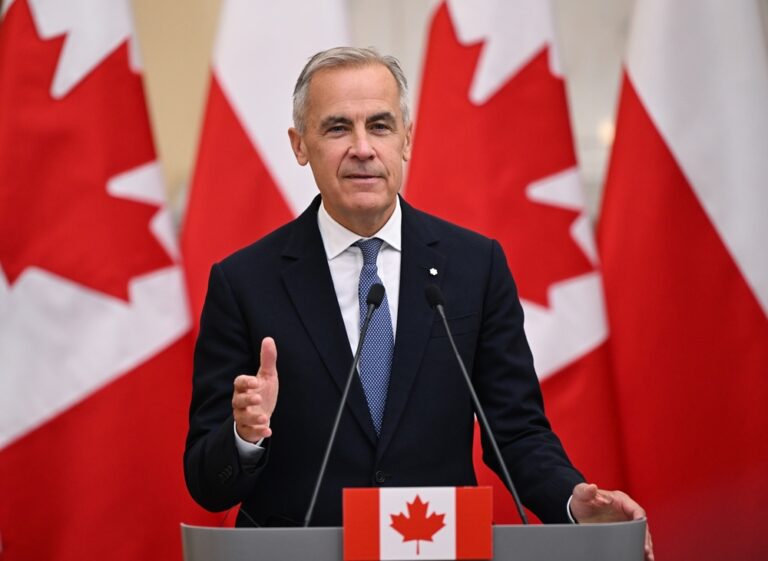
A Senate appointment can look like a quiet personnel move — until it changes the rules around who gets considered for one of Canada’s most powerful unelected jobs. Prime Minister Mark Carney’s first Senate selections do both. By naming four new senators and removing the non-partisanship criterion from the process, the government has opened a major new debate over expertise, independence, and political influence in the Red Chamber.
The move brings together a Conservative MP, a senior Liberal-aligned strategist, a cancer researcher, and a corporate governance leader. It also signals that Carney wants a Senate built less around strict distance from party politics and more around governing experience, technical knowledge, and policy capacity at a time when Ottawa is trying to move quickly on major national files.
A Sharp Turn From Trudeau-Era Senate Reform
Carney Drops Non-Partisanship Rule From Senate Picks as Four New Appointments Land
For nearly a decade, the Senate appointment system was framed around independence from party machines. The Independent Advisory Board for Senate Appointments, created in 2016, was designed to assess candidates through public, merit-based criteria and provide non-binding recommendations to the prime minister. The process did not remove the prime minister’s final choice, but it changed the tone of Senate recruitment by encouraging Canadians to apply and by emphasizing independence, regional representation, professional accomplishment, and non-partisanship.
Carney’s change does not abolish the advisory model, but it removes one of its most recognizable guardrails. The government says the new approach will broaden eligibility to people who have served in elected office or partisan roles, arguing that such experience can improve the Senate’s understanding of Parliament, regulation, industry, and major public policy challenges. That is a meaningful shift. It suggests Carney sees the Senate not only as a chamber of sober second thought, but also as a place where people with political, technical, and institutional experience can help review ambitious legislation more effectively.
The timing matters. The government says that once these four appointments are completed, six vacancies will remain in the Senate, with five more expected before the end of 2026. That means Carney’s first round is not a one-off moment; it is likely the start of a larger reshaping of the upper chamber. A new Independent Advisory Board is expected to be established, and a new application process is expected to open, giving the government a chance to define what “merit-based” means under this more flexible standard.
This creates a tension that will follow every future appointment. Supporters can argue that a senator who understands party discipline, parliamentary committees, cabinet priorities, or regulatory complexity may be better equipped to test government bills. Critics will ask whether removing non-partisanship makes it easier to reward allies, insiders, and useful political figures. Both arguments will now sit at the centre of the Senate debate.
The Four Appointments Send More Than One Political Message
The four names create an unusually mixed signal. Richard Martel, named for Quebec, is a Conservative MP from Chicoutimi—Le Fjord who was first elected federally in 2018 and re-elected in 2019, 2021, and 2025. Before politics, he built a long career in hockey, including coaching in the Quebec Major Junior Hockey League and serving in leadership roles connected to the sport. In Parliament, he held opposition critic and party roles tied to national defence, sport, and regional economic development. His appointment stands out because it brings a sitting Conservative parliamentarian into a Senate round launched by a Liberal prime minister.
Thomas Pitfield, also named for Quebec, points in a very different direction. He is a technology entrepreneur, investor, public policy adviser, and former principal secretary to Carney. His background includes digital strategy, artificial intelligence, data analytics, campaign strategy, and public policy work. To supporters, that makes him a useful addition at a time when governments are trying to regulate artificial intelligence, raise productivity, and manage technology-driven disruption. To critics, his closeness to the prime minister makes the appointment the clearest test of whether the new rules will be seen as expertise-based or insider-friendly.
The other two appointments broaden the professional profile of the group. Dr. Rodney Ouellette, named for New Brunswick, is a physician-scientist known for cancer research, precision oncology, and molecular medicine. He founded the Atlantic Cancer Research Institute and has contributed to national research networks and more than 75 peer-reviewed publications. Geeta Tucker, named for Manitoba, is a Chartered Professional Accountant and former CEO of CPA Manitoba, with more than three decades of leadership across business, regulation, education, governance, and the not-for-profit sector.
Together, the four selections help explain the government’s new framing. This is not simply a return to old-style partisan appointments, nor is it a continuation of the Trudeau-era model exactly as it was. It is a hybrid: political experience in one seat, prime ministerial proximity in another, scientific expertise in a third, and financial governance experience in a fourth. That variety gives Carney a defensible story about skills. It also gives opponents an easy opening to question whether the definition of “skills” now conveniently includes partisan usefulness.
Why Partisanship Is Back at the Centre of the Debate
The Senate has always lived with a contradiction. It is unelected, but powerful. It is appointed, but expected to act independently. It reviews legislation passed by elected MPs, but its members can remain in office until age 75. That design was meant to give Canada a chamber that could slow down, revise, and scrutinize legislation without facing the daily pressure of elections. The independent appointment process was intended to strengthen that role by reducing the perception that Senate seats were rewards for party loyalty.
That is why the non-partisanship change is so sensitive. Public debate over the Senate is rarely just about one appointment. It often becomes a proxy fight over patronage, accountability, democratic legitimacy, and whether Canada’s upper chamber is doing useful work. Earlier this year, senators and observers were already raising concerns about growing vacancies and the future of the appointment system. Reports noted that the advisory board had many vacant provincial and territorial seats and that applications were not being accepted at the time, feeding suspicion that a shift was underway before the government formally announced one.
Carney’s defence is practical. The government argues that Canadians who have served in elected or partisan roles can bring valuable knowledge of governing, legislative procedure, and public decision-making. That argument is not unreasonable. A chamber that reviews complex bills on defence, artificial intelligence, health care, finance, housing, energy, or trade can benefit from members who understand how laws move through Parliament and how political decisions are implemented. The question is whether that benefit can be gained without weakening the Senate’s independence.
The public mood may make the answer difficult. Recent polling commissioned by Senator Donna Dasko and conducted by Nanos Research found strong support for continuing to choose independent senators, with only a small share favouring a return to the old partisan system. That does not mean voters oppose every person with political experience. It does mean the government will likely have to work harder to prove that “partisan background” is not becoming a softer label for patronage.
What Changes Inside the Red Chamber Next
The Senate has 105 seats and is built to represent provinces, territories, regions, and minority interests in Parliament. Senators study bills, propose amendments, examine national issues through committees, and bring professional and regional perspectives to federal lawmaking. Because senators do not face re-election, the institution is supposed to offer longer-term scrutiny than the House of Commons, where MPs must constantly balance policy work with party strategy and electoral pressure.
That role makes the composition of the Senate important. A chamber with more former elected officials and partisan figures could become more politically fluent, more aggressive in legislative review, or more willing to challenge the government from inside the parliamentary system. It could also become more vulnerable to accusations that it is drifting back toward the old patronage model. Much will depend on where the new appointees choose to sit, how they vote, how they behave in committee, and whether they show independence once they arrive.
Carney’s next appointments may matter even more than the first four. If future selections lean heavily toward party insiders, former candidates, donors, or close advisers, the government’s expertise argument will weaken quickly. If the next wave includes respected figures from law, science, Indigenous leadership, business, labour, public administration, community service, and underrepresented regions, the government may be able to argue that it is modernizing the process rather than politicizing it.
The Senate often changes slowly, but appointment rules can change its character quickly. Trudeau’s reforms transformed the chamber by moving many senators away from traditional party caucuses. Carney’s adjustment could now redefine what independence means in practice. The central question is no longer whether a Senate nominee has ever been political. It is whether, once appointed, that person can put institutional judgment ahead of partisan loyalty. That test begins with these four names — and it will grow sharper with every vacancy Carney fills next.
This Options Discord Chat is The Real Deal
While the internet is scoured with trading chat rooms, many of which even charge upwards of thousands of dollars to join, this smaller options trading discord chatroom is the real deal and actually providing valuable trade setups, education, and community without the noise and spam of the larger more expensive rooms. With a incredibly low-cost monthly fee, Options Trading Club (click here to see their reviews) requires an application to join ensuring that every member is dedicated and serious about taking their trading to the next level. If you are looking for a change in your trading strategies, then click here to apply for a membership.