35,000+ smart investors are already getting financial news, market signals, and macro shifts in the economy that could impact their money next with our FREE weekly newsletter. Get ahead of what the crowd finds out too late. Click Here to Subscribe for FREE.
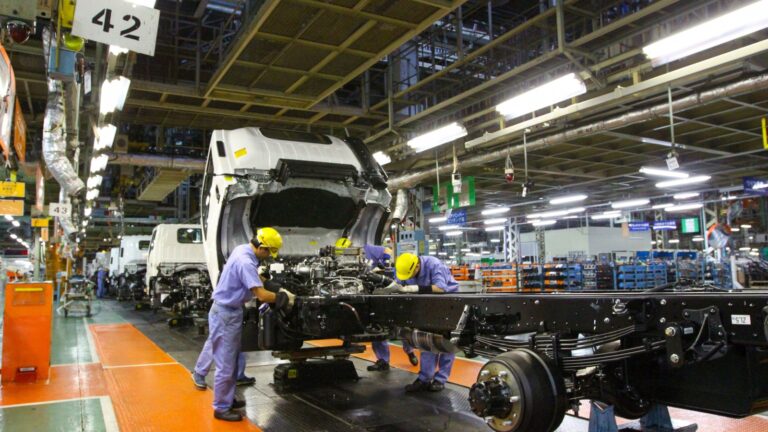
A Canadian factory can appear busy while its finances quietly worsen. That contradiction defined June, when manufacturing activity expanded but the price of keeping production lines moving climbed to its highest level in nearly four years. U.S. tariffs raised the cost and uncertainty of cross-border trade, while conflict in the Middle East disrupted shipping, lifted energy expenses and lengthened supplier delivery times. Manufacturers responded by buying early, building inventories and adding workers to handle current orders. Yet the same behaviour also revealed anxiety about what might come next. The result is an industrial recovery with a fragile foundation: production is growing, but margins, investment plans and customer demand remain under pressure. For households and businesses, the central question is whether these factory-level increases remain contained or eventually appear in the prices of vehicles, machinery, building materials, food packaging and other everyday goods.
The Expansion Comes With a Warning
Canadian Factory Costs Hit Four-Year High as U.S. Tariffs and War Disrupt Supply Chains
- The Expansion Comes With a Warning
- Supply Chains Are Slowing Again
- Tariffs Magnify Every Border Crossing
- Stockpiling Is Making Growth Look Stronger
- Energy and Materials Are Driving the Surge
- Factories Face a Margin Squeeze
- Hiring Is Improving, but the Damage Is Not Reversed
- Steel, Aluminum, Autos and Lumber Feel It First
- Investment Decisions Are Being Put on Hold
- The Next Test Is Whether Costs Reach Consumers
June’s headline numbers looked reassuring. The S&P Global Canada Manufacturing PMI edged up to 53.0 from 52.9 in May, remaining above the 50-point line that separates expansion from contraction. Output rose for another month, new orders increased and the employment index reached 51.9, its strongest reading since October 2024. On the factory floor, that can mean fuller order books, extra shifts and fewer idle machines.
The warning appeared in the cost data. The input-price index rose to 67.2 from 66.5, its highest level since July 2022. Business confidence simultaneously slipped to a three-month low. That combination matters because it suggests manufacturers are producing more without feeling more secure about the future. Growth built on expensive materials, delayed deliveries and defensive purchasing is less durable than growth driven by strong final demand. Canadian industry is expanding, but the June report showed that the recovery is carrying a growing financial burden today.
Supply Chains Are Slowing Again
The most immediate problem is time. Supplier delivery times in June lengthened by the greatest degree since September 2022, as conflict in the Middle East disrupted shipping routes. A late component can halt an entire production run, even when every other part is sitting beside the assembly line. For a small manufacturer, one delayed shipment may force overtime, air freight or an uncomfortable call to a waiting customer.
The disruption has spread beyond oil. Statistics Canada reported that problems moving goods through the Strait of Hormuz affected crude costs and multiple commodity groups in May, including chemicals, petroleum products and non-ferrous metals. Even after shipping traffic began recovering, manufacturers still faced backlogs, damaged infrastructure and uncertain transit schedules. Supply chains do not reset when a route reopens. Containers must be repositioned, inventories rebuilt and delayed contracts completed, allowing freight surcharges and longer lead times to persist for weeks or months.
Tariffs Magnify Every Border Crossing
U.S. tariffs are especially disruptive because Canadian manufacturing is connected to American suppliers and customers. In 2024, Canadian manufacturers shipped $324 billion in goods to the United States, and more than one-quarter of that value reflected content imported from there. U.S. demand supported $113 billion in Canadian manufacturing value added and about 694,000 payroll jobs. A tariff therefore affects more than one sale; it can disturb an entire production network.
The pressure is concentrated in strategic sectors. U.S. measures imposed in 2025 included broad tariffs on non-CUSMA-compliant Canadian goods and targeted duties on steel, aluminum, automobiles and some auto parts. Canada answered with counter-tariffs, including measures on U.S.-made vehicles. When inputs and finished products move through an integrated continental system, each new charge raises paperwork, financing needs and pricing uncertainty. A component maker may absorb the cost once, while an assembler, distributor and customer encounter it through higher quoted prices.
Stockpiling Is Making Growth Look Stronger
Part of the factory expansion reflects preparation for trouble rather than confidence in booming demand. S&P Global said manufacturers and customers have been purchasing early because they fear future price increases and shortages. Input inventories rose sharply in May, and June’s growth remained partly supported by stockpiling. The behaviour is understandable: a plant manager would rather hold extra bearings, resin or sheet metal than stop production because one shipment fails to arrive.
However, defensive buying can make current activity look stronger than the underlying market. Orders are pulled forward, warehouses fill and suppliers become busier, even though final consumption has not increased equally. The PMI includes supplier delivery times as a weighted component, with the measure inverted so slower deliveries can lift the headline index. That design historically treated delays as a sign of strong demand, but during war-driven disruption it can blur the distinction between genuine momentum and scarcity.
Energy and Materials Are Driving the Surge
The cost shock is visible in producer-price data. In May, prices for raw materials purchased by Canadian manufacturers were 33.4 per cent higher than a year earlier, while prices for products leaving Canadian factories were up 13.6 per cent. Both indexes also rose from April. Shipping disruptions through the Strait of Hormuz continued influencing crude oil, chemicals, petroleum products and non-ferrous metals, creating a broad increase rather than an isolated fuel problem.
Earlier data showed how quickly pressure spread. In April, chemical and chemical-product prices jumped 7.3 per cent in one month, the largest increase in a series dating to 1981. Plastic resins rose 35.7 per cent, petrochemicals increased 15.0 per cent and unwrought aluminum gained 10.0 per cent. Those materials feed into packaging, auto parts, construction products, appliances and industrial equipment. A surge at the commodity stage can therefore travel through several manufacturing layers before reaching a final buyer.
Factories Face a Margin Squeeze
Manufacturers have three responses to higher costs: raise prices, accept smaller margins or cut activity. Many are using each. Statistics Canada found that 28.3 per cent of businesses had passed tariff-related cost increases to customers during the year, while 33.8 per cent expected they were to do so over the next 12 months. Yet passing on every increase is difficult when customers are cautious or competitors hold cheaper inventory.
Industry responses reveal strain. In a June survey by Canadian Manufacturers & Exporters, 55 per cent of affected respondents said they were absorbing tariff costs or reducing margins, while 48 per cent were raising prices for U.S. customers. Many reported lost or reduced U.S. sales. Picture a parts supplier negotiating an annual contract: steel, freight and financing costs can change within weeks, but the customer may resist reopening the agreed price. The supplier carries the difference, delaying equipment purchases or hiring.
Hiring Is Improving, but the Damage Is Not Reversed
June brought a sign for workers. The manufacturing employment index rose to 51.9, its highest level since October 2024, as companies added staff for a third consecutive month to manage production and workloads. S&P Global also reported rising backlogs, suggesting some factories needed more hands because orders were arriving faster than completed goods could leave. For communities built around a plant, even modest hiring can support restaurants, contractors and retailers.
The broader labour picture remains less comfortable. Statistics Canada reported that manufacturing employment in March was down 44,000, or 2.4 per cent, from a year earlier—the largest year-over-year decline among major industries. A few months of survey-based hiring growth do not erase those losses, particularly when tariff-exposed businesses consider shorter shifts or smaller workforces. CME’s June survey found one-quarter of affected manufacturers had reduced employment, hours or shifts, while 36 per cent said they could do so if tariffs persisted.
Steel, Aluminum, Autos and Lumber Feel It First
The burden is uneven. The Bank of Canada found that most Canadian steel exports to the United States faced a 50 per cent tariff, while many steel derivatives faced 25 per cent. Steel exports had fallen by half, although production and employment declined less because domestic procurement, counter-tariffs and import controls supported Canadian demand. Aluminum producers also faced 50 per cent U.S. tariffs, and exports initially fell before partially recovering as American inventories tightened.
Other sectors have vulnerabilities. Softwood lumber exports were roughly 20 per cent below their 2024 average by February 2026 after U.S. duties increased the previous autumn. Auto manufacturing faces complexity because vehicles combine parts and materials sourced across North America, while Canadian countermeasures apply to certain U.S.-built vehicles. These industries extend beyond plants: mills, mines, railways, dealerships and specialized suppliers depend on them. When tariffs cut exports or raise input costs, effects travel through regional economies.
Investment Decisions Are Being Put on Hold
High costs hurt profits, but uncertainty can cause damage by changing tomorrow’s investment. The Bank of Canada has said U.S. tariffs and trade-policy uncertainty are weighing on Canadian exports, hiring and business investment. Manufacturers considering a new press, robotics line or warehouse must estimate demand and costs for years. When tariff rules, energy prices and CUSMA’s future remain unsettled, waiting can appear safer than committing capital.
Caution is visible. CME found that 30 per cent of affected manufacturers had delayed, reduced or cancelled investment in Canada. If tariffs remained above competitive thresholds, 36 per cent said they would delay or cancel investment, while 43 per cent could shift production, sourcing or capital to the United States. Nine in 10 supported extending CUSMA, and 73 per cent said failure to secure a full 16-year renewal would hurt their business. Fewer expansions today can mean weaker productivity, hiring and export capacity later.
The Next Test Is Whether Costs Reach Consumers
Factory inflation does not pass immediately into consumer prices. Companies may absorb some, redesign products, switch suppliers or draw from older inventories. Statistics Canada’s industrial product index measures prices at the factory gate, not what shoppers pay, and excludes later transportation, wholesale and retail costs. Still, persistent increases make restraint harder, particularly when imported inputs and domestic materials become more expensive simultaneously.
Its April outlook illustrated the policy dilemma. It projected growth of 1.2 per cent in 2026 while expecting war-related oil costs to lift near-term inflation before it returned toward the two per cent target in early 2027. Tariffs can weaken demand while raising prices, leaving policymakers to balance slow growth against renewed inflation pressure. The best outcome would be steadier shipping and tariff relief. Without both, Canadian factories may keep producing, but households and businesses will increasingly share the bill through higher prices over the coming year ahead.
This Options Discord Chat is The Real Deal
While the internet is scoured with trading chat rooms, many of which even charge upwards of thousands of dollars to join, this smaller options trading discord chatroom is the real deal and actually providing valuable trade setups, education, and community without the noise and spam of the larger more expensive rooms. With a incredibly low-cost monthly fee, Options Trading Club (click here to see their reviews) requires an application to join ensuring that every member is dedicated and serious about taking their trading to the next level. If you are looking for a change in your trading strategies, then click here to apply for a membership.