35,000+ smart investors are already getting financial news, market signals, and macro shifts in the economy that could impact their money next with our FREE weekly newsletter. Get ahead of what the crowd finds out too late. Click Here to Subscribe for FREE.
Nearly two years after Parliament approved a foreign-influence transparency regime, Canada still has no public registry showing who is acting for foreign states or state-linked entities to shape political and government decisions. The immediate delay is regulatory: Ottawa published draft rules in early January 2026, closed a 30-day consultation in February and, as of June 18, says the final package is in the “very final stage of development.”
The gap is no longer merely procedural. Anton Boegman has been approved by Parliament to become the first commissioner, but he cannot formally assume the job until the law and regulations take effect and the office and database are established. Civil-society and diaspora organizations argue that the unfinished system leaves Canada without a transparency tool its closest allies already use, even as intelligence authorities continue to describe foreign interference as a persistent threat.
A Law on the Books, but Not Yet in Force
Ottawa Still Has No Foreign Influence Registry Six Months After Draft Rules
- A Law on the Books, but Not Yet in Force
- What the Registry Is Designed to Expose
- Draft Rules Added Detail—and New Questions
- Canada Has a Commissioner-in-Waiting
- The Delay Comes Amid Repeated Security Warnings
- Diaspora and Rights Groups Are Pressing Ottawa to Finish
- Broad Rules Create Legal and Civil-Liberties Tensions
- Canada Is Still Catching Up With Its Allies
Parliament moved quickly when Bill C-70 was adopted in June 2024. The legislation updated national-security laws and created the Foreign Influence Transparency and Accountability Act, or FITAA. Yet the registry provisions did not begin operating upon Royal Assent. Unlike other parts of Bill C-70, they were left to come into force later by order of the Governor in Council, after detailed regulations and an administrative system were prepared. That sequencing turned the registry from an enacted promise into an unfinished implementation project.
The proposed regulations finally appeared in the Canada Gazette on January 3, 2026, with comments accepted until February 2. More than five months later, no final regulations had been published and the Justice Department’s consolidated law still marked the registry, reporting duties, commissioner’s powers and penalties as “not in force.” Public Safety told Global News that the rules were nearing completion, but did not provide a launch date. For organizations waiting to know whether their work must be disclosed, the difference between a passed law and an active regime is decisive: until proclamation, nobody can register, search the database or be penalized under FITAA.
What the Registry Is Designed to Expose
FITAA is broader than a conventional lobbying register. It applies when a person or organization enters an arrangement to act under the direction of, or in association with, a foreign principal and carries out specified activities connected to a Canadian political or governmental process. Those activities include communicating with public office holders, spreading information through channels such as social media, and providing money, services, facilities or other things of value. The covered processes extend beyond federal elections to policy development, contracts, party nominations and decisions at provincial, territorial, municipal and certain Indigenous-government levels.
The central idea is disclosure, not a declaration that every registered activity is illegal. A company openly advocating for a foreign state-owned client, a public-relations firm circulating policy messages or an organization arranging benefits connected to a government decision could face registration duties, depending on the facts. New arrangements would generally have to be reported within 14 days. The public-facing record would identify registrants, foreign principals and the purpose and type of influence activity, while more sensitive information would remain with the commissioner. That distinction matters because the registry is meant to reveal lawful but foreign-directed influence while helping authorities identify activity that has been deliberately concealed.
Draft Rules Added Detail—and New Questions
The January proposal supplied much of the machinery missing from the statute. Registrants would provide extensive identifying information, describe the arrangement, name the foreign principal, explain the political or governmental process involved and outline the influence activities being undertaken. Updates would be required after material changes and periodically even when nothing changed. Public records would remain available for 20 years after an arrangement ended, unless the commissioner had reasonable grounds to believe publication threatened someone’s safety or the information was false or misleading.
The enforcement design was equally significant. Administrative penalties could range from $50 to $1 million, with the amount shaped by intent, harm, compliance history, ability to pay and cooperation. Serious offences under the statute could carry much larger criminal consequences, including fines of up to $5 million and imprisonment following conviction on indictment. Ottawa’s regulatory analysis estimated roughly $25.45 million in government costs from 2026 to 2035 for the IT system, the commissioner’s office and related disclosure work, compared with about $442,500 in compliance costs for individuals and businesses. Those figures underline why finalizing the regulations involves more than publishing a form: Ottawa is building a new regulator, database and enforcement operation.
Canada Has a Commissioner-in-Waiting
Anton Boegman appeared before a House committee in February 2026 with a résumé tailored to the assignment. He had served as British Columbia’s chief electoral officer from 2018 to 2025, administered election rules and registries, and created a provincial election-integrity working group. He told MPs that his priorities would include launching the office and registry, explaining the rules, engaging communities likely to be targeted, building partnerships with agencies such as CSIS and the RCMP, and beginning enforcement promptly.
His testimony also exposed the unusual limits of his position. Boegman said he had no launch timeline, had not helped draft the proposed regulations and was not involved in preparing the final version. Parliament subsequently approved his nomination, and Public Safety announced him as the proposed commissioner on March 13. Even so, he cannot formally be appointed until FITAA and its regulations are in force and the office, including the registry, has been established. Ottawa says setup work has begun, but the person expected to administer the system remains outside the completed regulatory process. The result is an accountability office with a named leader, but no active mandate.
The Delay Comes Amid Repeated Security Warnings
The registry was created after years of warnings that foreign states were using covert relationships, community pressure, disinformation, financial incentives and political access to advance their interests in Canada. CSIS has described foreign interference as one of the greatest strategic threats to national security, affecting democratic institutions, the economy, social harmony and fundamental rights. The public inquiry led by Justice Marie-Josée Hogue later found that foreign interference had affected Canada’s broader electoral ecosystem and undermined public confidence, even though it did not change which party formed government after the 2019 or 2021 federal elections.
That context explains why supporters view delay as more than administrative caution. A registry would not stop intimidation, espionage or criminal conduct by itself, and sophisticated actors may try to evade disclosure. It would, however, create a searchable trail for journalists, officials, researchers and communities trying to understand who is attempting to shape public policy on another government’s behalf. It could also give the commissioner a basis to investigate non-registration, compel testimony and documents, and publish violations. Without the regime in force, those FITAA-specific powers remain unavailable, leaving existing intelligence, policing, election and lobbying systems to cover a transparency gap Parliament already decided should be addressed.
Diaspora and Rights Groups Are Pressing Ottawa to Finish
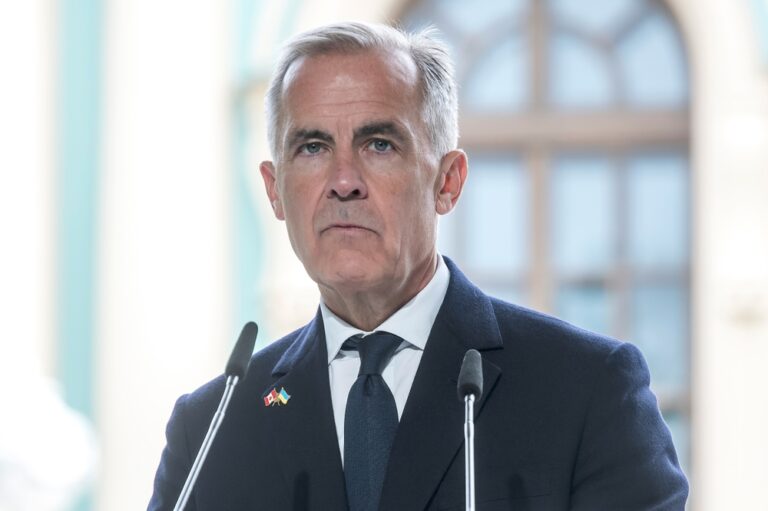
The most direct pressure is coming from organizations whose members say they experience foreign-state intimidation and influence firsthand. In a June 2026 open letter, 33 civil-society, human-rights and diaspora groups urged Prime Minister Mark Carney to bring FITAA fully into force, finalize Boegman’s appointment and adequately fund both his office and the national counter-foreign-interference coordinator. Their message was straightforward: hostile governments have not paused their operations while Canada completes its paperwork.
Those groups also argue that the registry must be designed for people who may fear retaliation. Consultation submissions called for secure, multilingual reporting channels, clear protection for anonymous complainants and guidance tailored to diaspora communities, local institutions and civil society. They warned that ordinary update timelines could be too slow during elections, when information disclosed weeks later may arrive after ballots are cast. They also asked Ottawa to clarify that registration does not legitimize intimidation or other unlawful conduct. The human dimension is easy to lose in debates about forms and databases: a person deciding whether to report pressure from a foreign state may be weighing not only civic duty, but possible consequences for relatives, employment or personal safety.
Broad Rules Create Legal and Civil-Liberties Tensions
Finalization is difficult partly because the regime must expose hidden influence without treating normal international activity as suspicious. The Canadian Bar Association warned that the proposed disclosure fields could reveal privileged legal relationships, confidential advice or sensitive transaction strategies. It argued for an explicit legal-services exemption or a process allowing privilege claims before information becomes public. The concern is practical as well as constitutional: a foreign company seeking advice about an acquisition or regulatory dispute could reveal commercially sensitive plans simply by complying.
Other critics worry about vague language such as acting “in association with” a foreign principal, which could chill academic work, cultural ties, nonprofit advocacy or routine business collaboration. On the other side, rights groups say the draft may be too narrow because it focuses on communication, information and benefits but may not fully capture coercion, indirect proxies or threats against relatives. They also want compensation and the identities of targeted office holders disclosed, while the proposed framework withholds some information for privacy and safety reasons. These competing demands help explain the regulatory caution, but they do not eliminate the cost of delay. The final rules must be clear enough for good-faith compliance and strong enough that sophisticated actors cannot exploit uncertainty.
Canada Is Still Catching Up With Its Allies
Canada is not inventing this type of transparency system from scratch. The United States has required certain agents of foreign principals to disclose political and related activities under the Foreign Agents Registration Act since 1938, with filings available through a public database. Australia’s Foreign Influence Transparency Scheme began operating in December 2018. The United Kingdom’s two-tier Foreign Influence Registration Scheme came into force on July 1, 2025, adding an online registration service and public register for covered arrangements and activities.
The comparisons are useful, but they are not templates to copy blindly. Each country defines foreign principals, political influence, exemptions and penalties differently, and each has faced criticism over complexity, enforcement or overbreadth. Canada’s challenge is to launch a system that people can actually understand and use while preserving safety, privacy and constitutional protections. The immediate steps are clear: publish the final regulations, proclaim FITAA in force, complete Boegman’s appointment, open the office and database, and issue practical guidance before enforcement begins. Until that happens, the country remains in an awkward middle ground—past the legislative debate, but still without the public transparency mechanism Parliament approved.
This Options Discord Chat is The Real Deal
While the internet is scoured with trading chat rooms, many of which even charge upwards of thousands of dollars to join, this smaller options trading discord chatroom is the real deal and actually providing valuable trade setups, education, and community without the noise and spam of the larger more expensive rooms. With a incredibly low-cost monthly fee, Options Trading Club (click here to see their reviews) requires an application to join ensuring that every member is dedicated and serious about taking their trading to the next level. If you are looking for a change in your trading strategies, then click here to apply for a membership.