35,000+ smart investors are already getting financial news, market signals, and macro shifts in the economy that could impact their money next with our FREE weekly newsletter. Get ahead of what the crowd finds out too late. Click Here to Subscribe for FREE.
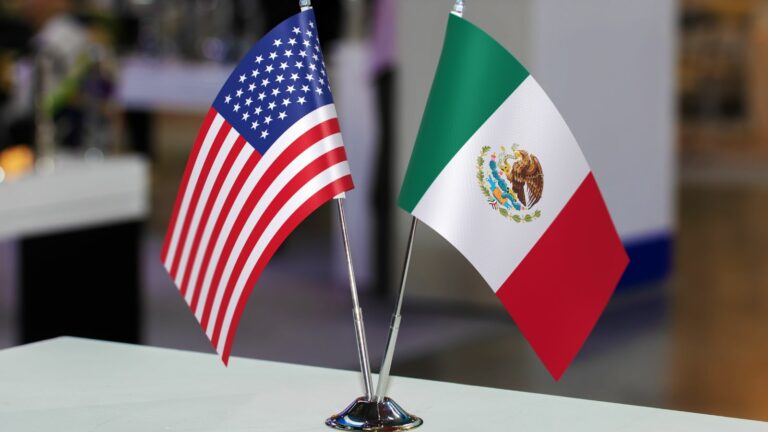
The most revealing image in North American trade right now is not a tariff chart or a factory line. It is an empty Canadian chair. U.S. and Mexican officials have moved into a scheduled series of formal CUSMA negotiating rounds, including meetings in Washington on June 16 and 17, while Canada has yet to receive an equivalent formal track.
That does not mean Ottawa has stopped speaking with Washington. Canadian ministers and diplomats insist the conversations remain active and constructive. But the imbalance is unmistakable: Mexico is discussing detailed changes at the negotiating table, while Canada is still trying to turn informal engagement into a defined process. With the pact’s first six-year joint review arriving July 1, the difference between being consulted and being formally included could shape the rules governing Canadian factories, farms and exporters for years.
Mexico Has a Negotiating Calendar — Canada Does Not
Mexico Gets Formal CUSMA Talks While Canada Is Shut Out
- Mexico Has a Negotiating Calendar — Canada Does Not
- Washington Says Canada Chose a Harder Line
- July 1 Is a Review Point, Not an Overnight Expiry
- Mexico Is Already Discussing the Rules That Shape Industry
- The Auto Proposal Shows Why Exclusion Carries Risk
- Canada Has More at Stake Than the Empty-Chair Optics
- Ottawa Is Sidelined, but It Is Not Silent
- The Real Test Is Whether Canada Can Re-enter Before Positions Harden
The United States and Mexico have established three bilateral rounds tied directly to the first joint review of CUSMA. The first took place in Mexico City on May 28 and 29. The second was scheduled for Washington on June 16 and 17, while a third is planned for Mexico City during the week of July 20. U.S. officials have publicly identified the subjects, locations and timing. That is what makes the process formal rather than simply diplomatic contact.
Canada’s position is noticeably different. Trade Minister Dominic LeBlanc and chief negotiator Janice Charette have met U.S. Trade Representative Jamieson Greer and presented Canadian proposals, but Washington has not announced a comparable series of Canada–U.S. rounds. Reuters reported that no date had been set for formal negotiations even after a June 2 meeting described by Ottawa as positive. The result is a two-speed process: Mexico is advancing through an organized agenda, while Canada is relying on ministerial meetings, private discussions and the hope that a structured track will follow.
Washington Says Canada Chose a Harder Line
The Trump administration has publicly linked Canada’s slower progress to Ottawa’s response to U.S. tariffs. Greer has described the outstanding issues with Canada as significant and argued that Canadian retaliation makes negotiations more difficult. Canada removed many counter-tariffs in September 2025, but kept measures on U.S. steel, aluminum and automotive products. Provincial restrictions on the sale of American alcohol have provided Washington with another highly visible complaint.
From Ottawa’s perspective, those measures are leverage against U.S. sectoral tariffs that continue to hit Canadian metals and vehicles. Canada is therefore entering the review with a different immediate priority than Mexico: tariff relief. LeBlanc has repeatedly raised those duties, while Charette has said the goal is to secure the lowest possible tariffs on the narrowest range of goods without sacrificing the value of CUSMA. The disagreement is strategic as much as personal. Washington wants concessions before formalizing talks; Canada wants relief from damaging trade measures before surrendering its remaining bargaining tools.
July 1 Is a Review Point, Not an Overnight Expiry
The approaching date can sound more dramatic than the legal text actually is. CUSMA took effect on July 1, 2020, and Article 34.7 requires the three governments to conduct a joint review six years later. If all three confirm that they want the agreement extended, its term is renewed for another 16 years. That would carry the pact to 2042 and return the partners to a six-year review cycle.
If one country refuses to approve an extension on July 1, however, CUSMA does not suddenly disappear. The agreement remains in force and moves into annual reviews for the rest of its current term, which runs to 2036. The countries can still agree to a 16-year extension during any of those later reviews. This distinction matters for Canadian businesses planning investments or contracts. There is no immediate tariff cliff built into the July meeting, but a failure to extend would create recurring uncertainty. Every annual review could become another negotiation over market access, rules of origin and the future of continental supply chains.
Mexico Is Already Discussing the Rules That Shape Industry
The first U.S.–Mexico round covered automotive rules of origin, steel and aluminum, economic security and regulatory compatibility in sectors such as medical devices and pharmaceuticals. The second round expanded the agenda to agriculture, energy and what Washington calls a “level playing field.” U.S. farm groups are pressing for stronger access to Mexico’s ethanol and biotechnology markets, while energy companies want Mexico to provide fairer treatment for private and foreign investors.
These are not side issues. They reach into the operating rules of the North American economy. Rules of origin determine how much of a vehicle or industrial product must be made within the region to receive preferential treatment. Energy provisions affect investment and state-owned companies. Agricultural terms influence billions of dollars in cross-border sales. U.S. officials have also said they want to prevent third countries from using Mexico as a route into the North American market. By working through these questions before Canada has a formal round of its own, Washington and Mexico can establish concepts and compromises that Ottawa may later be asked to react to rather than help design from the beginning.
The Auto Proposal Shows Why Exclusion Carries Risk
The clearest warning for Canada emerged from the automotive discussion. Reuters reported that U.S. negotiators proposed requiring 50 per cent of a North American vehicle’s value to come specifically from the United States, while lifting the broader regional-content threshold to 82 per cent. People familiar with the proposal said it did not provide a defined way to count Canadian automotive content toward the U.S.-specific requirement.
For Ontario’s auto corridor, that is more than a technical drafting problem. Canadian assembly plants and parts suppliers operate within a continental system in which components can cross borders repeatedly before a finished vehicle reaches a dealer. Existing CUSMA rules already require 75 per cent regional value content for passenger vehicles and light trucks, along with North American sourcing requirements for steel and aluminum. A new U.S.-only threshold could redirect investment and sourcing even if Canada remained inside the broader pact. The concern is not that Mexico can legally rewrite trilateral rules by itself. It is that an early U.S.–Mexico understanding could become the opening position Canada must fight after companies have already begun adjusting their plans.
Canada Has More at Stake Than the Empty-Chair Optics
Canada’s dependence on the U.S. market makes the negotiating imbalance economically significant. Nearly 70 per cent of Canadian exports go to the United States, and U.S. government data show bilateral goods trade totalled approximately US$719.5 billion in 2025. Vehicles, machinery, energy and agricultural products move in both directions, supporting communities far from the border as well as the major industrial centres of Ontario, Quebec and Alberta.
CUSMA also remains a practical shield, even after the return of sectoral tariffs. The Canadian government says more than 98 per cent of tariff lines and over 99.9 per cent of bilateral trade can potentially receive preferential treatment when products meet the agreement’s origin rules and the preference is properly claimed. Steel, aluminum, autos and several other sectors can still face separate U.S. duties, but the agreement protects a large share of ordinary commerce from broader tariffs. That is why prolonged uncertainty can become costly before any treaty provision changes. Companies delay equipment purchases, hiring and plant decisions when they cannot confidently estimate future border costs.
Ottawa Is Sidelined, but It Is Not Silent
Canada has formally told the United States and Mexico that it wants CUSMA renewed for another 16 years. LeBlanc’s June letter also left room to consider changes that could benefit all three countries. During his Washington visit, he said Canada had presented specific proposals addressing longstanding American concerns, although neither side disclosed the details. Canadian officials have therefore begun substantive work even without a publicly announced negotiating calendar.
Ottawa is also reframing bilateral deals as compatible with the trilateral pact rather than evidence that it is being broken apart. LeBlanc has said Canada–U.S. and U.S.–Mexico arrangements could sit beside CUSMA when they resolve issues shared by the three partners. Canada’s ambassador to Washington, Mark Wiseman, has described private discussions as productive, serious and respectful. Those statements soften the impression of a total freeze, but they do not erase the procedural gap. Mexico can point to dates, rounds and published agendas. Canada can point to meetings and constructive conversations. In trade negotiations, both matter, but they are not the same thing.
The Real Test Is Whether Canada Can Re-enter Before Positions Harden
The most favourable outcome for Ottawa would be a trilateral extension accompanied by targeted deals that reduce sectoral tariffs and preserve meaningful Canadian participation in automotive and industrial supply chains. A less stable outcome would leave CUSMA operating under annual reviews, with unresolved tariff disputes and recurring threats hanging over investment. The Bank of Canada has warned that an unfavourable review could weaken exports, reduce production, investment and hiring, and place the broader economy on a lower growth path.
President Donald Trump has said he is not looking to renew the pact, although negotiations with Mexico are continuing and Canadian officials remain engaged. That contradiction suggests the public rhetoric may be part of a pressure campaign, but Ottawa cannot assume the process will eventually correct itself. Mexico’s head start gives it the opportunity to shape U.S. expectations on autos, agriculture, energy and economic security. Canada’s challenge is to convert private access into formal influence before those expectations become entrenched. Being absent from an early round is survivable. Allowing the rules to solidify without Canadian input would be far more difficult to reverse.
This Options Discord Chat is The Real Deal
While the internet is scoured with trading chat rooms, many of which even charge upwards of thousands of dollars to join, this smaller options trading discord chatroom is the real deal and actually providing valuable trade setups, education, and community without the noise and spam of the larger more expensive rooms. With a incredibly low-cost monthly fee, Options Trading Club (click here to see their reviews) requires an application to join ensuring that every member is dedicated and serious about taking their trading to the next level. If you are looking for a change in your trading strategies, then click here to apply for a membership.