35,000+ smart investors are already getting financial news, market signals, and macro shifts in the economy that could impact their money next with our FREE weekly newsletter. Get ahead of what the crowd finds out too late. Click Here to Subscribe for FREE.
The idea of a $25,000 electric car arriving in Canadian showrooms has landed at exactly the moment many drivers are wondering whether EVs will ever become truly affordable. BYD, China’s electric-vehicle giant, has been circling the Canadian market for nearly two years through lobbying records, trade-policy shifts, and reported retail discussions. But the latest wave of excitement also comes with an important correction: BYD has not publicly confirmed a Canadian passenger-vehicle launch, a 20-dealer rollout, or a specific model lineup.
That distinction matters. Canada has opened a managed pathway for Chinese-built EVs, and BYD appears to be preparing for the possibility. What remains unproven is whether Canadian buyers will actually see BYD badges on dealer lots soon.
The Headline Moved Faster Than the Confirmation
BYD Confirms Canada Launch With $25,000 EV and 20-Dealer Push
- The Headline Moved Faster Than the Confirmation
- The Door Opened Because Ottawa Changed the Math
- The $25,000 EV Claim Hits a Real Pain Point
- A 20-Dealer Push Would Be About Trust
- BYD Would Not Arrive Like a Startup
- The Canadian EV Market Is Ready, But Uneven
- Rebates and Rules Could Shape the First Wave
- Legacy Automakers and Unions Will Push Back
- The Next Test Is Execution, Not Hype
The BYD Canada story became a cautionary tale almost as quickly as it became a viral auto-market headline. Reports circulated saying the company would launch in Canada with more than 20 dealerships and a low-cost EV around $25,000. That would be major news in a country where many battery-electric vehicles still sit well above the price of a typical compact gasoline car. For a family pricing out a commuter car, the difference between a $25,000 EV and a $50,000 EV is not abstract; it can decide whether electrification is realistic at all.
But the confirmation never held. Global News removed its story and said BYD had not announced, approved, or confirmed plans to launch passenger vehicles in Canada, open more than 20 dealerships, or roll out specific models. Another report corrected claims tied to a fake social media account attributed to a BYD executive. The result is a more nuanced story: BYD’s Canadian preparations appear real, but the specific launch package remains unconfirmed.
The Door Opened Because Ottawa Changed the Math
BYD’s Canadian prospects became more serious after Ottawa and Beijing reached a trade arrangement that changed the economics of Chinese-built EV imports. Canada created an initial annual quota of 49,000 Chinese-origin electric vehicles at a 6.1 percent most-favoured-nation tariff rate, a sharp departure from the earlier 100 percent surtax environment. For automakers, that kind of policy shift can turn a market from nearly impossible into commercially interesting almost overnight.
The quota is not a free-for-all. It is designed as managed market entry, with future policy discussions around allocation, affordability thresholds, and certification. Ottawa has also said the arrangement is expected to encourage Chinese investment in Canada’s EV supply chain. For consumers, the most important piece may be the affordability carve-out: over time, a larger share of the quota is intended to be reserved for EVs with an import price of $35,000 CAD or less. That is the policy backdrop behind the buzz.
The $25,000 EV Claim Hits a Real Pain Point
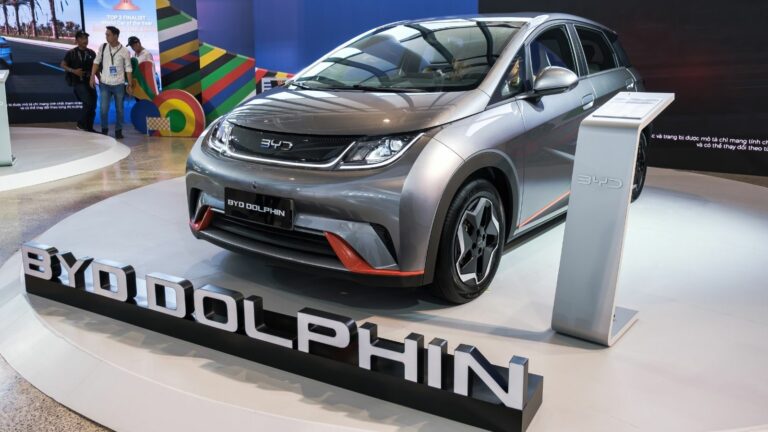
The idea of a $25,000 BYD EV is powerful because it speaks directly to the biggest barrier in Canada’s electric-vehicle market: price. In Europe, BYD’s small Dolphin Surf has been positioned as a low-cost urban EV, with Reuters reporting European pricing from about 22,990 euros and promotional pricing below that level. In China and other markets, BYD has shown it can compete aggressively in the compact segment, where low battery costs, scale, and simplified packaging can make EVs feel less like premium technology and more like everyday transportation.
Still, a Canadian sticker price cannot simply be copied from another market. Transport costs, federal rules, provincial fees, dealer margins, exchange rates, winterization, safety certification, and tariff-quota treatment all matter. The corrected reporting also means the $25,000 figure should be treated as speculation rather than a company-confirmed price. If BYD ever does bring a small city EV to Canada near that number, it would likely force every mainstream brand to defend its entry-level EV pricing.
A 20-Dealer Push Would Be About Trust
A dealer network matters because EV buyers are not just buying a battery and a badge. They are buying warranty support, parts availability, software updates, winter-service confidence, and a place to go when something breaks. In Canada, where driving conditions can range from downtown Toronto congestion to Prairie cold starts, that service layer can matter as much as range. A new brand without credible local support would have a hard time winning over cautious households.
That is why the reported 20-dealer target drew so much attention. A network spread across Toronto, Vancouver, Montreal, and Calgary would cover Canada’s largest urban EV markets and give BYD an immediate foothold where adoption is strongest. But again, the number should be handled carefully. Public lobbying records show market-entry preparation, and industry reports have discussed retail-network scouting, but BYD has not publicly confirmed a 20-store rollout. In practice, existing dealer groups could become the fastest route if the company chooses to move.
BYD Would Not Arrive Like a Startup
If BYD eventually enters Canada, it would not be arriving as an experimental EV brand looking for its first big break. The company is already one of the most important electric-vehicle manufacturers in the world, with a presence in more than 100 countries and regions. Its scale is part of the reason Canadian consumers and legacy automakers are watching closely. BYD is not only assembling vehicles; it has built a reputation around batteries, electric drivetrains, plug-in hybrids, and vertical integration.
That scale could allow BYD to compete differently from some earlier EV startups. It can spread development costs over millions of vehicles, use its own battery technology, and bring models already tested in demanding global markets. The company’s Blade Battery and hybrid technologies are central to its identity. For Canadian buyers, the appeal would be simple: a brand that can offer EVs at mainstream prices without looking like a niche experiment. For competitors, that same formula is exactly what makes BYD difficult to ignore.
The Canadian EV Market Is Ready, But Uneven
Canada’s EV market has grown quickly, but not evenly. National light-duty EV market share reached 10.3 percent in 2025, according to Transport Canada’s dashboard, while British Columbia and Quebec remained far ahead of much of the country. Those regional gaps matter. A compact BYD EV might look like an obvious fit in Vancouver or Montreal, where charging networks, incentives, and consumer familiarity are stronger. The same car could face a slower reception in regions where public charging remains thinner and pickup trucks dominate new-vehicle sales.
This creates a practical challenge for any new EV entrant. Canada is one country, but it behaves like several auto markets at once. A launch plan that works in Greater Toronto or Richmond, B.C., may not immediately translate to Saskatoon, Moncton, or rural Alberta. BYD’s early success, if it arrives, would likely depend on picking the right cities first, building service trust quickly, and avoiding the perception that affordable EVs are only for dense urban drivers.
Rebates and Rules Could Shape the First Wave
Price headlines are only part of the affordability equation. Canada’s federal iZEV purchase incentive program ended in 2025, and newer incentive structures have become more politically and geographically complicated. Ottawa has also moved away from the earlier national EV sales mandate, replacing it with a different policy direction focused on emissions standards, domestic manufacturing, and targeted consumer support. That makes the competitive landscape less predictable than it was during the early EV boom.
For Chinese-built vehicles, incentives may be especially tricky. Federal support has increasingly been tied to trade relationships, domestic industrial strategy, and supply-chain policy. A BYD imported from China may not qualify for the same incentives available to vehicles built in Canada or free-trade partner countries. That could reduce the headline advantage of a low-cost EV, particularly if rivals can combine local production, rebates, and financing offers. In short, BYD’s Canadian price would have to be strong enough to stand on its own.
Legacy Automakers and Unions Will Push Back
BYD’s potential arrival would not only affect car shoppers. It would land in the middle of a sensitive industrial debate about Canadian auto jobs, North American supply chains, and the future of domestic manufacturing. Canadian unions and legacy automakers have previously warned that Chinese EV imports could undermine investments in Canadian plants, especially if Chinese brands benefit from lower costs, state support, or different labour and production economics. Those concerns are not likely to disappear.
The federal government is trying to balance two competing goals: making EVs more affordable for consumers and protecting the jobs tied to Canada’s auto industry. That is a difficult line to walk. Cheaper imports can push prices down and speed up EV adoption, but they can also put pressure on companies already investing billions in Canadian battery and assembly projects. A BYD launch would therefore be judged not only by sales numbers, but by whether it brings investment, parts jobs, service jobs, or manufacturing commitments to Canada.
The Next Test Is Execution, Not Hype
For now, the BYD Canada story is best understood as a market-entry watch, not a confirmed launch schedule. The policy door is open, the lobbying record points to serious preparation, and the commercial logic is obvious. Canada has buyers who want cheaper EVs, cities with strong adoption, and a trade framework that now allows a limited number of Chinese-built electric vehicles into the market at a lower tariff rate. Those are meaningful ingredients.
But cars on Canadian roads require more than momentum. BYD would need certification, dealer or retail partners, parts logistics, service training, warranty systems, consumer financing, and a clear answer on winter performance. It would also need to communicate carefully after the confusion around false confirmation reports. If BYD eventually arrives with a credible sub-$30,000 EV and a real service network, it could reshape Canada’s EV market. Until then, the smarter reading is simple: the opportunity is real, but the launch is not confirmed.
This Options Discord Chat is The Real Deal
While the internet is scoured with trading chat rooms, many of which even charge upwards of thousands of dollars to join, this smaller options trading discord chatroom is the real deal and actually providing valuable trade setups, education, and community without the noise and spam of the larger more expensive rooms. With a incredibly low-cost monthly fee, Options Trading Club (click here to see their reviews) requires an application to join ensuring that every member is dedicated and serious about taking their trading to the next level. If you are looking for a change in your trading strategies, then click here to apply for a membership.