35,000+ smart investors are already getting financial news, market signals, and macro shifts in the economy that could impact their money next with our FREE weekly newsletter. Get ahead of what the crowd finds out too late. Click Here to Subscribe for FREE.
Canada’s World Cup moment was supposed to be about packed stadiums, global attention and a rare chance to showcase Toronto and Vancouver on one of sport’s biggest stages. But as kickoff approaches, the security side of the tournament has become a story of its own.
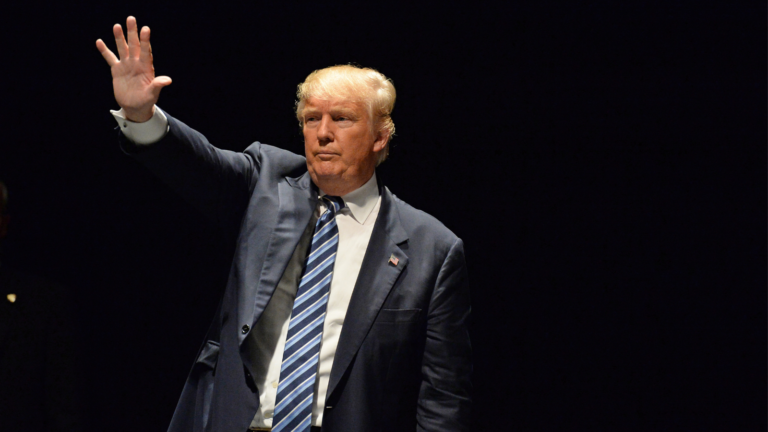
The bill is no longer just about guarding stadium gates. It now reflects a wider and more complicated world: U.S. immigration politics under Donald Trump, Iran-related tensions spilling into the tournament, cross-border coordination with two other host countries, and a threat environment that has made major sporting events more expensive to protect. For Canadian governments, the challenge is straightforward but costly: keep the tournament welcoming without underestimating the risks around crowds, transit, fan zones, teams, dignitaries and global attention.
Canada’s World Cup Bill Has Become a Billion-Dollar Question
Trump, Iran and Global Instability Are Driving Up Canada’s World Cup Security Bill
- Canada’s World Cup Bill Has Become a Billion-Dollar Question
- Security Is Now One of the Biggest Cost Drivers
- Vancouver’s Downtown Footprint Makes Security More Expensive
- Toronto Has a Different Policing Advantage
- Trump’s Immigration Policies Have Added Cross-Border Uncertainty
- Iran Has Turned the World Cup Into a Geopolitical Flashpoint
- The Threat Environment Has Expanded Beyond Stadiums
- The Public Is Paying for Risk Management, Not Just Soccer
Canada is hosting only a slice of the 2026 FIFA World Cup, but the public cost is already large enough to spark national debate. The tournament will run from June 11 to July 19, with Canada sharing hosting duties with the United States and Mexico. Toronto is scheduled to host six matches, while Vancouver is scheduled to host seven, giving Canada 13 matches in a 104-game tournament.
The Parliamentary Budget Officer has estimated total Canadian government support at about $1.066 billion across all levels of government. That works out to roughly $82 million per Canadian match. The federal share is estimated at $473 million, with provincial and municipal governments covering the rest. Those figures have sharpened the political question around the event: how much of the spending is a one-time price for global exposure, and how much reflects the new reality of staging a mega-event in an unstable world?
Security Is Now One of the Biggest Cost Drivers
The federal government has committed up to $145 million specifically to help Toronto and Vancouver cover enhanced security operations. Vancouver is expected to receive about $100 million of that amount, while Toronto is expected to receive about $45 million. That money is on top of earlier federal commitments to help the Canadian host cities prepare for the tournament.
The security figures are striking because they show how far World Cup planning extends beyond stadium staffing. Governments are budgeting for police, emergency management, fire, paramedics, crowd control, fan activity, transportation pressure and coordination with federal agencies. In Vancouver, local and provincial safety and security costs have been estimated at approximately $242 million. In Toronto, reported security estimates are far lower, at about $94 million, but still significant for six matches. Those numbers help explain why the World Cup is being framed less as a soccer tournament alone and more as a temporary national-security operation wrapped around a sporting event.
Vancouver’s Downtown Footprint Makes Security More Expensive
The difference between Vancouver and Toronto is not only about the number of games. Vancouver’s BC Place sits in the middle of a dense downtown environment, surrounded by transit, roads, businesses, hotels and public gathering spaces. That geography creates a wider security footprint because authorities must think not just about the stadium, but about how thousands of people move before and after each match.
Security planning in a downtown stadium setting usually requires layered perimeters. Those can include controlled areas near the venue, traffic management zones, pedestrian flow routes, emergency access points and protection around nearby transit infrastructure. Vancouver’s SkyTrain system and major roadways near BC Place become part of the operational picture. A match-day problem in one place could quickly spill into another. That makes the job more complicated than simply screening ticket-holders at the gate. It also helps explain why Vancouver’s security costs are much higher than Toronto’s, even though the two cities are hosting a similar number of games.
Toronto Has a Different Policing Advantage
Toronto faces its own security pressures, but its World Cup geography is different. BMO Field is located at Exhibition Place, a large event district that already handles major crowds for sports, concerts, the Canadian National Exhibition and other gatherings. That does not make the job simple, but it gives planners a more familiar event footprint than a stadium embedded in the heart of a dense downtown core.
Toronto also benefits from a broader regional policing environment. Officials have pointed to the city’s ability to draw on policing partners beyond the Toronto Police Service, including neighbouring services and provincial support. That matters because mega-events are labour-intensive. Officers are needed not only at the stadium, but also around hotels, public viewing areas, team movements, transit nodes and crowd corridors. In Vancouver, the mix of Vancouver Police and RCMP support creates a different resource picture. The result is a security comparison that is not just about city size, but about geography, staffing depth and how many agencies can be mobilized quickly.
Trump’s Immigration Policies Have Added Cross-Border Uncertainty
The 2026 World Cup is the first men’s tournament co-hosted by three countries, which means Canada’s security planning cannot be separated from what happens in the United States. Donald Trump’s travel restrictions and tighter U.S. immigration posture have already complicated the tournament for fans, officials and participants from several countries. Iran and Haiti have faced full U.S. entry restrictions, while other qualified countries have faced partial restrictions or additional hurdles.
That uncertainty matters for Canada even when matches are not being played on Canadian soil. Fans, teams, media, sponsors and officials are moving through a North American tournament rather than a single-country event. If people are denied entry to the United States, rerouted through Mexico, delayed at airports or pushed toward Canadian fan events and travel routes, Canadian agencies still have to prepare for the ripple effects. Border management, intelligence sharing and crowd planning become more important when one host country’s immigration policy becomes a live tournament issue.
Iran Has Turned the World Cup Into a Geopolitical Flashpoint
Iran’s involvement has become one of the clearest examples of how international politics can follow a team into the World Cup. Iran’s federation has said its ticket allocation for matches in the United States was withdrawn just days before the tournament, leaving supporters who had made plans unable to attend through the usual federation process. Iran’s team also shifted its base from Arizona to Mexico, amid visa uncertainty and concern about keeping its U.S. presence limited.
Those developments do not mean Canada is directly responsible for Iran’s U.S. match logistics. But they do show why Canadian security planners are preparing for a tournament shaped by events far beyond soccer. Iran-related tensions have already affected travel, ticketing, team operations and public messaging. Any high-profile dispute involving a national team can draw protests, counter-protests, diplomatic attention and online mobilization. For Canadian host cities, that means the security bill must cover not only predictable stadium operations, but also the possibility that global disputes turn local very quickly.
The Threat Environment Has Expanded Beyond Stadiums
Modern event security is not built around a single threat. Researchers and security analysts now describe mega-event risk as a combination of terrorism, lone-actor violence, cyberattacks, sabotage, public disorder, crowd surges, counterfeit operations and soft-target vulnerabilities. For the World Cup, the most exposed spaces may not be inside the stadium at all. They may be fan zones, transit corridors, hotel districts, restaurants, public squares and queues outside entrances.
That is why security costs rise even when no specific threat materializes. The 2026 tournament is spread across 16 cities in three countries over 39 days, with millions of spectators and billions of global viewers. Security agencies have to plan for visible policing, emergency response, intelligence sharing, cyber resilience, drone risks, public communications and coordination between governments. The safest event is often one where the public notices very little. But that calm surface can require months of planning, thousands of personnel hours and expensive systems that most fans never see.
The Public Is Paying for Risk Management, Not Just Soccer
The political challenge is that taxpayers see the bill long before they see any promised benefits. Ottawa has said the tournament is expected to generate major economic and social gains, including tourism activity, jobs and international exposure. British Columbia has pointed to projected tourism benefits, GDP impacts and tax revenues. Toronto has argued that its direct costs are funded through a mix of reserves, government grants and third-party revenues rather than simply through the property-tax base.
Still, mega-events often leave residents asking whether the benefits are as concrete as the costs. Security spending is especially difficult to sell because it is partly a payment for things not happening: no major disorder, no serious safety failure, no transit breakdown, no international embarrassment. That makes the World Cup security bill politically uncomfortable but operationally hard to avoid. In the current environment, governments are not just paying for guards and barricades. They are paying for readiness in a world where sport, politics and security are increasingly impossible to separate.
This Options Discord Chat is The Real Deal
While the internet is scoured with trading chat rooms, many of which even charge upwards of thousands of dollars to join, this smaller options trading discord chatroom is the real deal and actually providing valuable trade setups, education, and community without the noise and spam of the larger more expensive rooms. With a incredibly low-cost monthly fee, Options Trading Club (click here to see their reviews) requires an application to join ensuring that every member is dedicated and serious about taking their trading to the next level. If you are looking for a change in your trading strategies, then click here to apply for a membership.