35,000+ smart investors are already getting financial news, market signals, and macro shifts in the economy that could impact their money next with our FREE weekly newsletter. Get ahead of what the crowd finds out too late. Click Here to Subscribe for FREE.
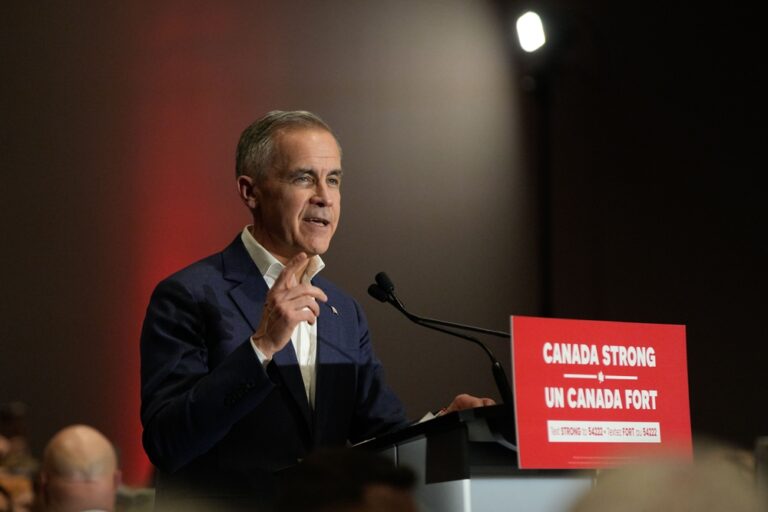
Guilbeault’s departure has turned a policy dispute into a defining test of Mark Carney’s leadership. What began as a federal-provincial energy bargain with Alberta has now become a visible fracture inside the Liberal coalition, pitting economic-security arguments against the climate agenda that Steven Guilbeault helped build as environment minister.
The resignation also lands at a delicate moment for Ottawa. Carney is trying to reposition Canada as a faster-building, export-focused energy power while keeping net-zero promises alive. For Guilbeault, the pipeline pivot appears to have crossed a line. For the Liberals, it raises a harder question: whether the party can still hold together voters, MPs, and regions that want very different things from Canada’s climate future.
Resignation Turns a Cabinet Rift Into a Parliamentary Break
Guilbeault Resignation Confirmed as Carney’s Pipeline Pivot Splits Liberals Again
- Resignation Turns a Cabinet Rift Into a Parliamentary Break
- Carney’s Pipeline Pivot Rewrites the Liberal Energy Message
- The Alberta Deal Became the Breaking Point
- Climate Rollbacks Made the Dispute Bigger Than One Pipeline
- Liberal Unity Is Now Being Tested in Public
- British Columbia and First Nations Remain Major Obstacles
- Carbon Pricing Is the Deal’s Political Shield
- Conservatives and Alberta See an Opening
- The Bigger Question Is What the Liberal Brand Means Now
Steven Guilbeault’s resignation as an MP marks the second major rupture between the longtime environmental advocate and Prime Minister Mark Carney’s government. The first came in November 2025, when Guilbeault quit cabinet after Ottawa and Alberta signed an energy memorandum of understanding that opened the door to a new bitumen pipeline to the Pacific Coast. At the time, he stayed in the Liberal caucus and remained the MP for Laurier—Sainte-Marie, leaving room for the party to frame the disagreement as serious but contained.
That changed when Carney confirmed Guilbeault’s resignation and thanked him for his contributions. The symbolism is difficult to miss. Guilbeault was not a backbench unknown; he was one of the most recognizable climate figures ever brought into a Canadian cabinet. His exit turns the pipeline dispute from a policy disagreement into a personal and political break. It also leaves the Liberals defending an energy strategy that has now cost them a former environment minister, a former Quebec lieutenant, and one of their strongest links to climate-focused voters.
Carney’s Pipeline Pivot Rewrites the Liberal Energy Message
Carney’s pivot is rooted in a different reading of Canada’s economic moment. The Canada–Alberta agreement frames energy infrastructure as a national-interest issue, with Ottawa and Alberta committing to work on export diversification, industrial carbon pricing, carbon capture, and a proposed bitumen pipeline to Asian markets. The federal government has argued that Canada needs to reduce its overwhelming dependence on the United States as the main buyer of Canadian crude oil, a vulnerability made more obvious by trade fights and shifting U.S. politics.
The numbers explain why the argument has traction. Canada exported about 4.2 million barrels per day of crude oil in 2024, and roughly 95.7 per cent of that went to the United States. For Alberta, that dependence has long been framed as a market-access problem that keeps Canadian producers tied to one dominant customer. For Carney, the pipeline pitch fits a broader economic-security message: build faster, diversify exports, and use resource wealth to strengthen Canada’s bargaining position. For Guilbeault and many climate-focused Liberals, the same pivot looks like a retreat from the party’s environmental identity.
The Alberta Deal Became the Breaking Point
The November memorandum of understanding did more than nod vaguely toward future energy talks. It described a path for an Alberta bitumen pipeline to Asian markets, possible referral to the Major Projects Office, and a clearer federal approval process under major-projects legislation. The deal also linked pipeline progress to the Pathways carbon-capture project, making the political bargain fairly explicit: Alberta would accept a strengthened industrial carbon-pricing framework while Ottawa would help move a major export pipeline concept forward.
That tradeoff was always likely to divide Liberals. Alberta Premier Danielle Smith could present the MOU as movement on long-demanded pipeline access. Carney could present it as a pragmatic bargain that ties energy growth to emissions reductions. Guilbeault, however, opposed the agreement on climate and environmental grounds, warning that it moved Canada away from the climate plan he had helped design. The resignation suggests he saw the deal not as a compromise, but as a line crossed. In politics, such moments matter because they reveal which promises leaders are willing to bend when economic pressure rises.
Climate Rollbacks Made the Dispute Bigger Than One Pipeline
Guilbeault’s frustration was not only about a single pipeline proposal. His cabinet resignation statement and subsequent reporting pointed to a broader concern: several elements of the federal climate architecture had been weakened, reversed, or placed under review. Reporting on the Alberta deal said Ottawa agreed to drop or soften major climate regulations, including the planned oil and gas emissions cap and clean-electricity rules in Alberta, while pursuing a new industrial carbon-pricing arrangement with the province.
That broader backdrop is what makes the resignation politically dangerous for the Liberals. Canada’s official 2030 target remains a 40 to 45 per cent emissions cut below 2005 levels, with net-zero emissions by 2050. But independent climate analysis has warned that Canada is not on track, estimating national emissions at 694 megatonnes in 2024 and saying current and announced policies deliver only about half the reductions needed for the 2030 goal. To climate-focused voters, Guilbeault’s exit may feel less like an isolated protest and more like confirmation that Carney’s government is rewriting the Liberal climate bargain.
Liberal Unity Is Now Being Tested in Public
The Liberal response has been careful. Ministers praised Guilbeault’s record while expressing confidence in the government’s direction. That is the language parties use when they want to respect a departure without letting it become a movement. Still, the internal tension is now public. Reports that 14 Liberal MPs sent Carney a letter raising concerns about climate policy show the issue reaches beyond one former minister. A planned Liberal Climate Caucus meeting adds another sign that the party is trying to manage dissent before it grows.
That matters because modern governing parties often depend on disciplined caucuses, especially when policies cut across regional and ideological lines. The Liberals have long tried to hold urban climate voters, Quebec progressives, Atlantic pragmatists, Ontario centrists, and Western economic-growth voices inside the same tent. The pipeline pivot strains that coalition. Some MPs may see Carney’s approach as necessary economic realism. Others may worry it weakens the party’s credibility with younger voters, environmental groups, and ridings where climate policy is not a side issue but a core Liberal selling point.
British Columbia and First Nations Remain Major Obstacles
Even if Carney can manage caucus dissent, the proposed pipeline faces another problem: it still needs political and legal room in British Columbia and among First Nations. B.C. Premier David Eby has criticized the pipeline push and warned against letting it distract from other major projects already underway in the province. Coastal First Nations have also strongly opposed crude oil tanker traffic in their territories, with groups defending the Oil Tanker Moratorium Act as a key coastal protection measure.
That opposition gives Guilbeault’s resignation more force. His argument is not only that a new pipeline could increase climate risk; it is also that Ottawa is moving toward a project that may not have the consent or practical pathway needed to be built. The MOU talks about Indigenous co-ownership and economic benefits, but opposition from coastal leaders shows that ownership opportunities do not automatically resolve concerns about spills, tanker traffic, fishing, cultural rights, and coastal ecosystems. The politics of the project may be national, but many of the hardest decisions sit on B.C. land and water.
Carbon Pricing Is the Deal’s Political Shield
Carney’s strongest defence is that the Alberta agreement is not a simple pro-oil turn. The implementation agreement announced in May 2026 includes a new industrial carbon-pricing path for Alberta, with the federal government saying the effective carbon price will reach $130 per tonne by 2040 and the headline price will rise to $140 per tonne. It also includes carbon contracts for difference and tighter benchmarks under Alberta’s industrial system, designed to give companies investment certainty for emissions-reduction projects.
That is the policy shield around the pipeline pivot: more export infrastructure paired with stronger industrial pricing and carbon capture. Supporters argue this is the kind of bargain Canada needs if it wants investment, energy security, and credible emissions reductions at the same time. Critics see a slower and riskier bargain, because future carbon-capture performance is being used to justify near-term fossil-fuel expansion. The split comes down to trust. Carney is asking Liberals to trust that markets, carbon prices, and major projects can be aligned. Guilbeault’s resignation suggests he no longer believes that promise is strong enough.
Conservatives and Alberta See an Opening
For Alberta’s government and many Conservatives, Guilbeault’s exit is likely to be framed as proof that Carney is moving in the right direction. Alberta has spent years arguing that federal climate rules made investment harder and deepened Western alienation. A pipeline pathway, faster approvals, and changes to federal climate regulations give Premier Danielle Smith a political win to show voters who want Ottawa to treat Alberta’s oil sector as a national asset rather than a problem to be managed.
That does not mean Carney has solved the West. Alberta separatist sentiment and referendum politics remain a live challenge, and pipeline promises can create backlash if construction does not materialize. But the energy deal gives Carney a way to argue that his government is taking Alberta’s grievances seriously. The risk is that every gain on the right flank may cost him trust on the climate flank. Guilbeault’s resignation gives opposition parties a simple narrative: the Liberals are either abandoning climate voters or still not building fast enough, depending on which side is speaking.
The Bigger Question Is What the Liberal Brand Means Now
The deeper issue is not only whether one pipeline gets built. It is whether the Liberal Party under Carney is becoming a different kind of governing party. Under Justin Trudeau, Liberals often presented climate policy as central to Canada’s economic future. Under Carney, the message has shifted toward economic resilience, export diversification, faster project approvals, and strategic resource development, while still keeping net-zero language in place. That is a subtle but important change in emphasis.
Guilbeault’s resignation makes that change visible. His political career inside the Liberal Party was built on the idea that environmental ambition could live at the centre of government. His departure suggests that, at least in this moment, the centre of gravity has moved. Carney may still argue that his approach is practical climate policy for a harsher geopolitical era. But for voters watching the split unfold, the question is simpler: whether the Liberals are adapting to reality or walking away from one of the clearest promises that defined their last decade in power.
This Options Discord Chat is The Real Deal
While the internet is scoured with trading chat rooms, many of which even charge upwards of thousands of dollars to join, this smaller options trading discord chatroom is the real deal and actually providing valuable trade setups, education, and community without the noise and spam of the larger more expensive rooms. With a incredibly low-cost monthly fee, Options Trading Club (click here to see their reviews) requires an application to join ensuring that every member is dedicated and serious about taking their trading to the next level. If you are looking for a change in your trading strategies, then click here to apply for a membership.