35,000+ smart investors are already getting financial news, market signals, and macro shifts in the economy that could impact their money next with our FREE weekly newsletter. Get ahead of what the crowd finds out too late. Click Here to Subscribe for FREE.
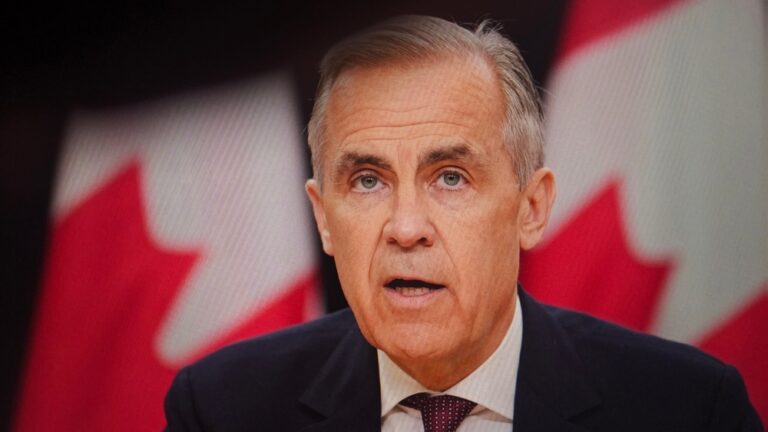
Diplomacy rarely turns on a single invitation, but some invitations reveal where the political weather is shifting. Prime Minister Mark Carney’s expected appearance at the European Political Community summit in Armenia has that kind of feel: not just another stop on the calendar, but a signal that Canada is being drawn more directly into Europe’s wider strategic conversation at a volatile moment.
This story is best understood through 10 distinct angles: why the invitation is unusual, what the forum is designed to do, why Armenia matters, how trade and security shape the backdrop, and what Carney’s presence may say about Canada’s place in a changing global order.
A First for the European Political Community
Carney Invited to European Political Community Summit in May
- A First for the European Political Community
- What the EPC Actually Is
- Why Armenia Matters This Time
- Canada Already Has Deep Economic Stakes in Europe
- Security Is Likely to Dominate the Room
- Carney Brings Unusual Credibility to This Setting
- The Invitation Fits Canada’s Trade Diversification Push
- Europe and Canada Have Been Building a Closer Strategic Partnership
- The Politics at Home Matter Too
- What to Watch When the Summit Opens
What makes this invitation stand out is not simply that Carney is going to another international meeting. It is that the European Political Community, or EPC, has until now been a forum built around leaders from Europe and its immediate political neighborhood. By bringing in Canada’s prime minister as a guest, organizers are signaling that the lines around the gathering may be widening. That is a notable shift for a forum still young enough to be defining itself in real time.
The symbolism matters because summit formats often say as much as summit statements. If Canada is the first non-European participant, Europe is effectively saying that geography alone no longer determines who belongs in certain high-level political conversations. At a moment shaped by trade tension, war in Ukraine, and questions about democratic resilience, Canada’s presence looks less ceremonial than strategic. That is why this invitation carries more weight than a routine diplomatic photo opportunity.
What the EPC Actually Is
The EPC can sound abstract, but its purpose is fairly direct. It was launched in 2022 as a political forum where leaders can discuss shared challenges without forcing every issue through the European Union’s formal machinery. That matters because Europe’s biggest problems often stretch beyond the EU itself. Security, migration, energy vulnerability, transport links, and democratic stability do not stop at the borders of the 27-member bloc, and the EPC was built to reflect that reality.
From the beginning, the forum has been shaped by crisis. The first meeting in Prague came in the shadow of Russia’s invasion of Ukraine and a deep European energy shock. Since then, summits have repeatedly focused on security, resilience, and cross-border coordination. That gives the gathering a practical flavor. It is not a treaty-making body, and it is not a substitute for EU enlargement or NATO, but it has become a place where leaders can compare positions quickly and show political alignment in public.
Why Armenia Matters This Time
Location always adds a layer of meaning, and this summit’s setting is no exception. Yerevan is not a neutral backdrop picked only for scenery or logistics. Armenia sits in the South Caucasus, a region where questions of sovereignty, connectivity, security, and outside influence remain unusually sharp. Hosting the EPC gives Armenia a higher diplomatic profile at a time when European institutions are paying closer attention to its long-term stability and its place in regional transport and political networks.
There is another reason the venue matters. The EPC meeting is scheduled just ahead of the first-ever EU-Armenia summit, creating a back-to-back diplomatic sequence rather than a one-off event. That design suggests Europe wants to use this week in Yerevan to do two things at once: hold a continent-wide political conversation and deepen a specific bilateral relationship. In that setting, Carney’s attendance becomes part of a broader diplomatic choreography, one that is about more than Canada alone.
Canada Already Has Deep Economic Stakes in Europe
The invitation also lands against a very real commercial backdrop. Europe is not a peripheral market for Canada; it is one of the country’s biggest economic relationships outside the United States. The Canada-EU trade link has been strengthened by CETA, which provisionally entered into force in 2017 and removed tariffs on the overwhelming majority of tariff lines. That agreement was once treated mainly as a trade policy milestone. Now it looks increasingly like part of a larger strategic architecture.
Recent numbers help explain why. Canada’s trade in goods and services with the European Union reached into the hundreds of billions of dollars in 2025, and officials on both sides have continued to present Europe as Canada’s second-largest trading partner. Just as important, both Ottawa and Brussels have recently emphasized trade diversification, investment resilience, and the need to make supply chains less vulnerable to geopolitical shocks. In that context, a political summit invitation does not sit apart from economics. It reinforces an already substantial relationship.
Security Is Likely to Dominate the Room
Even when trade and energy make headlines, security has remained the EPC’s gravitational center. Recent editions of the summit have focused heavily on Ukraine, traditional and hybrid threats, migration pressures, and economic security. That pattern makes it likely that Yerevan will be no different. Canada’s relevance here is straightforward: it is a NATO ally, a long-standing supporter of Ukraine, and a country that European governments increasingly view as politically aligned on rules-based international order questions.
The numbers behind the Ukraine file illustrate why these conversations remain so intense. NATO has said that allies provided roughly €50 billion to Ukraine in 2024, with nearly 60 percent coming from European allies and Canada, and it has also pointed to tens of billions more in security assistance commitments in 2025. Those figures show why forums like the EPC keep returning to the same core themes. The war is not a background issue in Europe’s diplomacy; it is still one of the forces organizing the entire agenda.
Carney Brings Unusual Credibility to This Setting
Carney is not a typical first-year prime minister on the international stage. Before entering elected politics, he had already built one of the more globally recognizable résumés in Canadian public life. He led the Bank of Canada during the financial crisis era, then became Governor of the Bank of England, one of the most prominent central banking positions in the world. He also chaired the Financial Stability Board, which gave him a direct role in shaping post-crisis regulatory thinking across major economies.
That matters in a room like this because credibility is often cumulative. European leaders do not need an introduction to Carney’s background in global finance, macroeconomic risk, and institutional management. He arrives not merely as Canada’s current political leader, but as someone many of them or their advisers have been watching for years in other roles. In practical terms, that means he can move across subjects with unusual ease, from trade diversification to financial stability to energy transition, without sounding like he is learning the vocabulary on arrival.
The Invitation Fits Canada’s Trade Diversification Push
The domestic Canadian backdrop makes the timing even more understandable. Ottawa has been dealing with the aftershocks of tariff friction with the United States, and Carney has repeatedly framed diversification as a strategic necessity rather than a slogan. That language is important because Canada’s economic relationship with the U.S. remains dominant by any normal measure. Shifting even a modest share of trade away from that dependence is not easy, which is precisely why Europe has become a more attractive partner in political and business terms.
The logic is clear enough. When a country sends a very large share of its exports to one market, every tariff fight becomes a structural vulnerability. That is why recent Canadian and European messaging has increasingly stressed resilience, non-U.S. trade growth, and new channels for investment and digital commerce. A summit seat does not solve any of that on its own. What it does do is give Carney a highly visible platform to align Canada with partners that are also thinking in terms of economic security, not just classical free trade.
Europe and Canada Have Been Building a Closer Strategic Partnership
The invitation did not emerge out of thin air. Over the past year, Canada and the European Union have been moving toward a broader relationship that reaches beyond tariffs and market access. In 2025, they signed a security and defence partnership, and they also launched talks on a digital trade agreement meant to complement CETA. That combination matters because it shows the relationship expanding in two directions at once: harder security on one side, newer economy rules on the other.
This is the kind of evolution that often precedes more visible political symbolism. Once two partners begin talking about defence architecture, digital standards, industrial resilience, and procurement frameworks, summit participation starts to look like a natural next step rather than an exception. Canada is not becoming European, and the EPC is not turning into a transatlantic alliance. But the trend line is unmistakable. Ottawa and Brussels are steadily treating each other less as occasional counterparts and more as durable strategic partners.
The Politics at Home Matter Too
Foreign travel can be about diplomacy abroad, but it is often read politically at home. In Canada, Carney’s participation is likely to be viewed through a domestic lens as well: does this visit make him look like a leader with reach, or does it invite questions about priorities at a time when economic pressure is still intense? Because he entered office with an international profile already in place, every overseas appearance also doubles as a test of whether that experience can be converted into visible national advantage.
That is why the story may resonate beyond foreign policy circles. For many Canadians, Europe is familiar but distant: important, trusted, and culturally close, yet rarely central to day-to-day political debate unless trade or war pushes it forward. This invitation changes that slightly. It makes the Canada-Europe file easier to see in concrete terms. If Carney can use the summit to advance commercial, diplomatic, or security interests in ways that are legible back home, the visit will look substantive rather than symbolic.
What to Watch When the Summit Opens
The most important thing to watch on May 4 will not necessarily be the formal communiqué. At gatherings like this, the side meetings, the guest list, the language used by hosts, and the images leaders choose to create can be just as revealing. If Carney is presented not as a token outsider but as a partner in discussions on security, connectivity, and economic resilience, that will tell observers a great deal about where Europe sees Canada fitting into its next diplomatic chapter.
The second thing to watch is whether this remains a one-off invitation or becomes a precedent. Organizers have already described Canada’s participation as the first non-European presence at the EPC. Firsts matter in diplomacy because they quietly test future possibilities. If the meeting goes smoothly and Carney uses it to reinforce Canada’s ties with European institutions and leaders, this summit could be remembered less as an isolated gesture and more as the moment Europe formally widened one of its most interesting political forums.
This Options Discord Chat is The Real Deal
While the internet is scoured with trading chat rooms, many of which even charge upwards of thousands of dollars to join, this smaller options trading discord chatroom is the real deal and actually providing valuable trade setups, education, and community without the noise and spam of the larger more expensive rooms. With a incredibly low-cost monthly fee, Options Trading Club (click here to see their reviews) requires an application to join ensuring that every member is dedicated and serious about taking their trading to the next level. If you are looking for a change in your trading strategies, then click here to apply for a membership.